
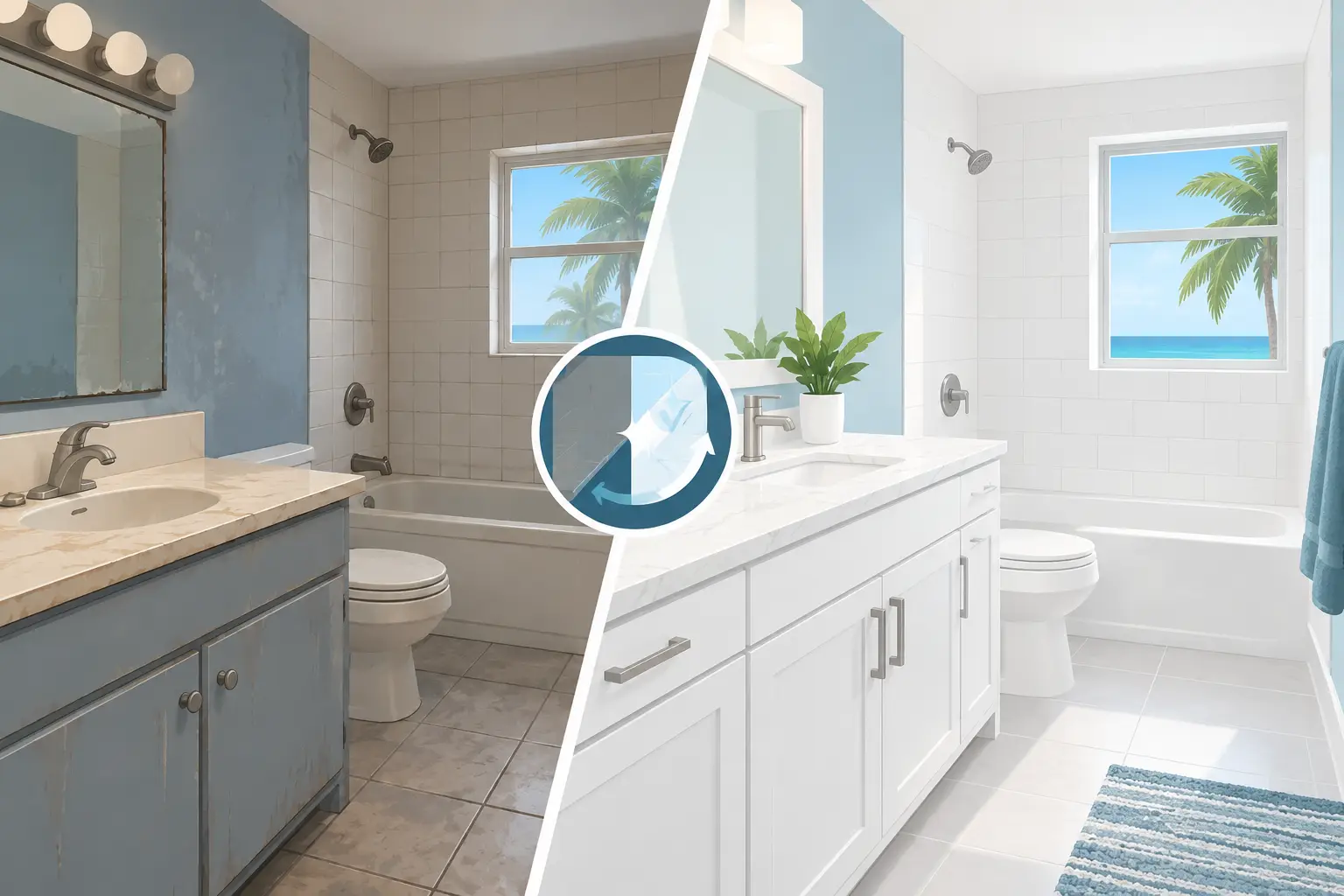
A bathtub can be clean and still look terrible. Yellowing, chips, dull spots, rust stains, and dated colors can make the whole bathroom feel worn out. Surface restoration gives those fixtures a fresh, durable finish without tearing out tile, hauling away a tub, or putting your bathroom out of commission for weeks.
For many Florida homeowners, refinishing is the practical middle ground between living with an ugly bathroom and paying for a full remodel. The right process can make an old tub, sink, shower, or tile surround look dramatically better at a fraction of replacement cost.
What Surface Restoration Really Means
Surface restoration is the professional repair and refinishing of an existing fixture or finished surface. Instead of removing a tub or replacing a tile wall, a trained technician prepares the surface, repairs minor damage, and applies a new coating system designed to hold up to everyday use.
This is not a quick paint job. Proper refinishing depends on preparation. The surface must be cleaned, stripped of soap residue and oils, repaired where needed, and properly bonded before the final finish is applied. Skip those steps, and the finish can peel, chip, or fail early.
A professional restoration can improve the look of cast iron, porcelain, fiberglass, acrylic, cultured marble, ceramic tile, and other common bathroom surfaces. It can also change the color. A tired almond, avocado, pink, or stained white fixture can be refinished in a cleaner, more current color without replacement.
When Refinishing Makes More Sense Than Replacement
Replacement sounds simple until demolition starts. Removing a bathtub may require cutting into walls, damaging tile, disconnecting plumbing, repairing drywall, and installing new flooring or trim around the replacement fixture. The original problem can turn into a much larger project fast.
Surface restoration works well when the fixture is structurally sound but looks worn, dated, stained, or lightly damaged. Common candidates include:
- Bathtubs with dull finishes, discoloration, chips, or rust stains
- Fiberglass showers that have faded, cracked, or lost their shine
- Tile walls with outdated colors or hard-to-clean grout lines
- Bathroom sinks with scratches, stains, or worn porcelain
- Countertops and cabinets that need a cosmetic update
The savings can be significant because you keep the existing fixture in place. There is less labor, less material waste, and far less disruption inside your home. For a homeowner preparing to sell, refreshing a dated bathroom can also improve the room’s appearance without committing to a full renovation budget.
That said, refinishing is not the answer to every problem. A tub with major structural damage, extensive rust-through, a failing drain area, or serious plumbing issues may need repair work beyond the finish itself. Loose tile, active leaks, mold behind walls, and water damage should be addressed before any cosmetic work begins. A dependable contractor will tell you when replacement is the better call.
The Surface Restoration Process
Good results come from careful prep work, not shortcuts. The exact process changes based on the material and condition of the surface, but professional refinishing follows a clear path.
Inspection and repair
The technician first checks the surface for chips, cracks, rust, old failed coatings, and problem areas around drains or fixtures. Minor chips and cracks can often be repaired. Rusted areas may need to be treated and stabilized before refinishing begins.
This step matters because a new finish is only as good as what is underneath it. Covering a damaged spot without fixing it first may look fine for a short time, then fail when moisture gets underneath.
Cleaning and surface preparation
Bathrooms collect years of soap scum, body oils, hard-water minerals, and cleaning product residue. Those contaminants interfere with adhesion. The surface is thoroughly cleaned and prepared so the new coating has the right foundation.
Depending on the project, this may include removing old caulk, etching or sanding the surface, masking surrounding walls and floors, and controlling dust. The bathroom should be protected before spraying begins. A careful setup keeps overspray where it belongs and protects the rest of the room.
Professional coating application
After preparation, the new finish is applied in controlled coats. This is where experience shows. The coating needs to lay down evenly, cover consistently, and cure properly. A rushed application can leave rough texture, runs, thin coverage, or an uneven sheen.
Once the finish has cured according to the product requirements, the fixture is ready for normal use. Drying and cure times vary, so homeowners should always follow the technician’s instructions before using the tub, shower, or sink.
What Results Should You Expect?
A properly refinished surface should look clean, smooth, and uniform. It should cover discoloration and minor cosmetic damage while giving the bathroom a brighter, more finished appearance. The change is especially noticeable in older homes where the tub or tile is still solid but the color and finish are showing their age.
Refinishing does not turn a damaged fixture into a brand-new factory-made unit. Deep structural cracks, badly corroded metal, and poor prior repairs can still limit what is possible. But for many worn surfaces, the visible improvement is major.
The best contractors set realistic expectations before the job begins. They explain what can be repaired, where imperfections may remain, how long the finish should last, and how to care for it. That honesty matters more than a promise that sounds too good to be true.
Durability Depends on the Work and the Care
A refinished tub or shower can last for years when the surface is prepared correctly and maintained properly. The coating system matters, but workmanship matters just as much. Cheap materials and poor prep are usually the reason homeowners see peeling, bubbling, or early wear.
Daily care also makes a difference. Use non-abrasive cleaners and a soft sponge or cloth. Avoid scouring powders, harsh scrub pads, and aggressive chemicals that can dull or damage the finish. Do not leave suction-cup mats attached to a refinished tub. They can trap moisture and pull on the coating over time.
Fix dripping faucets and plumbing leaks quickly. Constant water exposure around a drain or overflow area can wear on any finished surface. Fresh caulk, proper ventilation, and regular cleaning help protect the investment.
Why Florida Bathrooms Need Extra Attention
Florida bathrooms work hard. Humidity stays high, ventilation is not always ideal, and hard water can leave stubborn mineral buildup on tubs, tile, and glass. In coastal areas, moisture and salt air can also contribute to corrosion on older metal fixtures and hardware.
That does not mean refinishing is a poor choice. It means preparation and maintenance need to be taken seriously. A bathroom with an active moisture problem should be corrected first. Once leaks, failed caulk, and ventilation issues are handled, restoration can give the room a much longer useful life.
For rental properties, seasonal homes, and owner-occupied houses around Pinellas County and Saint Petersburg, restoration can be especially practical. It improves a bathroom’s appearance quickly without the mess and scheduling headaches of a major renovation.
Choosing a Surface Restoration Company
Ask about the process, not just the price. A low quote may leave out repairs, proper prep, masking, or quality coating materials. Those details affect how the finished surface looks and how long it lasts.
Look for a company that can clearly explain the condition of your fixture, the prep work required, the expected cure time, and the maintenance steps after the job. Warranty coverage is another key point. A company that stands behind its work should be willing to return and correct a legitimate issue.
At The Tub Guy, that commitment includes a five-year warranty because homeowners should not have to wonder whether a restored surface will hold up. The goal is straightforward: make the bathroom look right, make the finish last, and avoid the cost and mess of replacement whenever possible.
If your tub, tile, shower, or sink is making the whole bathroom feel dated, start with an honest assessment of the surface. A sound fixture with a tired finish may not need demolition at all. It may just need skilled restoration and the right care afterward.