
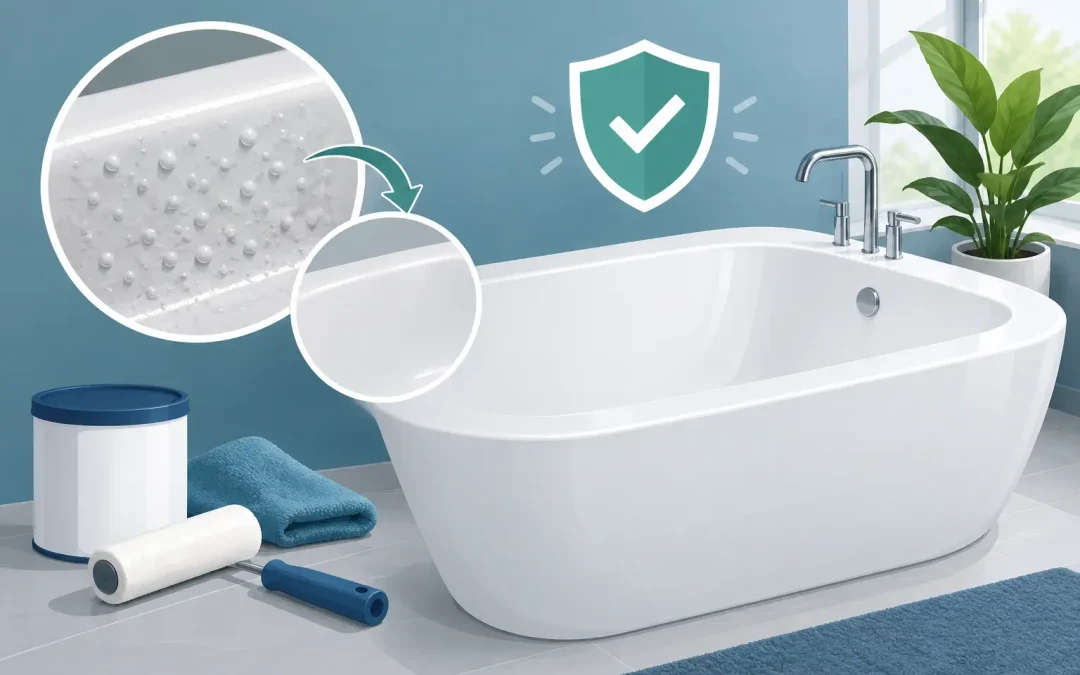
A newly refinished tub should look smooth, glossy, and clean. When bubbles show up in the coating, that finish can quickly look rough or worn. The good news is that most bubbling can be avoided. To prevent bathtub coating bubbles, the surface must be prepared correctly, kept dry, and given the right conditions to cure.
For homeowners in Florida, moisture is usually the biggest challenge. Humid air, hidden plumbing leaks, and water left around the drain can all work against a bathtub coating. Good workmanship matters from the first cleaning step through the final cure time.
Why bathtub coatings bubble
A bubble is usually a sign that something is trapped beneath the finish or that the new coating did not bond fully to the tub. It is not always caused by one mistake. Sometimes several small issues add up.
The most common cause is moisture. A tub may look dry on the surface but still hold water around the drain, overflow plate, faucet openings, caulk lines, or small chips. If moisture is sealed under a new coating, it can push upward as the finish cures. That pressure creates blisters or bubbles.
Poor adhesion is another common reason. Soap film, body oil, silicone residue, old wax, hard-water minerals, and leftover cleaning products can keep a new coating from gripping the tub. The finish may look fine at first, then begin to lift after regular use.
Heat and humidity can also affect the result. Florida bathrooms often hold warm, damp air. If the room is not ventilated and controlled during refinishing, the coating may not flash or cure the way it should. A rushed application can leave solvents trapped in the finish, which may later show up as bubbling.
The prep work that prevents bathtub coating bubbles
The coating is only as strong as the surface underneath it. Professional refinishing is not just spraying a fresh color over an old tub. The real work happens in the preparation.
First, the tub has to be thoroughly cleaned and decontaminated. That means removing soap scum, mineral buildup, oils, and residue from old cleaners. Products that leave a protective shine are especially troublesome because they can leave behind a barrier that coatings cannot bond to.
Next, the surface needs to be repaired and properly etched or sanded. Chips, cracks, rust spots, and worn areas should be addressed before the final coating goes on. A smooth repair is not just cosmetic. It gives the new finish a stable surface to bond with.
Old caulk also needs attention. Caulk can hide mildew, moisture, and residue along the edge of the tub. In many cases, it should be removed before refinishing and replaced after the coating has cured. Coating over questionable caulk is a shortcut that can create problems later.
Drying is not optional
A tub must be dry beyond what the eye can see. Water can sit inside the overflow opening, under drain hardware, in grout joints, or behind loose caulk. A trained refinisher checks those areas before applying any coating.
This matters even more in bathrooms with poor airflow. A hot shower right before service can fill the room with humidity and leave moisture on surfaces long after the steam disappears. If possible, avoid using the bathroom shortly before the refinishing appointment. Keep windows and doors managed as instructed so the work area stays clean and dry.
Control the room, not just the tub
Temperature, humidity, and ventilation all affect a bathtub finish. Coatings are designed to be applied within a certain range of conditions. When the room is too humid, too cold, too hot, or dusty, the finish can suffer.
A professional refinisher will protect the surrounding bathroom, use proper ventilation, and monitor the application process. Each coat needs enough time to flash before the next one is applied. Applying heavy coats too quickly can trap solvents. That can lead to soft spots, wrinkling, or bubbles as the coating cures.
Homeowners can help by keeping the work area clear. Remove bath mats, bottles, towels, shower curtains, and storage items before the appointment. Do not run the shower or use a nearby exhaust fan unless the technician directs you to. The goal is a controlled space with as little moisture and airborne debris as possible.
Give the coating time to cure
One of the fastest ways to damage a refinished tub is to use it too soon. A coating can feel dry before it is fully cured. Those are not the same thing.
Your refinisher should give you clear instructions for when the tub can be used again. Follow that timeline, even if the surface looks ready. Early water exposure can weaken the finish, especially around the drain and bottom of the tub where water sits the longest.
Avoid placing bottles, bath mats, or suction-cup accessories in the tub during the curing period. Do not clean the surface early. Let the finish harden as designed.
If you are planning other bathroom work, timing matters. Plumbing repairs, tile work, painting, and caulking can add dust, moisture, or accidental damage. It is best to coordinate those jobs so the refinished tub is protected.
Keep water from getting under the finish
After the coating has cured, the best maintenance is simple: do not let water work its way behind the finish.
Check the drain, overflow plate, faucet, and caulk line from time to time. If you see loose caulk, a slow leak, cracked grout, or water collecting at the edge of the tub, deal with it early. A small plumbing issue can become a coating issue if water reaches an exposed edge or damaged area.
Be careful with drain cleaners as well. Harsh chemical products can damage a bathtub coating, particularly if they sit in the tub or splash onto the surface. If a drain needs service, use a method recommended for refinished surfaces or call a plumber before reaching for aggressive chemicals.
A damaged spot should also be repaired promptly. Chips from dropped objects can expose the layer beneath the coating. They may be small, but they create a path for water. Quick repair protects the surrounding finish and helps avoid larger peeling or bubbling problems.
Clean a refinished tub the right way
The wrong cleaner can dull, scratch, or weaken a coating over time. Skip abrasive powders, scouring pads, stiff brushes, and products made with harsh solvents or bleach-heavy formulas. They can wear down the finish and make it more likely to fail.
Use a soft sponge or microfiber cloth with a non-abrasive cleaner that is safe for refinished tubs. Rinse well after cleaning, then wipe the surface dry. This simple habit helps prevent soap buildup and reduces the chance of standing water around the drain or caulk line.
Do not use suction-cup bath mats. The cups can trap moisture against the surface and pull on the finish. A non-slip mat that can be removed after use is a safer choice. If you use a bath tray or shower caddy, make sure it does not rub against the tub every day.
When bubbles need professional attention
A few bubbles are not something to ignore. They may point to moisture, a leak, or a bonding problem that needs to be corrected before it spreads. Popping the bubble yourself is rarely the right fix. It can expose more of the coating and allow water underneath.
Take note of where the bubbles appear. Bubbles near the drain, overflow, caulk line, or faucet may suggest a moisture issue. Bubbles in one isolated repaired area can point to an underlying defect. Widespread bubbling may mean the coating needs professional evaluation.
A reputable refinishing company should stand behind its work and explain what caused the problem. The Tub Guy approaches refinishing with the preparation, controlled application, and follow-up support needed for a finish that holds up. A five-year warranty also gives homeowners confidence that concerns will be addressed rather than brushed aside.
A smooth bathtub finish starts long before the final coat is applied. Keep the tub dry, respect cure time, use gentle cleaners, and handle leaks or chips early. Those practical steps protect your investment and help your bathroom keep its clean, refreshed look.