
Table of Contents
- What Bathtub Refinishing Warranty Coverage Actually Includes
- Workmanship vs. Material Defects: Understanding the Difference
- How Long Does Bathtub Refinishing Last Under Warranty
- Common Exclusions That Void Bathtub Refinishing Warranties
- Signs of a Bad Bathtub Refinishing Job and What to Do
- Bathtub Refinishing Maintenance Tips to Protect Your Warranty
- How to File a Warranty Claim and What to Expect
- Warranty Transferability: What Happens If You Sell
- Frequently Asked Questions
Last Updated: September 29, 2026
What Bathtub Refinishing Warranty Coverage Actually Includes
A bathtub refinishing warranty typically covers defects in the coating application and material failure under normal use conditions. This means if the refinished surface peels, bubbles, or blisters due to poor workmanship or material defects within the warranty period, the service provider should address it at no additional cost. However, the specific coverage varies significantly based on the contractor and the terms they outline in writing.
Understanding what your warranty protects is essential, many homeowners assume broader coverage than they actually have, only to discover limitations when problems arise.
At The Tub Guy, we stand behind our work with a 5-year warranty on durable coatings. This commitment means you have peace of mind knowing that if something goes wrong with the refinishing job itself, we’ll make it right. But not every provider offers the same level of protection, which is why reading the fine print matters.
Before signing any bathtub refinishing agreement, request the warranty in writing and ask specifically what happens if the coating fails at the 6-month mark, the 2-year mark, and beyond. A reputable contractor will answer these questions directly without hesitation.
Workmanship vs. Material Defects: Understanding the Difference
Workmanship defects refer to problems caused by how the refinishing job was performed, while material defects relate to failures in the coating itself. This distinction is crucial because it determines who bears responsibility when something goes wrong.
Workmanship issues include improper surface preparation, inadequate adhesion, uneven application, or failure to follow proper curing protocols. If your bathtub peels after three months because the surface wasn’t properly etched, that’s a workmanship failure.
Material defects occur when the coating itself fails to perform as intended, even though the application was done correctly. Distinguishing between the two in real situations can be tricky.
Most professional warranties cover both workmanship and material defects, though coverage periods may differ. A quality warranty explicitly states which defects are covered and under what circumstances.
If a contractor’s warranty only covers workmanship and excludes material defects, ask why. A reputable provider should stand behind both the quality of their work AND the materials they use. If they won’t commit to material coverage, that’s a red flag.
How Long Does Bathtub Refinishing Last Under Warranty
Typical bathtub refinishing warranties last 3 to 5 years. A longer warranty signals greater contractor confidence, though actual durability depends on maintenance and use.
The warranty period begins on the completion date, not when you first use the tub. Documentation of this date matters for future claims.
Within the warranty period, the contractor should repair or refinish affected areas at no cost. After expiration, you’re responsible for repairs. Some contractors offer extended warranties for an additional fee.
A properly applied coating can last 7-10 years or longer with proper care. Neglecting maintenance or using abrasive cleaners may void warranty coverage.
Common Exclusions That Void Bathtub Refinishing Warranties
Every warranty has exclusions, and these are the details that most often catch homeowners by surprise. Understanding what’s not covered is just as important as knowing what is covered.
Improper maintenance is the most common warranty killer. Using steel wool, bleach, vinegar, or scouring powders voids coverage. The refinished surface is more delicate than original porcelain and requires non-abrasive care.
Chemical damage from unapproved products typically voids coverage. Check warranty documentation before using any new cleaning product.
Curing time violations are another exclusion. Most tubs require 48-72 hours before use. Premature use voids the warranty.
Normal wear and tear is generally excluded. The warranty protects against premature failure, not normal aging.
Structural damage to the underlying tub is usually excluded from bathtub refinishing warranty coverage. Deep cracks must be addressed before refinishing.
Water damage from leaks in the plumbing beneath the tub is typically not covered. Similarly, damage from flooding or moisture intrusion from outside the tub isn’t the refinisher’s responsibility.
Signs of a Bad Bathtub Refinishing Job and What to Do
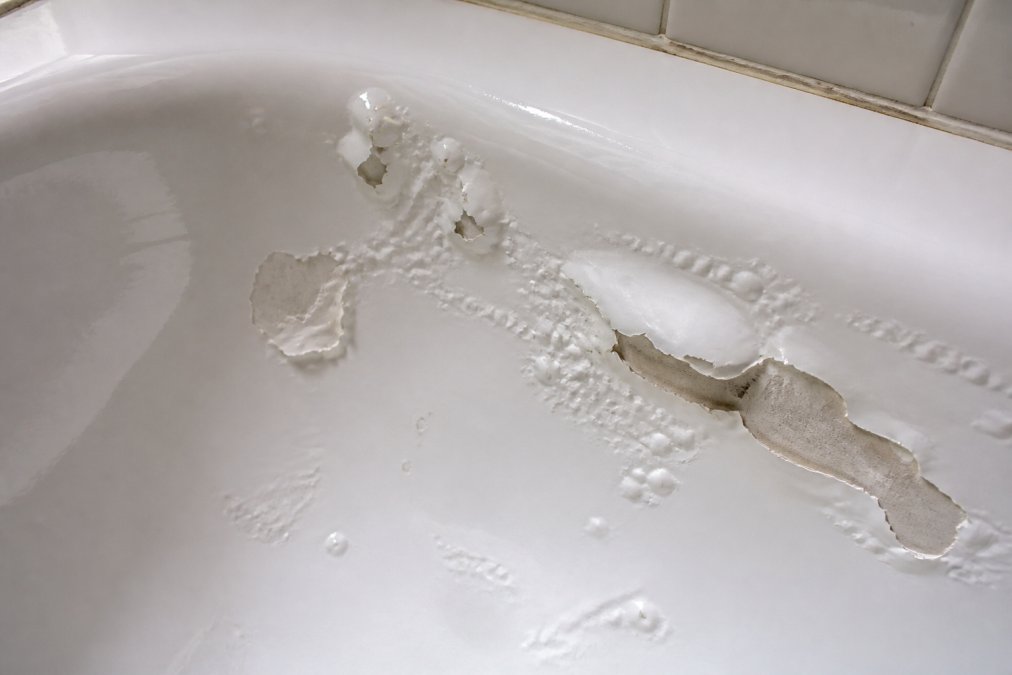
Early signs of a failing refinish are peeling, bubbling, and blistering, typically appearing within the first year. Peeling usually starts at edges or high-use areas.
Bubbling and blistering indicate poor bonding, often from inadequate surface preparation or trapped moisture. Document with photos and contact your contractor immediately.
Adhesion failure occurs when the coating separates from the old surface, indicating improper surface preparation.
Discoloration or staining that appears shortly after refinishing might indicate the wrong cleaning products were used during curing, or it could be a sign of moisture problems. If the staining appears despite proper maintenance, document it and contact the contractor.
Rough or uneven texture that develops over time could indicate the coating is breaking down or that the application wasn’t uniform. Run your hand across the surface; a properly refinished tub should feel smooth and consistent.
If you notice any of these issues within your warranty period, contact your contractor immediately. Provide photos and detailed descriptions of when the problem started and what you’ve done to maintain the tub. A reputable contractor will investigate and either repair the damaged area or refinish the entire tub if necessary.
Bathtub Refinishing Maintenance Tips to Protect Your Warranty
Proper maintenance is the single most important factor in keeping your bathtub refinishing warranty valid and extending the life of the finish. The good news is that maintaining a refinished tub is simple if you follow the contractor’s guidelines.
Use only non-abrasive cleaners approved for refinished surfaces. Mild dish soap and warm water is often sufficient for regular cleaning. For tougher stains, use a soft cloth or sponge with a gentle bathroom cleaner specifically labeled as safe for refinished tubs. Avoid bleach, vinegar, baking soda scrubs, and any product containing acids or strong chemicals. Maintaining this gentle cleaning routine preserves the integrity of your new finish while you prepare for broader bathroom renovation expectations.
Never use steel wool, scouring pads, or abrasive scrubbers on the refinished surface. These tools can scratch and damage the coating, potentially voiding your warranty. A soft cloth or non-abrasive sponge is all you need.
Dry the tub after each use to prevent water spots and mineral buildup. Standing water can eventually seep beneath the coating if there are any small cracks or weak spots, leading to bubbling or peeling. A simple squeegee or soft towel works well.
Avoid prolonged exposure to standing water. While your tub is designed to hold water during use, leaving water sitting for extended periods increases the risk of moisture penetrating the coating. This is especially important if you have young children who like to play in the tub for hours.
Apply a protective sealant if recommended by your contractor. Some refinishing services suggest periodic application of a clear protective coating to extend the life of the finish. This is typically done annually or as recommended in your warranty documentation.
Test any new cleaning product in a small, inconspicuous area first. Before using a new cleaner on the entire tub, test it on a small spot and wait a few days to see if it causes any discoloration or damage. This simple precaution can prevent accidental warranty violations.
The most common reason refinished bathtubs fail prematurely is improper maintenance, not poor workmanship. Following your contractor’s maintenance guidelines is the easiest way to protect your warranty and keep your tub looking new for years.
How to File a Warranty Claim and What to Expect
If you discover a problem covered by your bathtub refinishing warranty, acting quickly is important. The warranty claim process typically follows these steps.
Document the problem thoroughly. Take clear photos from multiple angles showing the peeling, bubbling, blistering, or other defects. Include photos of the surrounding area to show the extent of the damage. Note the date you first noticed the problem and any relevant details about how you’ve been using and maintaining the tub.
Review your warranty documentation. Before contacting the contractor, reread the warranty to confirm that your specific issue is covered. Check the warranty period to ensure you’re still within the coverage window. Verify that you haven’t violated any maintenance requirements that might void coverage.
Contact the contractor in writing. Call or email the contractor with photos and a detailed description of the problem. Provide the original completion date and your contact information.
Warranty Transferability: What Happens If You Sell
Whether a bathtub refinishing warranty transfers to a new owner depends entirely on the contractor’s terms. Some warranties are transferable; others are not. This is an important question to ask before signing the refinishing agreement, especially if you might sell your home in the next few years.
Frequently Asked Questions
How long should a professionally refinished bathtub last?
A professionally applied bathtub refinishing coating typically lasts 5-15 years with proper care, depending on the quality of the work and maintenance. The Tub Guy offers a 5-year warranty on durable coatings, which reflects the durability of professional-grade materials and proper surface preparation. Factors like water chemistry, cleaning habits, and usage frequency affect longevity. Poor surface preparation or low-quality materials can result in premature failure within 1-2 years.
What typically voids a bathtub refinishing warranty?
Warranties are commonly voided by abrasive cleaners, harsh chemicals, improper maintenance, neglecting curing time before use, accidental damage, and failure to follow manufacturer guidelines. Using scouring pads or acidic cleaners damages the coating. Allowing standing water or moisture to sit for extended periods can cause adhesion failure. Some warranties exclude damage from high water pressure or improper installation. Always review your specific service agreement to understand what actions will void coverage.
What’s the difference between a workmanship warranty and a materials warranty?
A workmanship warranty covers defects caused by improper application, poor surface preparation, or installation errors by the contractor. A materials warranty covers failures of the coating itself due to manufacturing defects. For example, if peeling occurs because the bathtub wasn’t properly acid-etched before application, that’s a workmanship claim. If the coating fails due to a defective bonding agent, that’s a materials claim. Professional refinishers typically cover both, but terms vary by provider and contract.
Can I transfer a bathtub refinishing warranty if I sell my home?
Warranty transferability depends on the specific service agreement. Some providers offer limited transferability to new owners, while others restrict coverage to the original customer only. If transferability is included, it may come with conditions or reduced coverage terms. Always ask about this before signing your contract and request written confirmation. If you plan to sell within the warranty period, clarify whether the new owner can file claims and under what conditions.