
Table of Contents
- What to Look for in a Bathtub Refinisher
- Bathtub Refinishing Cost Estimate: What Drives the Price
- Bathtub Reglazing Warranty Terms You Should Read Carefully
- How Long Does Bathtub Refinishing Take?
- Signs of a Bad Bathtub Refinishing Job
- DIY Kits vs. Professional Refinishing: Why Bonding Matters
- Ventilation, VOCs, and Chemical Safety During Curing
- Questions to Ask Before You Hire
- Frequently Asked Questions
Last Updated: October 2, 2026
What to Look for in a Bathtub Refinisher
Choosing the right bathtub refinisher comes down to three things: verified credentials, the materials they use, and a warranty you can enforce. Get those right and you avoid the most expensive mistake in this trade: paying for a coating that peels within a year.
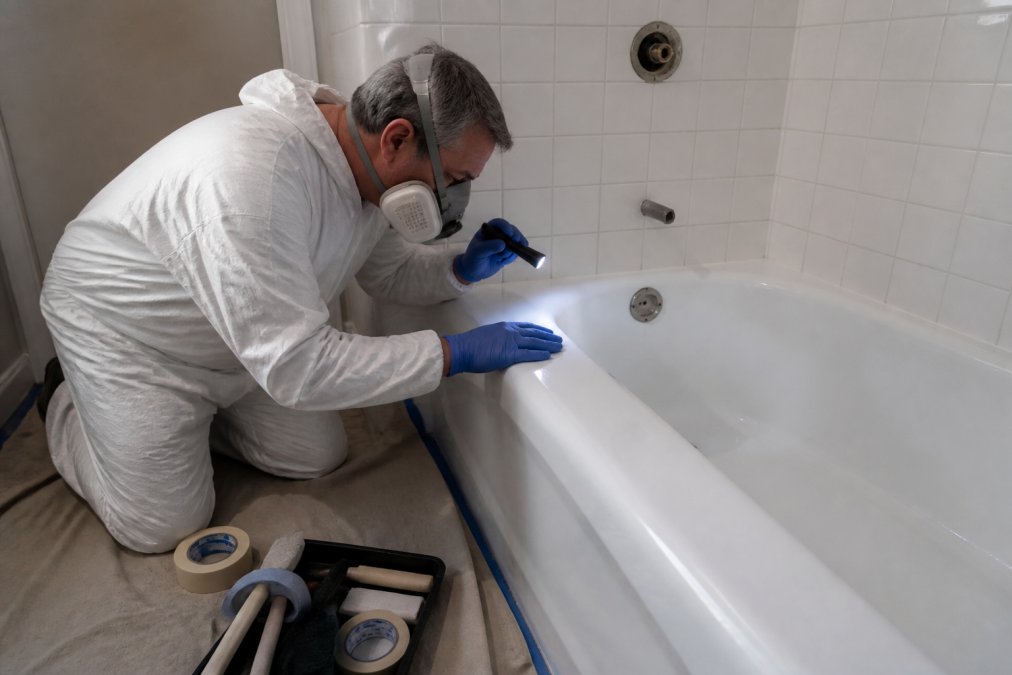
A legitimate bathtub refinisher should be able to prove:
- Insurance and licensing: General liability coverage plus any state or local licensing your area requires for surface coating work
- Background checks and training: A professional operation vets its technicians, not just its salespeople
- Verifiable references: Recent jobs you can call, not just photos on a website
- A written, itemized quote: Surface prep, materials, and cure time spelled out
The biggest mistake homeowners make is hiring on price alone. A low bid usually means skipped surface prep, which is the single most common cause of peeling and bubbling later. The cheap job costs more once you pay to have it redone.
Credentials, Insurance, and Background Checks
Ask for proof, not promises. A contractor who hesitates to show insurance or a license number is telling you something.
Request these documents before work begins:
- Certificate of general liability insurance
- Any required state or local license or registration
- Written confirmation that technicians passed background checks
- At least three references from jobs completed in the past year
Materials and Equipment That Decide Finish Longevity
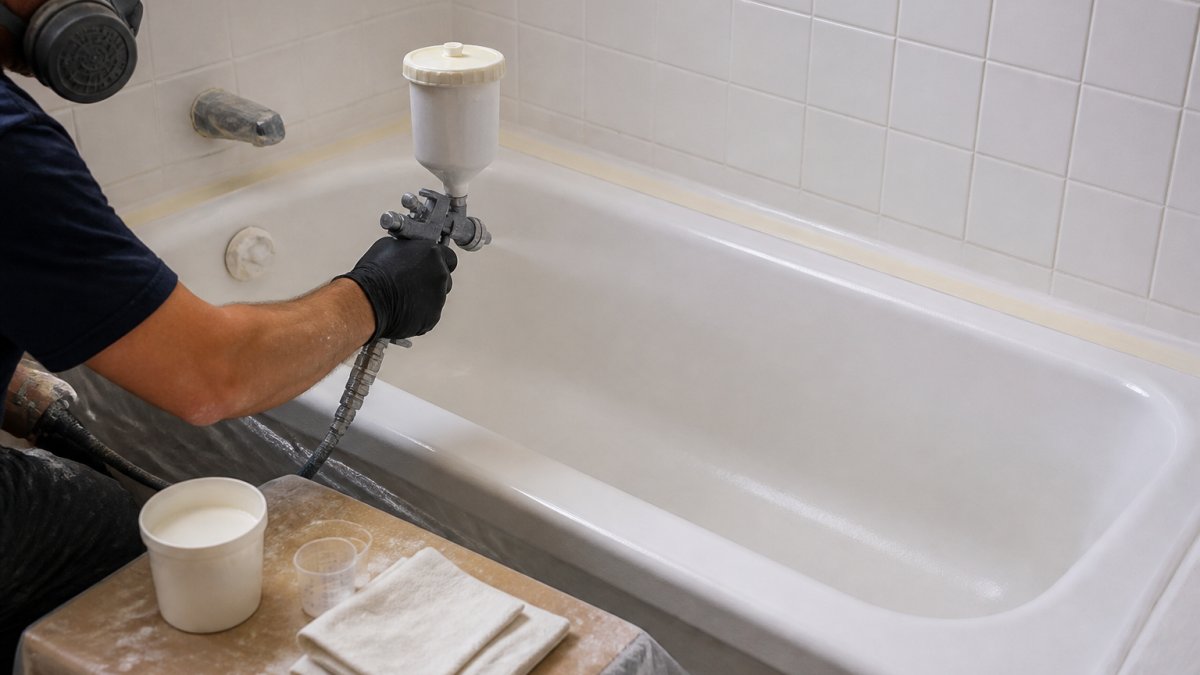
The coating system matters more than the brand name on the van. Professional refinishing relies on a multi-part system: acid etching or sanding to open the surface, a bonding agent or primer, and a topcoat that cures hard and non-porous.
Bathtub Refinishing Cost Estimate: What Drives the Price
A bathtub refinishing cost estimate varies with surface condition, size, and coating system, so pricing depends on your tub. Most quotes factor in labor, materials, prep, and cure time rather than a flat per-tub rate.
Several variables move the number up or down:
- Surface condition: Deep cracks, chips, or prior failed coatings require more prep
- Fixture type: Standard tubs, walk-in tubs, and shower surrounds are priced differently
- Coating system: Higher-grade epoxy or urethane costs more upfront but lasts longer
- Access and ventilation: Tight bathrooms need more masking and airflow management
- Color changes: Custom colors can add material cost
| Price Factor | Raises the Estimate | Lowers the Estimate |
|---|---|---|
| Surface damage | Cracks, chips, rust | Smooth, intact surface |
| Coating type | Urethane, premium epoxy | Basic epoxy |
| Fixture count | Tub plus tile plus shower | Single tub |
| Access | Tight space, poor airflow | Open bathroom |
| Color | Custom match | Standard white |
Get the quote in writing and ask what happens if the surface needs extra prep once the coating is stripped. A contractor who locks the price in writing before seeing the tub is guessing.
Bathtub Reglazing Warranty Terms You Should Read Carefully
A bathtub reglazing warranty is only as strong as its fine print. Since most coatings fail from poor prep or misuse, the language tells you what the contractor will actually stand behind.
Read for these specific terms:
- Length of coverage: How many years, and does it start at install or at first use
- What’s covered: Peeling, bubbling, and adhesion failure versus normal wear
- What voids it: Harsh cleaners, abrasive pads, or standing water left on the surface
- Who honors it: The contractor, the manufacturer, or both
How Long Does Bathtub Refinishing Take?
How long bathtub refinishing takes depends on prep and cure time, but most single-tub jobs take a few hours of active work. The waiting period afterward is what homeowners underestimate.
Here’s the realistic timeline:
- Prep and masking: Cleaning, etching, and protecting surrounding surfaces
- Coating application: Primer and topcoat applied in controlled conditions
- Curing: The finish hardens over roughly 24 to 48 hours before light use
Signs of a Bad Bathtub Refinishing Job
Spotting a bad job early saves you from a full redo. Warning signs usually appear within the first few months.
Watch for these post-refinishing failure signs:
- Peeling or flaking at the edges, drain, or overflow
- Bubbling where the coating didn’t bond to the surface
- Soft or tacky spots that never fully cured
- Yellowing or dullness within the first year
- Strong chemical odor that lingers long after curing
DIY Kits vs. Professional Refinishing: Why Bonding Matters
DIY refinishing kits fail for one main reason: bonding. Store-bought kits rarely include the surface prep and bonding agents that professional systems use, so the coating sits on top of the tub instead of fusing to it. That’s why so many DIY jobs bubble within months. Achieving a durable finish requires this level of chemical precision, which serves as a foundational step when modernizing outdated bathrooms to ensure the new aesthetic lasts as long as the underlying structure.
Here’s the practical difference:
- DIY kits: Thin coatings, minimal prep, no real warranty
- Professional refinishing: Acid etching, bonding agent, primer, and a durable topcoat
What’s Actually in the Box (and What Isn’t)
A typical DIY kit contains two-part epoxy or aerosolized acrylic, a scouring pad, a brush or roller, and a one-page instruction sheet. What it omits determines whether the coating stays put:
- A true etching or abrasion step. Most kits tell you to “clean thoroughly” with a provided cleaner. That removes soap scum, not the glossy gelcoat layer the coating needs to grip. Professionals mechanically sand or chemically etch the surface to create a profile the primer can bite into.
- A dedicated bonding primer. Kits often skip the primer and rely on the topcoat to do double duty. A primer’s job is to chemically bridge the substrate and the topcoat. Without it, adhesion depends entirely on how clean the surface happened to be.
- A catalyzed topcoat. Professional coatings are two- or three-part systems that cure through a chemical reaction once mixed. DIY kits are usually single-component products that cure by solvent evaporation. Evaporative cure leaves a thinner, more porous film that stains and scratches more easily.
Why the Failure Timeline Looks the Way It Does
DIY jobs often look fine for weeks, then fail at the edges, drain, and overflow, the spots where water sits, the surface flexes, and the bond is under the most stress. Marginal prep shows there first.
- Weeks 1-4: Coating looks acceptable; minor softness may go unnoticed
- Months 2-6: Edges lift, water gets underneath, bubbling begins
- Months 6-18: Peeling spreads; the tub looks worse than before the kit was applied
The Cost Math Homeowners Actually Face
A DIY kit is cheap upfront and expensive over time. When it fails, you’re not just out the kit cost, you’re paying a professional to strip the failed coating, re-prep, and refinish. That strip-and-redo is more labor-intensive than a first-time refinish because the old coating must come off completely before anything new bonds.
The single biggest factor in how long a refinish lasts is surface preparation and bonding, not the color or the brand of coating. Skip the prep and even the best product fails.
Ventilation, VOCs, and Chemical Safety During Curing
Chemical safety is the angle most guides skip. Professional coatings release VOC emissions while curing, so ventilation and odor control aren’t optional.
During and after application:
- Keep windows open and run exhaust fans to move air
- Keep children and pets out of the bathroom until the coating is fully cured
- Follow the contractor’s wait time before resuming use
- Ask what low-VOC or modern formulations they use
What VOCs Are and Why They Matter Here
Volatile organic compounds are carbon-based chemicals that evaporate at room temperature. In refinishing they come from the solvents and reactive diluents in the coating system, not the cured film. The smell during and after application is largely VOCs leaving the coating as it cures.
Two things drive how much is released:
- The solvent content of the product. Older high-solvent formulas release more; modern waterborne and high-solids formulas release less.
- The cure chemistry. A catalyzed system that cross-links quickly can off-gas faster but for a shorter window than a slow-evaporating single-component product.
What the Contractor Should Be Able to Tell You
A refinisher who has thought about safety can answer these without hedging:
- Which product system they use, by name, and whether it’s a high-solids or waterborne formulation
- Whether the product carries a manufacturer safety data sheet (SDS) they can share before the job
- How they exhaust the room, a window fan pushing air out, not just a bathroom exhaust fan recirculating it
- What containment they use to keep fumes out of the rest of the home, such as plastic sheeting over doorways
- How long the space should stay unoccupied, and whether that’s based on the manufacturer’s cure schedule or a guess
Protecting Sensitive Household Members
Some people are more affected by solvent exposure. If anyone in the home has asthma, chemical sensitivity, or is pregnant, plan around the cure window rather than hoping for the best.
- Relocate during application and initial cure if the bathroom is the only one in the home
- Seal off the work area with plastic sheeting and tape at doorways and vents
- Run exhaust continuously for the full cure period, not just during application
- Wait for the odor to clear completely before resuming normal use, even if the surface feels dry
Low-VOC Isn’t Zero-VOC
“Low-VOC” and “no-VOC” get used loosely. A low-VOC product still emits compounds, just fewer than the regulatory threshold. That’s a real improvement over older high-solvent formulas, but it doesn’t mean the room is safe to occupy immediately.
If a contractor tells you the tub is safe to use the same day or that “the smell is nothing to worry about,” treat that as a red flag. Cure time and off-gassing are real, and a professional will give you a specific window rather than a reassurance.
Questions to Ask Before You Hire
The right questions surface the difference between a pro and a pretender fast. Use this checklist before signing:
- Can I see your insurance and license?
- What specific coating system do you use, and is it manufacturer-backed?
- What does your warranty actually cover, and for how long?
- How do you handle surface prep and bonding?
- What’s the full cure time before I can use the tub?
- Can you provide references from the past year?
- How do you manage ventilation and odor during curing?
Frequently Asked Questions
What is the average cost of refinishing a bathtub?
A bathtub refinishing cost estimate depends on the tub’s size, condition, and the coating system used, so no single figure fits every job. Deep cracks, prior DIY coatings, or tile surrounds add prep time and can raise the quote. Ask each bathtub refinisher for a written, itemized estimate that separates surface preparation, materials, and labor, then compare scope rather than the bottom line alone. The Tub Guy offers free estimates so you can see exactly what your project involves before committing.
Should I look for a warranty when hiring a tub refinisher?
Yes. Bathtub reglazing warranty terms separate lasting work from quick-fix jobs. A meaningful warranty covers peeling, blistering, and adhesion failure for a defined period, and it should be in writing with clear exclusions, such as damage from abrasive cleaners or dropped objects. Ask what happens if the finish fails in year two: who pays for the repair, and how quickly will it be scheduled? The Tub Guy backs its coatings with a 5-year warranty.
How long does a professional bathtub refinishing job last?
Finish longevity depends on surface preparation, the coating system, and how the tub is cleaned afterward. Professional-grade epoxy and urethane coatings applied over a properly etched and primed surface typically outlast thin DIY kits by years. Maintenance matters just as much: use non-abrasive cleaners, avoid scrubbing pads, and fix drips promptly. A refinisher who explains curing time and aftercare is a sign the coating was applied to bond, not just to look good on day one.
What are the signs of a bad bathtub refinishing job?
Watch for peeling edges, bubbles, a rough or gritty texture, uneven color, and a strong odor that lingers well past the stated curing time. These point to skipped acid etching, a missing bonding agent, or a topcoat applied too thin. Check the drain, overflow, and caulk lines, since poor masking shows up there first. If any of these appear within the warranty period, document them with photos and contact the refinisher in writing.
Refinishing a tub is far cheaper than replacing it, but only if the job is done right the first time. A failed coating costs you twice: once for the bad job, once for the redo. The Tub Guy has been restoring tubs, sinks, tile, and showers since 2010, with professional credentials earned through background checks, training, and examinations, and a 5-year warranty on durable coatings. Request a free estimate and get a finish that actually lasts.