A cultured marble shower can make an entire bathroom look tired long before the fixture is actually worn out. When you refinish cultured marble shower walls, you can cover dull color, stubborn stains, scratches, and surface damage without tearing out the surround. For many Florida homeowners, that means a cleaner, newer-looking bathroom without the cost, dust, and downtime of replacement.
Cultured marble is built to last, but its glossy gel coat can lose its finish over time. Soap film, hard-water deposits, cleaners, hair dye, and everyday use all take a toll. The good news is that a worn-looking shower is not always a replacement job.
Can You Refinish a Cultured Marble Shower?
Yes, in many cases. A professional can refinish a cultured marble shower when the structure is solid but the surface looks dated, stained, scratched, faded, or damaged in small areas.
Cultured marble is a man-made material. It is usually made from crushed stone and polyester resin, then finished with a protective gel coat. That gel coat creates the smooth, glossy appearance homeowners like. Once it becomes worn or damaged, cleaning alone will not bring back the original look.
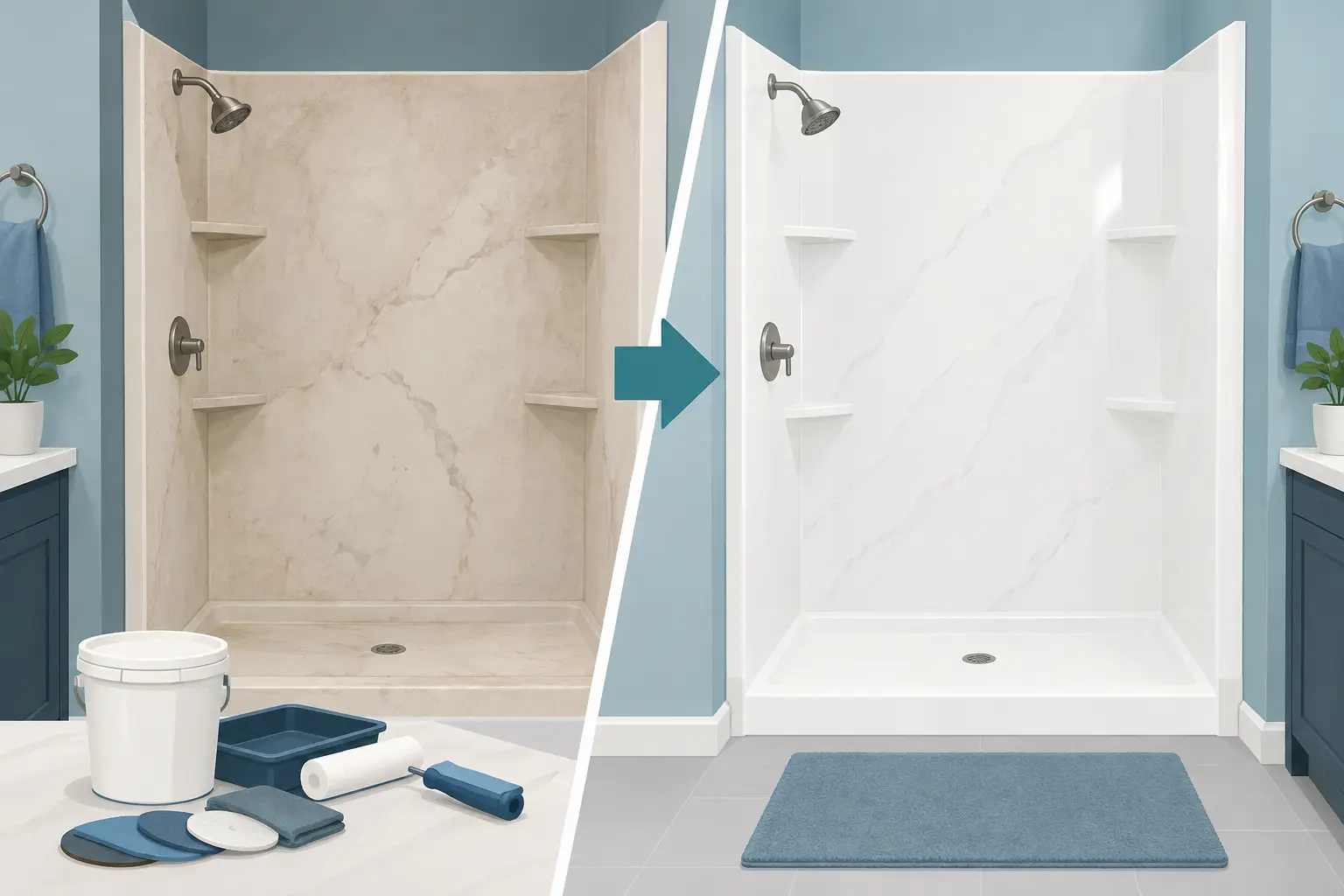
Refinishing adds a new, durable coating over the prepared surface. The result can dramatically improve color, shine, and overall appearance. It is also a practical way to change an outdated beige, almond, pink, or mottled shower to a clean modern white.
The key is proper preparation. A coating is only as good as the surface under it. That is why professional work matters.
When Refinishing Makes Sense
Refinishing is a strong option when your shower pan, walls, and seams are stable. Surface-level problems are exactly what resurfacing is designed to address.
You may be a good candidate if the shower has dull or yellowed areas, light scratches, mineral stains, minor chips, discoloration, or a finish that no longer cleans up well. It also makes sense when you want a color change but do not want to remove wall panels, plumbing fixtures, or tile around the shower.
For homeowners preparing to sell, refinishing can make a dated bathroom show much better without taking on a major renovation. For rental owners, it can restore a worn shower between tenants and help protect the value of the property.
Replacement may be the better call if the cultured marble is badly cracked, flexing, separating from the wall, or leaking behind the surround. Water damage, loose panels, and failed plumbing need to be fixed before any cosmetic work begins. A reputable refinishing contractor should tell you when resurfacing is not the right solution.
What Professional Shower Refinishing Involves
A proper cultured marble shower refinishing job is not a quick coat of paint. The surface must be cleaned, repaired, etched or sanded as needed, and carefully masked before a professional coating is applied.
First, the technician removes built-up soap residue, body oils, and contaminants. Even a thin layer of residue can cause adhesion problems later. Next comes repair work. Small chips, scratches, pits, or worn spots are filled and leveled so they do not show through the new finish.
The shower is then prepared to give the coating a sound surface to grip. Fixtures, drains, walls, and floors are protected with masking. After that, the new coating is sprayed on in controlled layers for an even, smooth finish.
Ventilation is part of the job. Professional refinishing materials need the right conditions to cure correctly, and the work area must be contained to protect the rest of your home. Once the coating has cured, the shower is inspected for coverage, texture, and overall appearance.
The finished surface should look clean, consistent, and glossy. It should not look like a brush-on patch job.
Why DIY Kits Often Fall Short
DIY refinishing kits are tempting because they appear inexpensive at the hardware store. But cultured marble shower walls are a demanding surface. They see heat, moisture, shampoo bottles, cleaners, and daily use. If the coating does not bond correctly, it can peel, bubble, chip, or discolor.
Most do-it-yourself kits also fall short on surface prep and spray quality. Rolling or brushing a coating can leave visible texture, lap marks, and uneven gloss. Repairs around corners, drain areas, shelves, and seams are especially difficult to hide.
There is also the issue of material safety. Refinishing products can have strong fumes and require careful handling, ventilation, and protective equipment. A homeowner can spend a weekend doing the work, only to face another repair when the finish fails early.
Professional refinishing costs more than a kit, but it is built around durability and appearance. For a shower that gets used every day, that difference matters.
Refinishing vs. Replacing Your Shower
Replacement gives you a completely new shower system. It may be necessary when there are leaks, structural problems, major cracks, or a layout that no longer works for your household. But replacement often means demolition, plumbing work, wall repair, tile work, and a longer project schedule.
Refinishing works with the shower you already have. There is no need to haul out heavy cultured marble panels or disturb surrounding finishes when the underlying shower is still sound. That can reduce the mess and keep your bathroom out of service for far less time.
Cost is another major difference. The final price depends on shower size, condition, repairs, access, color choice, and the amount of prep required. Still, professional resurfacing is generally a fraction of full replacement because it avoids the labor and materials involved in demolition and rebuild work.
The trade-off is simple. Refinishing renews a good existing fixture. It does not correct hidden water damage or turn a failing shower system into a sound one. An honest inspection helps you choose the right path.
How Long Does a Refinished Cultured Marble Shower Last?
A professionally refinished shower can provide years of service when it is properly prepared, applied, and maintained. Its lifespan depends on how the shower is used, how soon damage is addressed, and whether harsh cleaners are avoided.
The Tub Guy stands behind qualifying refinishing work with a five-year warranty. That warranty matters because homeowners should not have to wonder what happens if there is a problem after the job is complete. Good service means doing the work right and returning to correct an issue when needed.
No finish is indestructible. Dropping a heavy object, using abrasive pads, or allowing a leak to continue can damage even a quality coating. Treat a refinished shower like a finished surface, not raw construction material.
Care for a Refinished Shower
Maintenance is straightforward. Use a soft cloth or non-abrasive sponge with a mild, non-bleach cleaner. Rinse away soap residue after use when possible, and wipe down the surface to reduce mineral buildup.
Avoid scouring powders, steel wool, harsh acids, and abrasive scrub pads. These products can dull the finish and wear through the protective coating over time. Do not use suction-cup bath mats unless your refinishing professional confirms they are safe for the new surface. The suction can pull on the finish and create damage.
If you notice a chip or scratch, have it checked early. Small repairs are usually easier before moisture and cleaning chemicals can work into the damaged area.
A worn cultured marble shower does not automatically mean a demolition project is waiting. If the structure is sound, professional refinishing can give you the clean, updated bathroom look you want while keeping your budget and schedule under control. Start with a clear evaluation, choose a contractor who stands behind the work, and enjoy the bathroom you already have.