
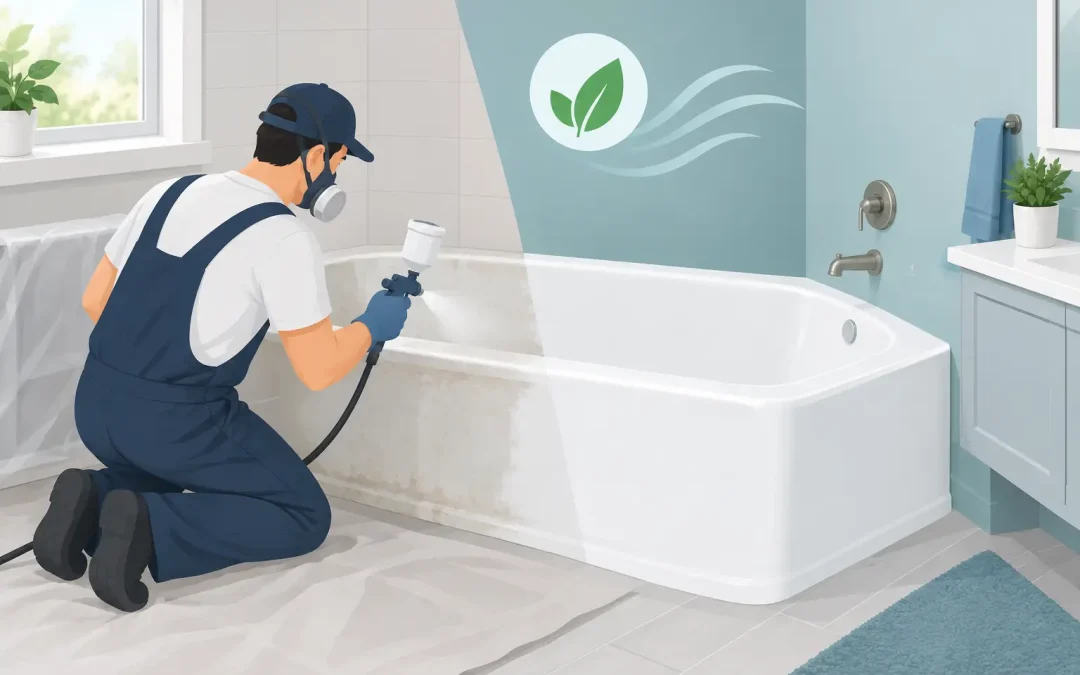
A stained tub can make the whole bathroom feel old, even when the room is clean. Low odor bathroom refinishing offers a practical way to restore that worn surface without tearing out the tub, hauling debris through the house, or taking on a full remodel.
For homeowners in Pinellas County and Saint Petersburg, that matters. Bathroom replacement can mean demolition, dust, plumbing surprises, and weeks of disruption. Professional refinishing can give a tub, shower, sink, or tile surround a clean new finish for far less cost and mess.
But “low odor” does not mean “no odor.” Refinishing materials still need to bond, cure, and create a durable surface. A good contractor manages ventilation, preparation, application, and cure time so the job is safer, cleaner, and easier on your household.
What Low Odor Bathroom Refinishing Means
Bathroom refinishing, also called reglazing or resurfacing, restores the visible surface of an existing fixture. Instead of removing a cast iron tub, fiberglass shower, porcelain sink, or dated tile, a refinisher repairs damage and applies a new coating system over the properly prepared surface.
Low odor bathroom refinishing refers to methods and products selected to reduce fumes during the work. It also depends on how the work area is contained and ventilated. Lower-odor materials can help, but workmanship still makes the biggest difference.
A contractor should clean away soap residue, body oils, mineral buildup, and failed old coatings before applying anything new. Chips, cracks, rust spots, and worn areas need repair. Skipping those steps may save time on the front end, but it can lead to peeling, rough texture, or early failure later.
The goal is simple: a smooth, even finish that looks clean and holds up to normal daily use.
Why Homeowners Choose Refinishing Over Replacement
Replacing a tub is rarely just about the tub. It may require opening walls, disconnecting plumbing, removing tile, repairing flooring, and repainting the room. If the existing fixture is heavy cast iron, removal can be especially difficult.
Refinishing keeps the fixture in place. That cuts down on demolition and avoids many of the surprise costs that show up once a renovation starts. It is a strong option when the tub or shower is structurally sound but looks stained, chipped, dull, outdated, or impossible to clean.
Color change is another reason homeowners choose resurfacing. A dated almond, pink, blue, or yellow fixture can often be refinished in a fresh white or another approved color. That can make the bathroom look brighter without replacing working fixtures.
Refinishing is not the right answer for every bathroom. A fixture with major structural damage, active leaks, severe movement, or water damage behind the walls may need repair or replacement first. An honest inspection should identify those issues before work begins.
Where Odor Comes From During Refinishing
Odor usually comes from cleaning agents, repair materials, primers, and topcoats. The exact amount depends on the surface, the coating system, the size of the project, and the condition of the bathroom.
A small sink refinish will not affect the home the same way a full tub, tile wall, and shower enclosure project can. Bathrooms without windows may also require more careful ventilation planning. Florida humidity can affect curing conditions, so the contractor needs to account for temperature and moisture as well.
The best approach is not to make unrealistic promises. The work should be handled with proper ventilation and professional equipment. You should know when the work will happen, when it is safe to reenter the area, and when the fixture can be used again.
If anyone in the home has respiratory sensitivities, strong chemical sensitivities, or health concerns, bring that up before scheduling. Your contractor can explain the process and help you plan for time away from the work area if needed.
How a Professional Controls Odor and Overspray
A professional refinishing job should be contained. That protects the rest of the bathroom and helps keep dust, coating particles, and odor from traveling through the house.
The crew should mask nearby surfaces carefully, including floors, walls, fixtures, cabinets, and hardware that will not be refinished. Ventilation equipment should direct air out of the work area. Doors may be sealed or managed to limit air movement into the rest of the home.
Preparation is just as important. The surface must be cleaned, repaired, sanded, and treated correctly. A coating does not last because it looks good on day one. It lasts because it has a clean, stable surface to grip.
At The Tub Guy, the focus is on doing the prep work right and standing behind the finished result. A five-year warranty provides added peace of mind when you are choosing refinishing instead of replacement.
How to Prepare Your Bathroom Before the Appointment
A little preparation makes the project go smoother. Remove personal items from the bathroom, including towels, bath mats, shower curtains, toiletries, decorative items, and anything stored near the tub or shower.
Clear the vanity top if the refinishing area is nearby. Make sure the contractor can reach the bathroom easily from the entry point. If you have pets, keep them away from the work zone and plan for the noise of ventilation equipment.
You should also tell the contractor about any concerns before the appointment. Point out chips, cracks, rust stains, soft spots, previous coatings, plumbing leaks, or areas where the surface has already started to peel. Those details help the crew plan the repair correctly.
Do not use harsh cleaners, waxes, or oily products right before the job unless your contractor tells you otherwise. Those residues can complicate preparation. If you are not sure what has been used on the surface, just say so. It is better to address it upfront.
What to Expect After Refinishing
The surface may look finished when the crew leaves, but curing still matters. Your contractor will give you specific instructions on when the tub, shower, sink, or tile can be used again. Follow that timeline. Using the fixture too soon can damage a new finish before it fully hardens.
Once the surface is ready for use, keep maintenance simple. Use non-abrasive cleaners and a soft sponge or cloth. Avoid scouring powders, steel wool, harsh scrub pads, and cleaners that are not recommended for refinished surfaces.
Do not leave bath mats with suction cups in the tub unless your refinisher approves them. The suction cups can trap moisture and pull on the coating over time. Fix dripping faucets quickly, too. Constant water exposure in one spot is hard on any finish.
A refinished surface should be cleaned regularly, but it does not need aggressive scrubbing. Gentle maintenance helps preserve the shine and keeps soap buildup from making the surface look dull.
Questions to Ask Before Hiring a Refinisher
Price matters, but it should not be the only question. A very low quote may leave out repairs, proper prep, containment, or warranty coverage. Ask what surfaces are included, what repairs are needed, what finish options are available, and how long the fixture must stay out of service.
Also ask how odor and ventilation will be handled in your specific bathroom. This is especially important in occupied homes, condos, and properties with limited airflow. A professional should give straight answers, not vague promises.
Warranty coverage is worth discussing as well. Ask what the warranty covers, how long it lasts, and what you should do if there is a problem. A company that is willing to return and make things right gives you more confidence in the work.
A Better Bathroom Without a Full Remodel
If your tub is solid but ugly, replacement is not your only choice. Low odor bathroom refinishing can restore the surfaces you already have, update the color, and help you avoid the cost and disruption of demolition.
The key is choosing a contractor who treats preparation, ventilation, repairs, and curing as part of the job, not as shortcuts to skip. Done right, refinishing gives you a bathroom that looks cleaner, feels renewed, and gets back to work without turning your home into a construction site.