
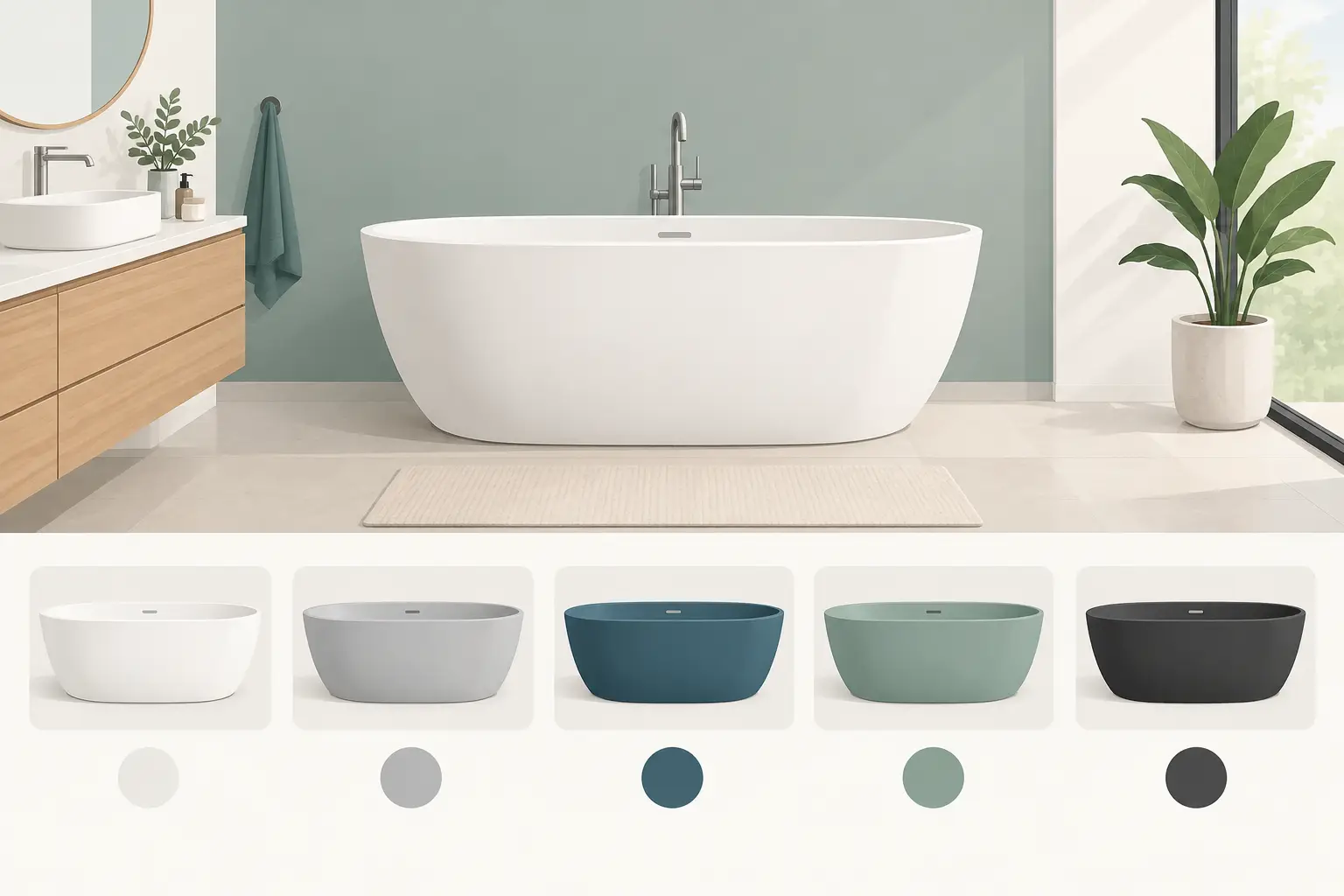
A tub can be clean and still make the whole bathroom look tired. Yellowed almond finishes, faded blue porcelain, stubborn rust stains, and chipped color around the drain all pull attention in the wrong direction. This bathtub color guide helps you choose a finish that looks right now and stays practical after years of real use.
For most Florida homeowners, the best tub color is not about chasing a trend. It is about making a small bathroom feel cleaner, brighter, and easier to maintain. A professional refinishing job can change the color of a worn tub without the demolition, plumbing work, and expense of replacement.
Start With the Bathroom You Already Have
Before choosing a color, look at the surfaces that are staying. Tile, vanity tops, flooring, wall paint, cabinets, and fixtures all matter. A bathtub takes up a large visual area, especially in a hall bath. The wrong shade can make clean tile look dingy or turn a simple update into a mismatched room.
Look at the room in daylight if possible. Florida sun can make cool whites look brighter and warm whites look creamier. At night, your light bulbs can shift the color again. Hold a sample near the tub, tile, and vanity instead of judging it against a phone screen.
If you plan to repaint or replace the vanity soon, choose the tub color first. A refinished tub is built to last. Paint and hardware are much easier to change later.
White Is Still the Safest Choice
Bright white remains the most requested bathtub finish for good reason. It looks clean, works with nearly any bathroom style, and makes a dated room feel newer fast. It also appeals to future buyers and renters because it is familiar and easy to match.
White works especially well with gray, blue, beige, green, and natural wood finishes. It gives older tile a cleaner backdrop without making the room feel overly styled. If your bathroom is small or lacks natural light, white can help it feel more open.
There is one trade-off. Pure white shows dark hair, makeup, and dirt more quickly than deeper colors. That does not mean it is hard to maintain. It simply means routine cleaning matters. Use a non-abrasive cleaner and avoid harsh scouring pads that can dull a refinished surface.
Warm White, Biscuit, and Bone for Softer Bathrooms
Not every bathroom needs a bright, cool white tub. Warm white, biscuit, bone, and almond-adjacent tones can work well when existing tile has cream, tan, peach, or warm beige undertones. These shades feel less stark and can make an older bathroom look intentional instead of dated.
The key is choosing a clean warm tone, not trying to match decades-old discoloration. Old almond tubs often look yellow because of age, staining, or worn finish. Refinishing gives you the chance to choose a fresher version of a warm neutral.
Warm colors are often forgiving with hard-water spots and light dust. But they can clash with crisp white toilet fixtures, cool gray tile, or chrome-heavy modern bathrooms. When in doubt, compare samples under the lighting you use most.
Gray Tubs Can Work, but Keep Them Light
Gray has been popular in bathroom design for years. A light, soft gray tub can pair well with white walls, gray tile, black fixtures, and modern vanities. It offers a clean, contemporary look without going as dark as charcoal.
Still, gray is not always the easy answer. A dark gray tub can make a compact bathroom feel smaller. It may show soap residue, mineral deposits, and scratches more than expected. The color can also date faster than a classic white or warm neutral.
Choose gray when it supports the room’s existing finishes. If your tile is cool-toned and your vanity has gray or black accents, it can look sharp. If the room has warm beige tile and brass fixtures, a warm white may be a better fit.
Bold Bathtub Colors Are a Commitment
Black, navy, deep green, and other statement colors can make a strong impression. In the right bathroom, they look dramatic and custom. They are usually best in larger spaces with good lighting, updated tile, and a design plan that carries the color through the room.
For most homes, bold tub colors come with more risk. Dark finishes reveal soap film and hard-water minerals. They can make a small bath feel closed in. They may also limit what you can do with walls, flooring, and fixtures later.
A color change should solve a problem, not create a new one. If you want personality without committing the entire tub to a dark shade, bring color in through paint, towels, artwork, or a vanity. Those are easier and less costly to update.
Match Undertones, Not Just the Main Color
Two colors can both be called white, gray, or beige and still look wrong together. That is because every finish has an undertone. White may lean cool blue, soft gray, warm cream, or neutral. Beige may lean yellow, pink, or gray.
This is where many bathroom updates go off track. A bright cool-white tub beside creamy tile can make the tile look yellow. A warm bone tub next to a cool white toilet can make the tub look dull. The contrast may be subtle at first, but it becomes obvious once the work is done.
You do not need to match every surface perfectly. In fact, an exact match is rarely possible in an older bathroom. Aim for colors that belong in the same family. Cool with cool, warm with warm, or a balanced neutral that bridges both.
A Practical Bathtub Color Guide for Real Life
Your household should influence the decision. A guest bath used once in a while has different needs than a primary bath shared by a busy family. Think about what you will see every day, not just what looks good in a photo.
A bright white finish is a reliable choice for resale, rental properties, and bathrooms that need a clean reset. A warm neutral makes sense when you are keeping beige tile or cream countertops. Light gray works best in a clearly modern room with cool finishes. Dark colors are best reserved for homeowners who want a specific look and understand the added upkeep.
Also consider the condition of surrounding surfaces. If your wall tile is badly stained, cracked, or dated in a color you cannot work around, changing only the tub may not give you the result you want. Refinishing tile, a sink, or a shower surround at the same time can create a more complete transformation without a full remodel.
Why Refinishing Is Different From Buying a New Tub
A replacement tub sounds simple until demolition begins. Removing an existing tub can involve tile damage, plumbing adjustments, flooring repairs, drywall work, hauling, and days or weeks of disruption. Costs add up quickly.
Professional bathtub refinishing changes the visible surface of the tub in place. The process starts with proper cleaning, repairs to chips or damage, surface preparation, and application of a durable new coating. Done correctly, it can restore a worn fixture and give you a new color without tearing apart the bathroom.
Preparation is what makes the finish last. A coating applied over soap residue, failed caulk, rust, or loose material will not perform the way it should. That is why a quick do-it-yourself kit is rarely equal to professional resurfacing. The final color matters, but the workmanship underneath it matters more.
Choose a Color You Will Not Have to Explain
The best bathtub color should make the room feel better the moment you walk in. It should not require a long explanation about why the tile looks different or why the fixtures do not match. In most bathrooms, a clean white or well-chosen warm neutral delivers the strongest return.
If you are unsure, keep it simple. Choose a durable finish that works with your existing bathroom, then use paint and accessories for the colors you may want to change later. A properly refinished tub should give you the satisfaction of a fresh bathroom without the mess and cost of starting over.