
Table of Contents
- How Long Does Bathtub Refinishing Last?
- Professional vs. DIY Bathtub Refinishing: Lifespan Differences
- What Determines How Long a Refinished Tub Lasts
- How to Clean a Reglazed Bathtub Without Damaging the Finish
- Pros and Cons of Bathtub Refinishing
- Bathtub Refinishing Price Estimate: What Affects Your Quote
- Repairing Chips vs. Full Refinishing: Which Do You Need?
- Frequently Asked Questions
Last Updated: October 1, 2026
How Long Does Bathtub Refinishing Last?
A professionally refinished bathtub typically lasts 10 to 15 years with proper care. A DIY kit often fails in 1 to 3 years. That gap comes down to surface prep, coating quality, and curing.
The coating matters, but the prep matters more.
The single biggest predictor of bathtub refinishing longevity is surface preparation, not the coating brand. A cheap coating on a perfectly prepped tub outlasts an expensive coating on a poorly prepped one.
Professional vs. DIY Bathtub Refinishing: Lifespan Differences
Professional refinishing lasts 10 to 15 years. DIY kits last 1 to 3 years. The difference is not the paint itself. It’s everything that happens before the paint goes on.
Why DIY Kits Fail Early
Most DIY kits skip the steps that make a finish bond. A common mistake is painting over soap scum, hard water film, or old caulk. The new coating sticks to the dirt, not the tub.
Here’s what typically goes wrong:
- No acid etching, so the surface stays slick and the coating can’t grip
- No bonding agent, so the first layer never truly adheres
- Thin coats applied too fast, trapping moisture underneath
- No proper curing time before the first shower
What Professional Application Changes
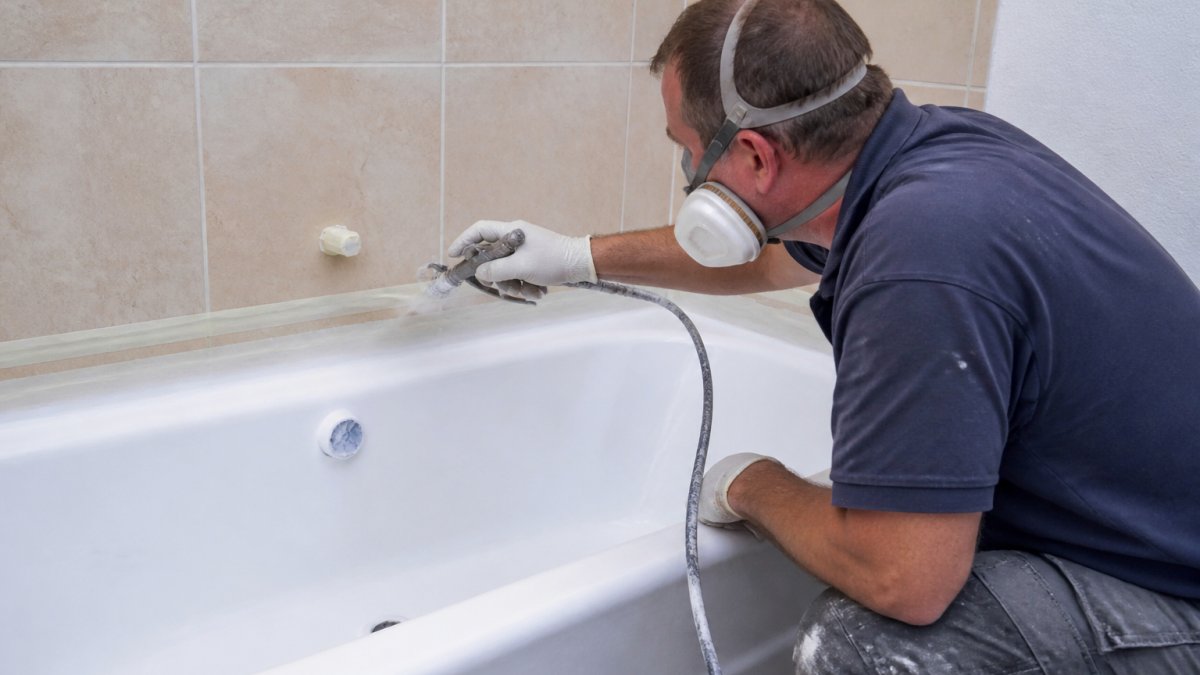
A professional job treats surface preparation as the main event, not a warm-up. The process usually includes:
- Deep cleaning to strip soap scum, oils, and mineral film
- Repairing chips, cracks, and gouges before coating
- Acid etching or sanding to open the surface for adhesion
- A bonding agent or primer coat for a chemical grip
- Multiple thin topcoats, each with proper cure time between layers
- A final cure window before the tub can get wet
What Determines How Long a Refinished Tub Lasts
Four factors decide whether your finish lasts 3 years or 15: surface preparation, coating type, curing time, and moisture resistance. Get all four right and the finish stays bonded. Miss one and it fails early.
Surface Preparation and Adhesion
Adhesion is everything. If the coating can’t bond to the tub, nothing else matters. Porcelain, cast iron, fiberglass, and acrylic each need a different prep approach.
- Porcelain and cast iron: acid etching opens the glossy glaze so the coating can bite
- Fiberglass and acrylic: light sanding creates a profile the coating can grip
- All surfaces: every trace of old caulk, soap film, and hard water must come off first
Coating Type, Curing Time, and Moisture Resistance
Not all coatings are equal. The three you’ll see most are epoxy, polyurethane, and acrylic.
| Coating Type | Typical Lifespan | Best For | Key Weakness |
|---|---|---|---|
| Epoxy | 5-10 years | High-traffic tubs | Can yellow over time |
| Polyurethane | 10-15 years | Long-term durability | Strong fumes during cure |
| Acrylic | 1-3 years | Quick touch-ups | Thin, wears fast |
Using a refinished tub before the full cure window is the most common cause of early failure. Even if the surface feels dry, the coating underneath is still setting. Wait the full 24 to 72 hours, or you’ll be refinishing again within a year.
How to Clean a Reglazed Bathtub Without Damaging the Finish
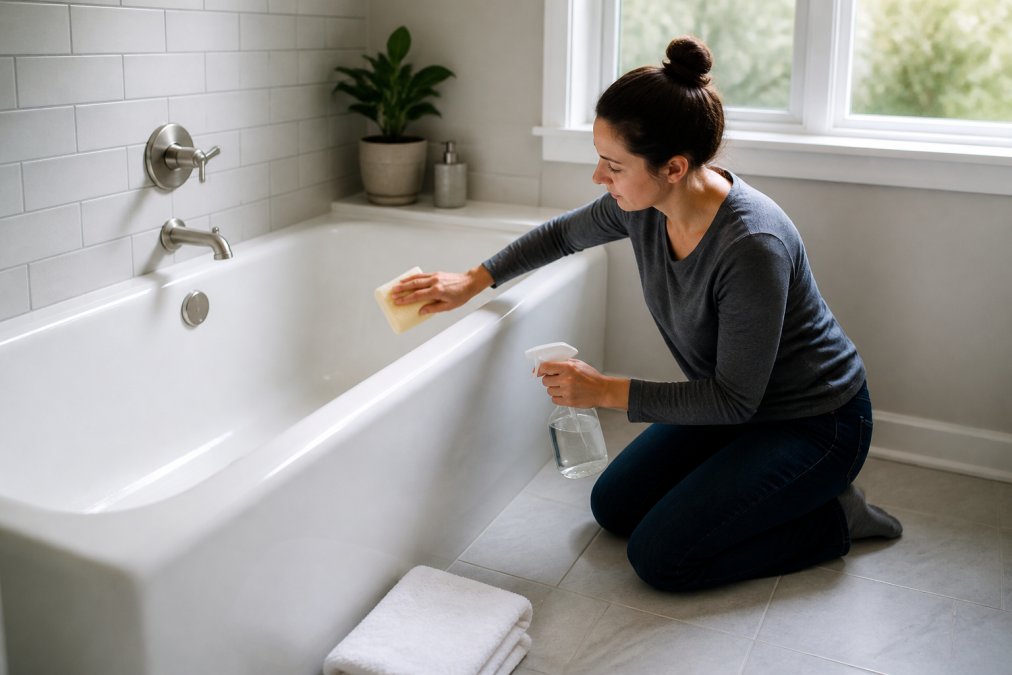
Clean a reglazed bathtub with mild soap, warm water, and a soft sponge. Skip abrasive cleaners and scrub pads. The finish is durable, but it’s not indestructible.
The pH Rule That Explains Everything
Refinished coatings, epoxy, polyurethane, and acrylic, are formulated to sit in a narrow pH band. Think of the finish as a plastic skin. Strong acids and strong bases both attack that skin, just in different ways.
- pH 0-3 (strong acids): descaling agents, lime and rust removers, and toilet bowl cleaners. These etch the surface and dull the gloss.
- pH 4-6 (mild acids): vinegar, lemon juice, and most everyday bathroom sprays. Occasional use is fine; daily use slowly dulls the shine.
- pH 7 (neutral): the safe zone. Mild dish soap, castile soap, and pH-neutral bathroom cleaners live here.
- pH 8-10 (mild bases): most liquid hand soaps and gentle all-purpose cleaners. Safe with rinsing.
- pH 11-14 (strong bases): bleach, ammonia, oven cleaner, and drain opener. These soften the coating and cause it to lift or yellow.
Safe vs. Damaging Products: A Specific List
Generic warnings don’t help when you’re standing in the cleaning aisle. Here’s what to reach for and what to leave on the shelf.
Safe for regular use:
- Dawn, Palmolive, and other mild dish soaps
- Dr. Bronner’s castile soap
- Seventh Generation and other pH-neutral bathroom cleaners
- Soft microfiber cloths and natural sponges
- A 50/50 water-and-white-vinegar mix for occasional hard water spots (rinse thoroughly)
Use with caution, occasional only:
- Scrubbing Bubbles and similar foaming bathroom sprays
- Clorox Bathroom Cleaner (diluted, rinsed immediately)
- Bar Keepers Friend (only the liquid, never the powder) Consistent adherence to these mild cleaning habits preserves the finish for years, though eventually the underlying structure may require a complete assessment of available bathroom remodeling options.
Never use on a refinished tub:
- Comet, Ajax, and other scouring powders
- Mr. Clean Magic Erasers (they’re melamine abrasives, not sponges) (pubmed.ncbi.nlm.nih.gov)
- Lysol Toilet Bowl Cleaner, The Works, and other strong-acid descalers
- CLR and Lime-A-Way
- Drano and Liquid-Plumr left to sit on the surface
- Steel wool, Scotch-Brite heavy-duty pads, and wire brushes
Magic Erasers are the most common accidental killer of refinished tubs. They feel soft, but melamine foam is a fine abrasive that sands the gloss off over time. If you’ve been using them weekly, you’ve likely already dulled the finish.
Tools Matter as Much as Chemicals
A safe cleaner on the wrong tool still scratches. Stick to soft sponges, microfiber cloths, and a plastic squeegee. Avoid anything labeled ‘heavy duty,’ ‘scrub,’ or ‘abrasive.’ If a tool can scratch a nonstick pan, it can scratch your tub.
A Simple Maintenance Schedule
A light routine keeps the finish strong. Here’s what works:
- Daily: rinse and wipe after use
- Weekly: clean with mild soap and a soft sponge
- Monthly: check edges, drains, and seams for early peeling
- Yearly: inspect the whole surface for wear, chips, or dull spots
Pros and Cons of Bathtub Refinishing
Refinishing is the cheaper, faster path to a fresh-looking tub. Replacement is the longer-term option. Weigh both before you decide.
Pros of bathtub refinishing:
- Costs far less than a full replacement or remodel
- Done in a day or two, not weeks
- Brings dingy, discolored fixtures back to life
- Lets you change the color of the tub
- Works on porcelain, fiberglass, acrylic, and cast iron
Cons of bathtub refinishing:
- Not permanent; expect 10 to 15 years with pro work
- Needs gentle cleaning to protect the finish
- DIY kits often fail within a few years
- Deep structural damage may call for replacement instead
Ask any refinisher what surface prep they do before coating. If they can’t explain their etching, bonding, and curing steps, walk away. That answer tells you whether the finish will last 3 years or 15.
Bathtub Refinishing Price Estimate: What Affects Your Quote
A bathtub refinishing price estimate depends on tub size, surface condition, coating type, and travel. There’s no single flat rate, so get a quote based on your actual tub.
What drives the number up or down:
- Tub type: cast iron and porcelain take more prep than acrylic
- Condition: chips, cracks, and heavy staining add repair time
- Coating: polyurethane and premium epoxy cost more than basic acrylic
- Scope: a tub alone costs less than a tub, tile, and shower combo
- Access: tight bathrooms slow the work and raise labor
Property managers with multiple units who need cost-effective, large-scale refinishing. The Tub Guy handles multi-unit jobs, not just single homes.
Repairing Chips vs. Full Refinishing: Which Do You Need?
Small chips and cracks call for a spot repair. Widespread peeling, deep stains, or a dull, worn surface call for full refinishing. The size and spread of the damage decide it.
The Decision Framework
Ask three questions in order. The first ‘yes’ tells you what to do.
What a Spot Repair Actually Involves
A proper chip repair is not a tube of touch-up paint. It’s a small version of the refinishing process:
- Clean and degrease the chip so no soap film remains
- Sand or etch the exposed area to create a mechanical grip
- Fill the chip with a color-matched epoxy or porcelain repair compound
- Wet-sand the fill flush with the surrounding surface
- Polish to blend the repair into the existing gloss
When a Spot Repair Is the Wrong Call
A patch only works if the surrounding finish is healthy. Skip the repair and go straight to full refinishing if you see:
- Peeling or delamination spreading from the chip
- Rust stains bleeding through the surface
- Multiple chips in different areas (a sign the whole coating is brittle)
- A dull, chalky, or yellowed finish around the damage
- Soft or flexing spots that suggest substrate damage
The Cost Trade-Off
If you’re not sure whether a chip is cosmetic or structural, take a photo with a coin next to it for scale and send it to a refinisher. Most will tell you over the phone whether a spot repair will hold, and that one call can save you hundreds.
The Tub Guy’s owner, Randy Baxter, is a former plumbing company owner. That background matters when damage goes deeper than the surface. If a tub needs more than a cosmetic fix, you want someone who can tell the difference.
Frequently Asked Questions
Is refinishing a bathtub worth it?
For most homeowners, yes. Refinishing costs hundreds or thousands less than a full tub replacement, and a professional application can last 10 to 15 years with proper care. It also lets you change the color of your fixture without tearing out tile or plumbing. If your tub is structurally sound with no flexing or deep cracks, refinishing is the better value. If the tub flexes underfoot or has major structural damage, replacement may be the smarter long-term call.
Does bathtub refinishing peel easily?
A properly applied finish does not peel easily. Peeling usually traces back to poor surface preparation, inadequate curing time, or harsh chemical cleaners. Skipping acid etching or the bonding agent, or applying the topcoat in a humid room, weakens surface adhesion and leads to delamination. Once cured, the finish holds up well against normal use. Avoid abrasive cleaners and suction-cup bath mats, and the coating should stay bonded for years.
Can you refinish a bathtub more than once?
Yes, a tub can be refinished more than once, but each round requires more surface preparation. The old coating must be sanded or stripped so the new primer and topcoat can bond properly. A tub that has been refinished two or three times may eventually need full replacement if the surface becomes uneven or the substrate weakens. A professional can assess whether your tub still has enough surface integrity for another refinishing cycle.
How often should a bathtub be resurfaced?
With professional application and proper maintenance, most tubs need resurfacing every 10 to 15 years. DIY kits often fail within a year or two, so they need redoing far sooner. Signs it is time include peeling, dull spots, visible wear on the tub floor, and discoloration that cleaning will not remove. Following a gentle cleaning routine and avoiding abrasive products helps you get the full lifespan out of each refinishing job.
A refinished tub only lasts as long as the prep and care behind it. DIY kits fade in a year or two, while a professional job with proper etching, bonding, and curing holds up for a decade or more. The Tub Guy brings over 15 years of experience, modern low-odor materials, a 5-year warranty on durable coatings, and free estimates for single tubs or multi-unit properties. Get started with The Tub Guy and bring your bathroom back to life with a finish built to last.