
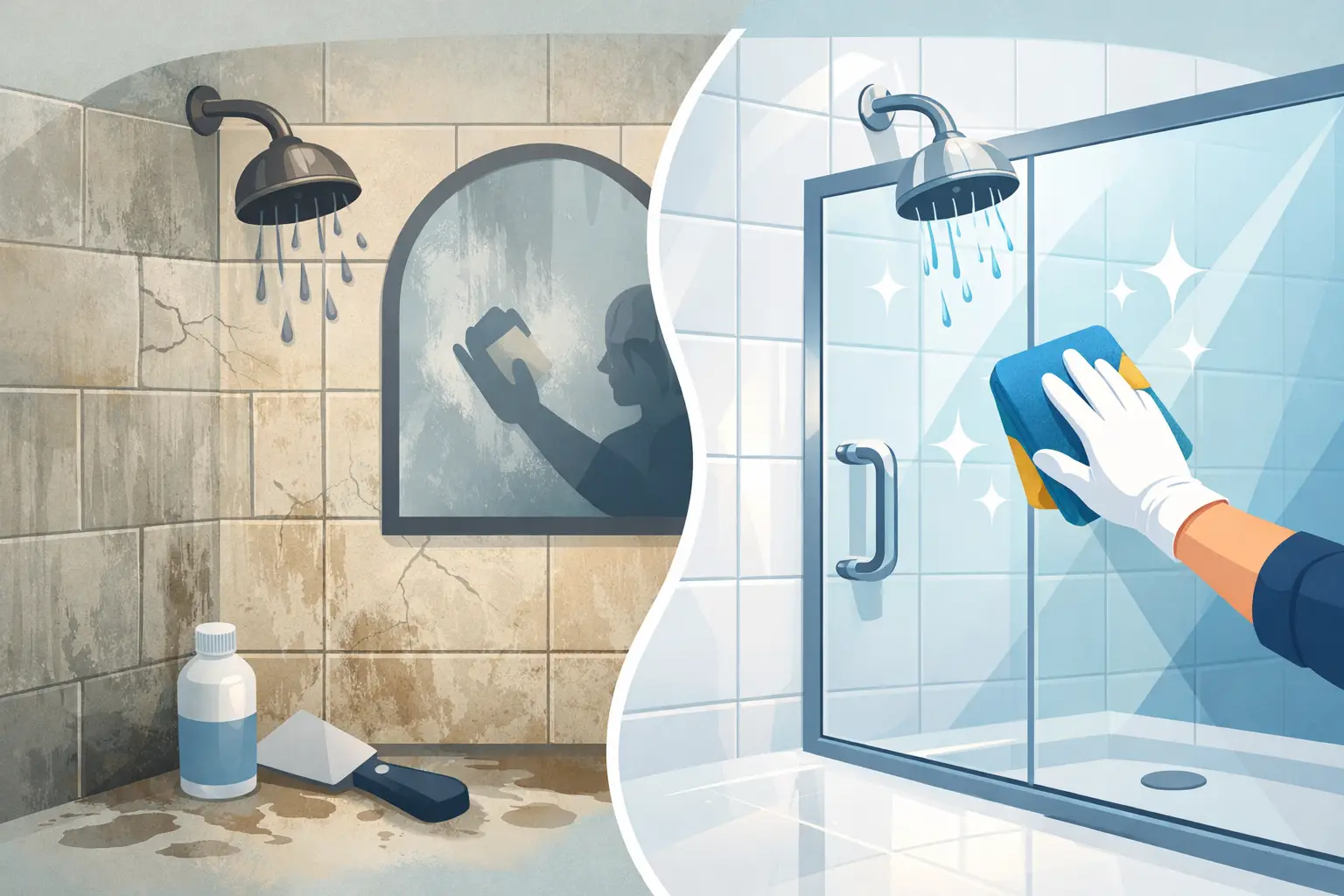
A shower can look permanently dirty even after you scrub it. Stains settle into worn surfaces. Old colors make the whole bathroom feel dated. Chips, dull spots, and rough texture collect soap scum faster than they should. So, does shower reglazing really work? Yes, when the shower itself is still sound and the work is done with the right preparation, materials, and curing time.
Reglazing is not a quick coat of paint. Done correctly, it is a surface restoration process that gives a worn shower a clean, smooth, like-new finish without tearing out walls, tile, or plumbing. For many Florida homeowners, that means a major visual change without the cost, dust, and disruption of a full remodel.
What Shower Reglazing Actually Does
Shower reglazing, also called refinishing or resurfacing, restores the visible finish of a shower. A technician repairs minor chips and surface damage, deep-cleans the area, prepares the existing material, applies a bonding system, and sprays on a durable coating. The finished surface is designed to look uniform, glossy, and easy to clean.
It can work on many shower surfaces, including fiberglass, acrylic, cultured marble, porcelain, ceramic tile, and older shower pans. It is especially useful when the shower is structurally solid but looks tired, stained, or stuck in another decade.
A color change is one of the biggest reasons homeowners choose refinishing. A dated almond, pink, blue, or worn white shower can often be refreshed to a crisp modern white without demolition. That makes reglazing a practical option before listing a home, updating a rental, or improving a bathroom you are tired of avoiding.
Does Shower Reglazing Really Work for Every Problem?
No. Reglazing fixes the finish. It does not fix every issue behind the finish.
If a shower has an active plumbing leak, loose tile, major cracks, water damage behind the walls, a soft floor, or severe corrosion, those problems need repair first. Coating over a failing surface may make it look better for a short time, but it will not stop moisture from causing more damage.
The same is true for failed caulk and grout. Water should not be getting behind the shower surround or tile. A qualified refinishing professional will look for these issues before starting and explain whether restoration makes sense.
That honest assessment matters. The best refinishing job begins with knowing when not to refinish.
Good candidates for reglazing
Reglazing is usually a strong choice when the shower is ugly, dull, stained, lightly chipped, discolored, or hard to keep clean, but still stable and functional. It also makes sense when you want a fresh bathroom appearance without removing a usable fixture.
A fiberglass shower with a faded finish, a cultured marble shower with stubborn discoloration, or ceramic shower tile in an outdated color can often be restored for far less than replacement. The plumbing stays in place. The walls stay intact. The project is usually much faster than a renovation.
When replacement may be smarter
Replacement may be the better investment if water has damaged the structure around the shower, the base flexes badly, the surface is badly cracked through, or a homeowner wants to change the layout. If you need a larger shower, a walk-in entry, new plumbing locations, or accessibility changes, refinishing will not accomplish that.
Reglazing is a restoration solution, not a structural remodel. Knowing the difference keeps expectations realistic.
Why Professional Preparation Makes the Difference
Most complaints about reglazing come down to poor preparation. A shower coating can peel, bubble, or wear early if the old surface was not cleaned, repaired, etched, and bonded correctly.
Bathrooms are tough environments. They deal with heat, moisture, body oils, shampoo residue, hard-water minerals, and daily use. A professional has to remove contaminants that can interfere with adhesion. Chips and damaged spots need to be repaired and leveled. The surface must be properly prepared before the finish is applied.
Ventilation and masking matter, too. A skilled technician protects nearby walls, fixtures, floors, and hardware, then applies the coating evenly. The goal is a finish that looks smooth from the doorway and feels smooth when you clean it.
DIY kits can seem tempting because the upfront price is low. The trade-off is in the prep work, application control, odor management, and durability. A kit may be fine for a short-term cosmetic touch-up, but it rarely matches a professionally sprayed finish. If the coating fails, removing it before a proper refinish can add time and cost.
How Long Does a Reglazed Shower Last?
A professionally reglazed shower can last for years with normal care. Its lifespan depends on the original surface, the quality of the preparation, how well the coating is applied, and how the shower is maintained after the job.
A reglazed shower is not indestructible. It is a restored finish, so it should be treated with reasonable care. Avoid abrasive powders, harsh acids, bleach-heavy cleaners, and stiff scrub pads. These products can dull or damage the coating over time.
Use a mild, non-abrasive cleaner and a soft sponge or cloth. Rinse away soap residue. Keep the shower ventilated after use, especially in humid Florida bathrooms. Repair worn caulk promptly so water stays where it belongs.
Do not use suction-cup bath mats on a reglazed shower floor unless your refinishing professional says they are safe. The suction can pull on the finish. A non-suction mat is the safer choice when extra traction is needed.
The Real Value Compared With Replacement
Full shower replacement often turns into a bigger project than homeowners expect. Removing an old unit or tile can expose water damage, require plumbing work, and create a chain of repairs. Labor, materials, demolition, disposal, and downtime add up fast.
Reglazing avoids much of that disruption when the existing shower is in good condition. Instead of rebuilding the bathroom around a new fixture, you restore the one you already have. The result is a cleaner appearance, a fresh color, and a bathroom that feels cared for again.
That does not mean refinishing is always the lowest-cost choice in every situation. If the shower is failing behind the surface, spending money on a finish will not solve the real issue. But for a sound shower with cosmetic damage, it is often one of the best value improvements available.
What the Process Feels Like for a Homeowner
A professional reglazing project is generally far less disruptive than demolition. The shower is prepared, repaired, and refinished in place. There is no need to haul out a heavy old unit or open up the surrounding bathroom just to improve the finish.
You will need to keep the shower dry and unused during the recommended cure period. That wait is part of getting a durable result. Rushing back into daily use too soon can compromise a finish that was meant to last.
Before work begins, clear personal items from the bathroom and make sure the technician can access the shower. Afterward, follow the care instructions closely. Those few steps protect the investment and help the new surface keep its shine.
Questions to Ask Before Hiring a Reglazing Company
The right contractor should be clear about what they are restoring, what repairs are included, and what the finished surface can realistically do. Ask whether they inspect for cracks, leaks, loose material, and other conditions that could affect the result.
Also ask about surface preparation, cure time, cleaning instructions, and warranty coverage. A company that stands behind its work should be willing to explain how to care for the shower and what happens if there is a workmanship issue.
At The Tub Guy, that accountability is backed by a five-year warranty and a commitment to return and make things right if there is a problem. That kind of coverage gives homeowners more confidence than a quick cosmetic patch.
A Better-Looking Shower Without Tearing Up the Bathroom
A worn shower does not always need to be replaced. When the base and surrounding structure are sound, professional reglazing can deliver the clean, updated look you want without turning your bathroom into a construction zone.
Start with an honest inspection, not a guess. If your shower is a good candidate, refinishing can be the practical middle ground between living with an eyesore and paying for a full remodel.