
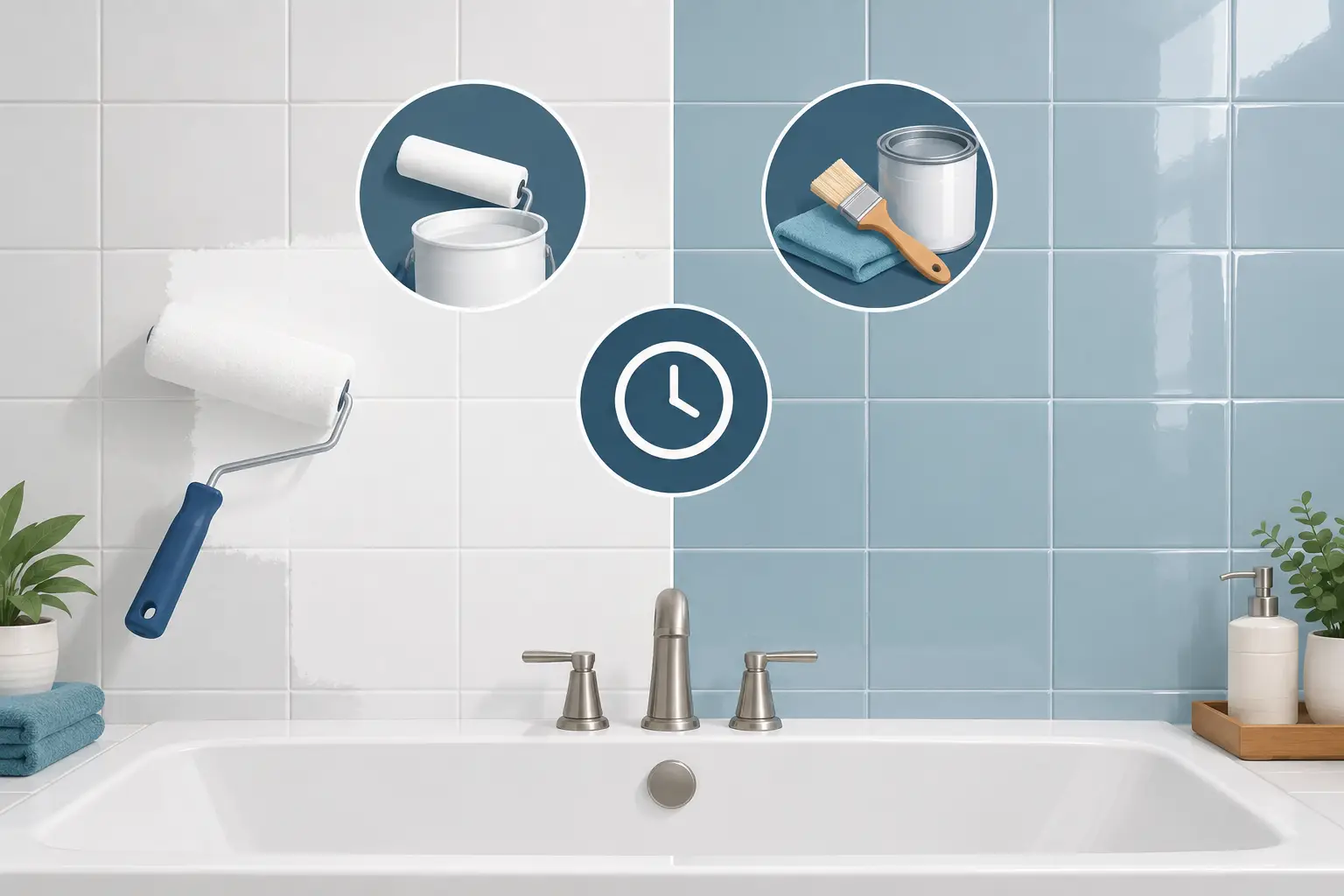
A tired tile surround can make the whole bathroom feel dirty, even after you scrub it. When replacement is not in the budget or you do not want demolition, tile paint versus refinishing is the decision most homeowners face. Both can change the color and improve the look. They are not the same level of repair.
Tile paint is usually a homeowner-applied coating from a can or kit. Refinishing is a professional surface restoration process that involves repair, deep prep, bonding products, and a durable sprayed finish. The right choice depends on the condition of the tile, how much water the area gets, and how long you need the result to hold up.
What Tile Paint Can Do
Tile paint is the lower-cost, do-it-yourself option. It can cover dated colors, minor stains, and uneven-looking tile in low-use areas. A backsplash, powder room wall, or decorative tile section may be a reasonable place for it.
The appeal is obvious. You can buy a kit, choose a fresh color, and avoid calling a contractor. For a quick update before guests arrive or while planning a larger remodel later, paint can make a visible difference.
The problem is that bathroom tile is not a normal painted wall. Shower walls deal with steam, direct water, soap residue, body oils, cleaning products, and constant temperature changes. Those conditions put stress on a paint coating. If the surface was not cleaned and sanded correctly, paint can peel, chip, or bubble sooner than expected.
Paint also does not repair the surface. It will not fix loose tile, failed grout, deep chips, rust stains, or cracks. It can hide them for a while, but the underlying issue is still there.
What Professional Tile Refinishing Does Differently
Professional refinishing is built for a longer-lasting transformation. The goal is not simply to put color over old tile. It is to restore a sound surface so it looks clean, smooth, and updated without tearing out the bathroom.
A proper job starts with inspection. Damaged areas need to be addressed before coating begins. The tile, grout, and surrounding surfaces are cleaned and prepared to remove contaminants that can interfere with adhesion. The room is masked carefully to protect fixtures, walls, floors, and hardware.
Then the refinisher applies professional bonding materials and a specialized topcoat. The finish is sprayed, not brushed or rolled on. That matters because spraying creates a more even, factory-style appearance with fewer brush marks and less texture.
Refinishing can also change the color of tile. That is a major advantage in older Florida homes where avocado green, pink, powder blue, or worn beige tile makes a bathroom look stuck in another decade. A bright, clean white or another updated color can change the room without the cost, dust, and disruption of a full tile replacement.
Tile Paint Versus Refinishing in a Shower
A shower is where the difference becomes clear. Tile paint can work in a dry or lightly used area if the prep is excellent and the homeowner follows the product instructions exactly. But a daily-use shower is one of the hardest places for a DIY coating to survive.
Water finds weak spots. It works its way into small chips, poorly sealed edges, and areas around fixtures. Once adhesion fails, peeling can spread. Harsh scrubbing to remove soap scum can make the issue worse.
Professional refinishing is generally the better choice for a shower surround that is structurally sound but stained, dull, chipped, or outdated. The coating system is designed for wet bathroom surfaces, and the technician has the tools and prep process to apply it correctly.
That does not mean refinished tile needs no care. No coating is indestructible. It needs proper cleaning and reasonable use. But with professional workmanship and the right maintenance, refinishing is made for homeowners who want a real upgrade, not a short-term cover-up.
Cost: The Upfront Number Is Not the Whole Story
Tile paint costs less at the store. That is true. The kit may look like an easy way to save money, especially when you are staring at a dated shower every morning.
But the real cost includes preparation supplies, cleaners, sanding materials, tape, ventilation equipment, possible repair products, and your time. It also includes the risk of doing the work twice if the coating fails. Stripping peeling paint from textured grout lines is not a fun weekend project.
Refinishing costs more upfront because it is a skilled service. You are paying for surface repair, professional materials, equipment, masking, application, and accountability. Still, it is usually far less expensive than demolition and replacement. It also avoids the added costs that often show up once walls are opened, such as water damage, plumbing changes, backer board, and new tile installation.
For a homeowner planning to stay in the home, a durable finish often provides better value than the cheapest possible first step. For a rental property, the calculation may depend on turnover timing, bathroom condition, and whether a quick cosmetic refresh is all that is needed.
Durability Depends on Prep and Use
Painted tile may last a limited time, particularly in dry areas with gentle use. Its life can be much shorter in a busy shower or bathroom used by kids, guests, or tenants. The biggest weak points are often grout lines, corners, edges, and areas around soap dishes and faucets.
A professionally refinished surface can provide years of service when the tile is stable and the finish is maintained correctly. The exact lifespan depends on the condition of the original surface, moisture exposure, cleaning habits, and whether previous coatings are already failing.
Be cautious with promises that sound too simple. No one can honestly guarantee that every surface is a candidate for coating. Loose tile, active leaks, major structural damage, or widespread water intrusion should be repaired before refinishing. A reputable company will tell you when refinishing makes sense and when replacement is the smarter move.
Maintenance Makes a Real Difference
Whether you paint or refinish, the bathroom should be cleaned with non-abrasive products. Avoid harsh scouring powders, steel wool, rough scrub pads, and aggressive chemical cleaners. They can dull or scratch a coated surface.
Use a soft sponge or microfiber cloth. Rinse away soap residue. Keep bath mats, shampoo bottles, and wet items from sitting against finished surfaces for long periods. Good ventilation also helps reduce moisture and mildew buildup.
If the shower has a persistent leak or failing caulk, fix it. Refinishing cannot solve a plumbing problem, and paint certainly cannot. Water damage behind the tile needs attention before cosmetic work begins.
When Tile Paint Makes Sense
Tile paint can be a practical fit when the area is dry, the budget is very tight, and you understand that the result may be temporary. It may also work for a low-traffic powder room or a decorative tile wall where there is little risk of standing water and constant cleaning.
It is less appealing when you need a smooth, durable finish in a main bathroom shower. It is also a poor choice when there are chips, cracks, loose tile, stained grout, or visible wear that needs more than a coat of color.
When Refinishing Is the Better Investment
Refinishing is the stronger option when the tile is still solid but looks worn out. It is especially useful for shower walls, tub surrounds, bathroom wall tile, sinks, and other surfaces where replacement would create a bigger project than you want.
It gives you a more complete result. The surface can be repaired, refreshed, and recolored in one process. You get the visual impact of an updated bathroom without weeks of construction activity.
For homeowners in Pinellas County and Saint Petersburg, that matters. A bathroom renovation can disrupt daily life fast. Professional resurfacing is a practical middle ground between living with an ugly surface and tearing the room apart.
Ask These Questions Before You Choose
Before buying a paint kit or scheduling a refinishing estimate, look closely at the condition of the bathroom. Is the tile secure? Are there leaks? Is grout missing? Has someone painted or coated the surface before? Does the area get direct water every day?
Then think about your goal. Are you trying to get through the next year, prepare a property for sale, or enjoy a cleaner-looking bathroom for years? The answer should guide the decision more than the price on a box.
If you want a finish that is built for daily bathroom use and backed by service accountability, ask about the preparation process, repair work, aftercare instructions, and warranty. The Tub Guy stands behind qualified refinishing work with a five-year warranty and a commitment to make the finished result right. A clear estimate and an honest inspection can save you from paying twice for the same bathroom.