
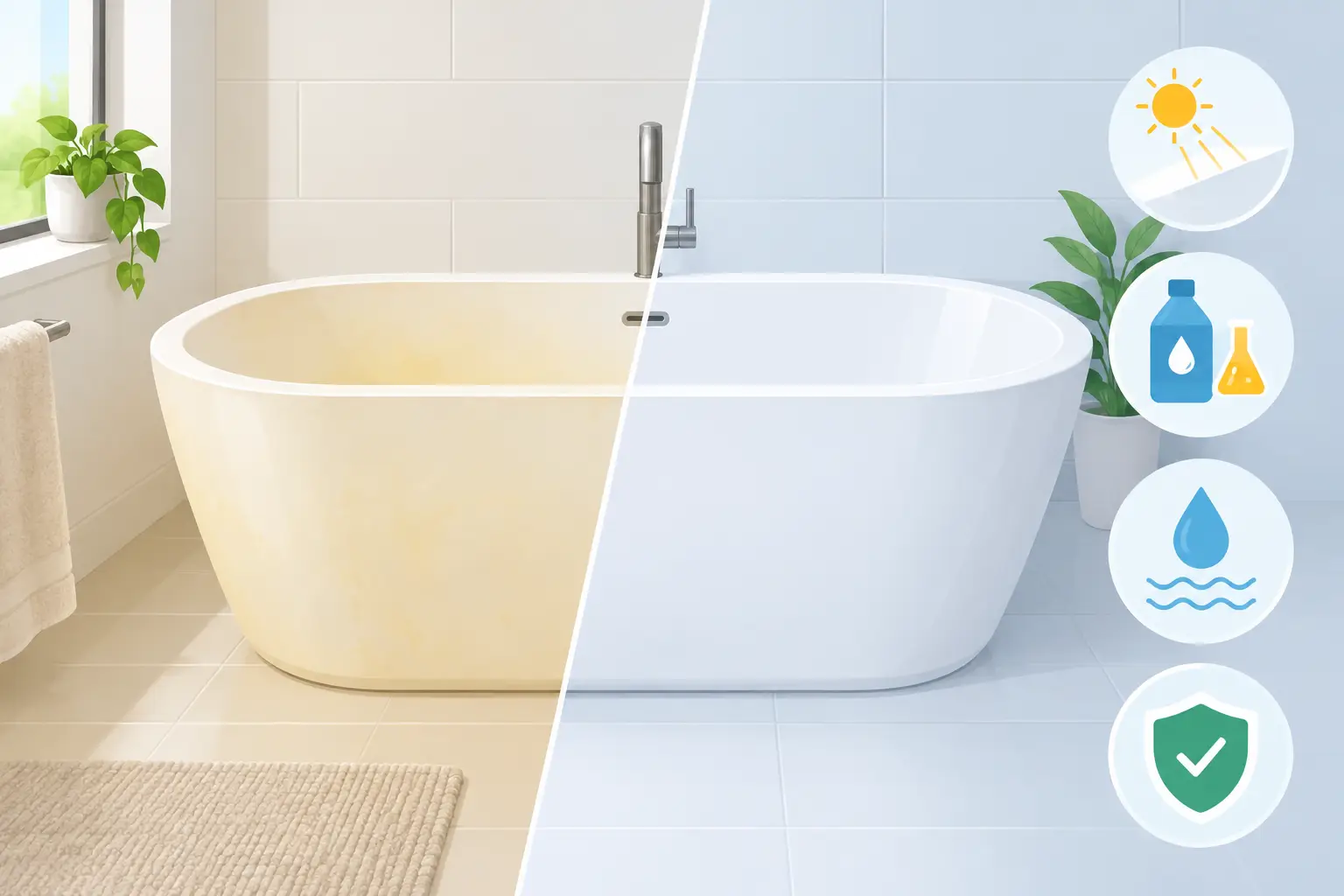
A bright white tub can make the whole bathroom feel clean. When that finish starts looking cream-colored or yellow, homeowners often assume the refinishing has failed. That is not always the case. Can tub coatings yellow? Yes, they can, but the cause matters. Some yellowing comes from cleaning habits, water conditions, or bathroom products. Other times, it points to a coating that needs professional attention.
A properly refinished tub should keep its color and gloss for years with reasonable care. The goal is to find the source early, protect the finish, and avoid turning a simple maintenance issue into a bigger repair.
Why can tub coatings yellow?
Tub refinishing creates a new protective surface over an existing bathtub. That surface is designed to look smooth, clean, and consistent. Like any finished surface, it can discolor when it is exposed to harsh chemicals, standing water, oils, dyes, or poor ventilation over time.
Not every yellow cast is actually in the coating itself. Soap film, body oils, hard-water minerals, and residue from bath mats can sit on top of the finish and change its appearance. In these cases, proper cleaning may bring the white color back.
True yellowing is different. It happens when the finish changes below the surface or loses its original clarity. Age, direct sunlight, chemical damage, and a low-quality or improperly applied coating can all contribute. The good news is that a professional can usually tell the difference between surface buildup and a finish problem without guessing.
Common reasons a refinished tub turns yellow
Harsh cleaners and chemical residue
Bleach, abrasive powders, strong acids, and heavy-duty bathroom cleaners can damage a refinished tub. They may dull the gloss first. With repeated use, they can also stain or discolor the coating.
This is a common problem because many homeowners clean a refinished tub the same way they cleaned old porcelain or fiberglass. A reglazed surface needs gentler products. If the cleaner feels gritty, contains bleach, or is labeled for tough rust removal, keep it away from the tub unless a refinishing professional specifically approves it.
Hair dye, colored bath products, self-tanner, and certain drain cleaners can also leave stains behind. Do not let these products sit in the basin. Rinse the tub well after use.
Hard water and mineral buildup
Florida water can be tough on bathroom surfaces. Hard water leaves calcium, lime, and iron deposits that build up slowly. At first, the tub may look dull or feel rough. As the residue gets thicker, white surfaces can take on a yellow, tan, or orange tint.
This is not always permanent coating discoloration. Mineral deposits often respond to a mild, non-abrasive cleaner that is safe for refinished surfaces. The key is regular cleaning before the buildup hardens.
If you see orange staining around the drain, overflow, or faucet area, minerals or rust in the water may be the bigger issue. Cleaning the tub will help, but the stain may return until the water source or plumbing issue is addressed.
Standing water and wet bath mats
Suction-cup bath mats are one of the fastest ways to damage a refinished tub. Water gets trapped under the mat, and the suction cups create pressure points on the coating. Over time, this can lead to discoloration, peeling, or dull spots.
Rubber mats and non-slip decals can cause the same trouble. If safety is a concern, ask about refinishing-safe non-slip options rather than applying a standard mat directly to the surface.
Do not leave shampoo bottles, soap dishes, washcloths, or toys sitting in the tub either. Moisture and product residue collect underneath them. A quick rinse and wipe-down after bathing makes a real difference.
Sunlight and heat exposure
Sunlight can affect certain coatings over a long period, especially in bathrooms with large windows or skylights. Ultraviolet light can slowly change the color of some finishes. This is more likely in a sunny bathroom where the tub gets direct afternoon light.
Heat can add to the problem. Extremely hot water does not usually turn a tub yellow overnight, but it can put extra stress on a worn or poorly applied finish. Use normal bathing temperatures and keep direct sun off the tub when possible with blinds or a window covering.
Age and wear
Even a quality refinished tub is not meant to last forever without maintenance. Daily use, cleaning, moisture, and normal wear eventually take a toll. A coating may lose shine before it changes color. Once the surface becomes worn, it holds dirt and minerals more easily, which can make yellowing look worse.
This does not automatically mean replacement is needed. A bathtub that is structurally sound may be a good candidate for repair or refinishing again. That is usually far less expensive and disruptive than pulling out the tub, opening walls, replacing tile, and dealing with plumbing changes.
Poor surface preparation or low-grade materials
The quality of the original refinishing job matters. A tub must be cleaned, repaired, prepared, and coated correctly for the new finish to bond well and hold its color. Cutting corners during preparation can lead to early staining, peeling, rough texture, or discoloration.
Cheap do-it-yourself kits are another factor. They can make a tub look better for a short time, but they rarely deliver the durability of a professionally applied coating. If the yellowing appeared soon after a DIY job, the finish may need to be removed and redone properly.
How to prevent tub coating yellowing
The best maintenance routine is simple. Use a soft sponge or microfiber cloth with a non-abrasive cleaner that is safe for refinished tubs. Clean the surface regularly, especially if your water leaves visible spots or mineral residue.
Rinse away soap, shampoo, and bath products after use. Then wipe the tub dry when you can. You do not need to scrub every day. A fast wipe removes the moisture and residue that lead to stains.
Avoid abrasive pads, steel wool, scouring powders, and harsh chemicals. Do not use suction-cup mats or adhesive strips unless they are approved for a refinished surface. Also, fix drips quickly. A leaking faucet can leave a constant line of water and minerals in the same spot, which leads to stubborn discoloration.
Ventilation helps too. Run the bathroom fan during and after showers, or open a window when weather allows. Lower humidity protects the tub finish and helps prevent mildew around caulk and tile.
Can yellowing be cleaned or does the tub need repair?
Start with the least aggressive option. Clean the tub using a refinishing-safe product and a soft cloth. If the yellow color lifts, the issue was likely surface buildup. Do not keep escalating to stronger chemicals if it does not. That can turn a cleanable stain into coating damage.
If the tub remains yellow after proper cleaning, look closely at the finish. Is it dull, rough, peeling, bubbling, cracked, or stained only in certain areas? Those signs point to a problem with the coating rather than simple residue.
A professional inspection is the smart next step when discoloration is paired with damage. Small trouble spots can sometimes be repaired before they spread. A badly worn coating may need complete refinishing to restore the even white color and smooth finish homeowners want.
The Tub Guy evaluates the condition of the existing surface before recommending work. That matters because the right answer depends on the tub, the cause of the staining, and the condition of the current finish. A good repair should solve the appearance problem without pushing you into unnecessary replacement.
When to call a refinishing professional
Call for help if yellowing keeps coming back after safe cleaning, if stains appear under a bath mat, or if the finish feels rough or looks uneven. You should also get an evaluation if the tub has peeling around the drain, chips, cracks, or areas where the original color is showing through.
Do not cover a failing finish with another DIY coating. That often traps the problem and makes the eventual repair more difficult. A professional can determine whether the tub needs a touch-up, a full reglaze, or a different repair altogether.
A yellow tub does not have to mean a full bathroom remodel. With the right care and a timely professional repair when needed, a refinished surface can stay clean, bright, and ready for daily use.