
Table of Contents
- How to Repair Stained Bathroom Sink Tile: Diagnose Before You Treat
- How to Clean Badly Stained Bathroom Tiles
- How to Remove Yellow Stains from a Bathroom Sink
- How to Repair Cracked Bathroom Tile
- Bathroom Sink Refinishing: When Cleaning Is Not Enough
- Frequently Asked Questions
Last Updated: October 6, 2026
How to Repair Stained Bathroom Sink Tile: Diagnose Before You Treat
Repairing stained bathroom sink tile starts with a simple rule: figure out what you are looking at before you touch it. A rust ring, a hard-water crust, and a burn mark all need different fixes. Treat the wrong one and you can scratch a glazed surface for good.
This guide from The Tub Guy walks through the whole process. Most people grab the strongest cleaner they own and scrub hard. That is backwards.
Below, we break down how to spot your material, match the stain to the right treatment, and know when a stain is really damage that needs repair.
Identify Your Sink and Tile Material
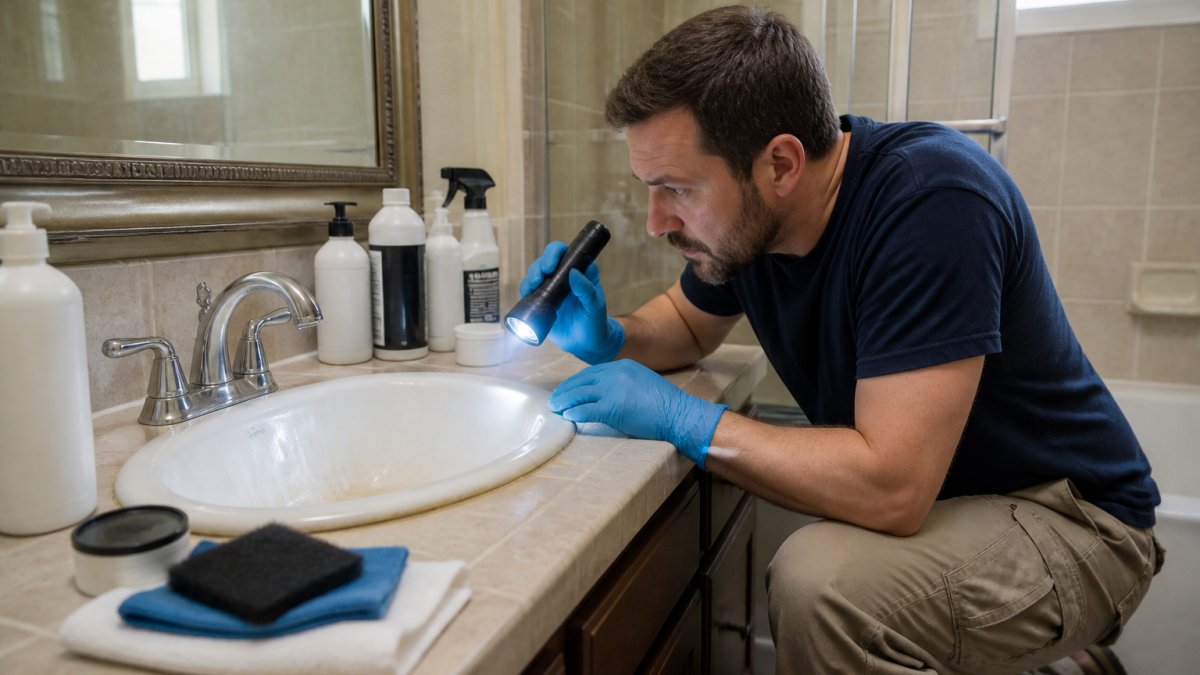
Porcelain and ceramic are the two most common sink materials. Both have a glass-like glazed surface that protects the clay underneath. That glaze is tough, but it is not indestructible.
Here is how to tell what you have:
- Porcelain feels smooth and dense, with a glossy finish.
- Ceramic looks similar but chips more easily at the edges.
- Glazed tile has the same glassy top layer as a sink.
- Grout is the porous cement line between tiles, and it stains faster than anything else in the room.
The key point: the glaze is what keeps stains out. Once it wears down or cracks, stains sink in and simple cleaning stops working.
Match the Stain Type to the Right Treatment
The color and texture of a stain tell you what it is. This matters because the wrong cleaner can etch the glaze or set the stain deeper.
| Stain Clue | Likely Cause | First Treatment to Try |
|---|---|---|
| White, chalky crust | Hard-water minerals | Vinegar soak, then soft cloth |
| Orange or brown ring | Rust | Baking soda paste, gentle scrub |
| Pink or black spots | Mildew | Bleach solution, rinse well |
| Dull gray haze | Soap scum | Dish detergent and warm water |
| Brown or black burn | Heat damage | Repair, not cleaning |
Do not mix bleach with vinegar or any acid cleaner. The combination releases dangerous fumes. Use one product at a time and rinse between them.
So if your stain is a crust, you clean it. If it is a burn or a crack, you repair it. That split decides everything that follows.
How to Clean Badly Stained Bathroom Tiles
Badly stained bathroom tiles respond to household staples, but the right cleaner depends on the tile material and the grout. Using the wrong product on the wrong surface is the fastest way to turn a stain into permanent damage.
Match the Cleaner to the Tile Material
- Glazed ceramic or porcelain tile: Baking soda paste, diluted dish detergent, and white vinegar are all safe. Avoid abrasive powders and metal scrubbers, which dull the glaze.
- Natural stone (travertine, marble, slate): Skip vinegar, lemon juice, and any acid cleaner. Acid etches calcium-based stone and leaves a permanent dull spot. Use a pH-neutral stone cleaner or a few drops of dish detergent in warm water.
- Unglazed or matte tile: These absorb liquids. Clean quickly, do not let liquids pool, and reseal per the manufacturer’s schedule.
- Grout: Porous cement-based grout soaks up stains faster than tile. Treat it separately from the tile surface.
A Step-by-Step Routine That Works on Glazed Tile
- Mix baking soda with just enough water to form a thick paste.
- Spread it over the stain and let it sit 10 minutes.
- Spray white vinegar on top. It will fizz as the acid reacts with the baking soda.
- Scrub with a soft brush or an old toothbrush. Work in small circles.
- Rinse with warm water and dry with a microfiber cloth.
For greasy soap scum, add a drop of dish detergent to warm water and wipe first, then follow with the paste. For mildew, a diluted bleach solution works on glazed tile and grout, but rinse it fully afterward and ventilate the room.
Grout-Specific Cleaning and Repair
Grout is where most “stained tile” complaints actually originate. A baking soda paste plus a toothbrush gets into the lines better than a sponge. For stubborn grout, a hydrogen peroxide soak can lift discoloration without harsh scrubbing.
If the grout is crumbly, cracked, or missing in spots, cleaning will not fix it. You need to repair it:
- Scrape out loose or failing grout with a grout saw or a utility knife held at a shallow angle.
- Vacuum the joint to remove dust.
- Apply new grout with a rubber float, pressing it into the joint.
- Wipe the tile surface with a damp sponge before the grout sets.
- Let it cure for the full time on the label, typically 24 to 72 hours depending on the product.
- Seal the cured grout with a penetrating sealer.
Seal your grout after it is clean and dry. Sealed grout resists stains far longer, which means less scrubbing next time. Reapply sealer every 6 to 12 months in a bathroom that gets daily use.
When Cleaning Has Failed
If stains return within days, the tile surface may be etched or the grout may be saturated below the surface. At that point, cleaning is not the answer. Grout replacement, tile refinishing, or tile replacement is the next step. A tile that flexes under thumb pressure usually means the substrate behind it has failed, and no surface treatment will hold.
How to Remove Yellow Stains from a Bathroom Sink
Yellow stains on a bathroom sink come from four main sources, and each one lifts differently. Diagnose first, then treat. Using the wrong method can etch the glaze or drive the stain deeper.
Diagnose the Yellow Stain
| What You See | Likely Cause | Test |
|---|---|---|
| Chalky yellow-white film near the drain or faucet | Hard-water minerals | Wipe with vinegar; if it fizzes or wipes away, it is mineral |
| Orange-yellow ring under a metal faucet or soap dish | Rust from the fixture | Look for pitting on the metal above the stain |
| Uniform yellowing across the whole basin | Age, oxidation, or under-glaze staining | Clean a small spot; if it does not lift, it is below the glaze |
| Yellow-brown streaks following the water line | Iron in the water supply | Check other fixtures for the same pattern |
Treat Each Type Correctly
Hard-water yellowing: Soak a cloth in white vinegar and lay it over the stain for 15 to 20 minutes. The acid breaks down the mineral deposit so it wipes away. Rinse and dry.
Rust: Make a paste of baking soda and a few drops of lemon juice. Apply it, let it sit 10 minutes, and scrub gently with a soft cloth. For heavier rust, a commercial rust remover formulated for porcelain is safer than scrubbing harder. Rinse thoroughly.
General yellowing on glazed porcelain or ceramic: Hydrogen peroxide is a good option. Apply it, let it sit 10 to 15 minutes, then rinse. Do not use it on natural stone.
Iron in the water: Cleaning will not solve this. A whole-house or point-of-use iron filter addresses the source. Otherwise the stain returns with every use.
Material Compatibility Rules
- Glazed porcelain and ceramic: Vinegar, baking soda, hydrogen peroxide, and non-abrasive bathroom cleaners are safe. Avoid abrasive powders, pumice stones, and metal scrubbers.
- Enameled cast iron: Treat like porcelain, but avoid any product that can chip the enamel edge. Do not let vinegar sit for hours.
- Natural stone sinks: Skip all acids, including vinegar and lemon. Use a pH-neutral stone cleaner only.
- Solid surface or composite: Follow the manufacturer’s cleaner list. Abrasives can dull the finish permanently.
When Yellowing Means Repair, Not Cleaning
If the yellow returns within days, the stain is likely under the glaze, not on it. That is a refinishing job, not a cleaning one. The same is true if the surface feels rough, dull, or etched, or if you see cracks, chips, or burn marks. A refinisher can coat the existing fixture with a new durable surface, which costs far less than replacing a sink and takes far less time than a remodel.
Yellow that wipes away is a cleaning problem. Yellow that comes back, or that sits under a rough or dull surface, is a repair problem.
How to Repair Cracked Bathroom Tile
Cracked bathroom tile is a repair job, not a cleaning one. No cleaner will fix a crack, and water seeping into one can loosen the tile and damage the wall behind it.
Here is how to handle it:
- Dry the area and remove any loose chips.
- Clean the crack with a soft brush to remove dust.
- Apply a color-matched epoxy or tile filler into the crack.
- Wipe the surface smooth before it sets.
- Let it cure for the full time on the label.
Small chips and hairline cracks often take a filler well. Deep cracks, or tiles that move when you press them, usually need replacement or a full refinish.
If a tile flexes under your thumb, the problem is behind it. Filling the crack alone will not hold.
Burn marks and etched spots are a different story. A burn or a dull etched patch is surface damage to the glaze itself. Cleaning will not bring the shine back. Those areas need refinishing to look right again.
Bathroom Sink Refinishing: When Cleaning Is Not Enough
Bathroom sink refinishing is the right call when the glaze is worn, stained below the surface, or damaged by cracks and burns. Refinishing coats the existing fixture with a new durable surface instead of replacing it.
At The Tub Guy, we refinish sinks, tubs, tile, and showers. We have been in business since 2010, and every coating we apply carries a 5-year warranty. That is the part most DIY kits cannot match.
Here is when to stop cleaning and call a pro:
- The stain comes back within days.
- The surface feels rough, dull, or etched.
- You see cracks, chips, or burn marks.
- You want a new color without a full remodel.
Refinishing costs far less than replacing a sink or retiling a wall. It also takes far less time. A DIY kit from a hardware store often bubbles or peels within months because the prep and materials are not up to the job. Our process uses modern materials and proper surface prep so the finish holds.
Randy Baxter, our owner, is a former owner of a medium-sized plumbing company. That background means we understand what is happening under the surface, not just on top of it.
If you are a property manager with a whole building of units, we handle large jobs too. One call can cover many sinks and tubs at once.
Frequently Asked Questions
Can stained bathroom tile be refinished instead of replaced?
Yes. If the tile is structurally sound with no loose or hollow areas, professional refinishing can cover stains and restore color at a fraction of replacement cost. The surface is cleaned, etched, and coated with a durable finish that bonds to the existing tile. This works well for badly stained bathroom tiles where replacement would mean tearing out walls or matching discontinued tile.
How do you repair chipped or cracked bathroom sink tile?
For small chips, clean the area and apply a two-part epoxy or porcelain filler matched to the tile color, then sand smooth once cured. Cracks that run through the tile or show movement usually mean the substrate is compromised, so patching alone will not hold. In those cases, replacing the tile or having the surround professionally refinished is the more reliable fix.
When should stained sink tile be professionally refinished?
Call a professional when stains return after cleaning, when the surface feels rough or etched, or when cracks and chips keep appearing. If you have tried baking soda, vinegar, and hydrogen peroxide without lasting results, the finish is likely worn through. Professional refinishing with a warranty-backed coating restores the surface and protects it from future staining.
Can porcelain be permanently stained?
Porcelain can stain permanently if the glazed surface is etched or worn. Once the protective glaze breaks down, minerals and dyes penetrate the porous layer beneath, and surface cleaning will not remove them. Refinishing or reglazing seals the surface again, which is why it is often the only way to fully resolve deep-set stains on an older sink.
Stains you can clean. Damage you cannot. If your sink or tile has cracks, chips, burns, or stains that keep coming back, cleaning will only waste your weekend. The Tub Guy refinishes sinks, tile, and tubs with durable coatings, a 5-year warranty, and the option to change your fixture color. Request a free estimate and bring your bathroom back to life.