
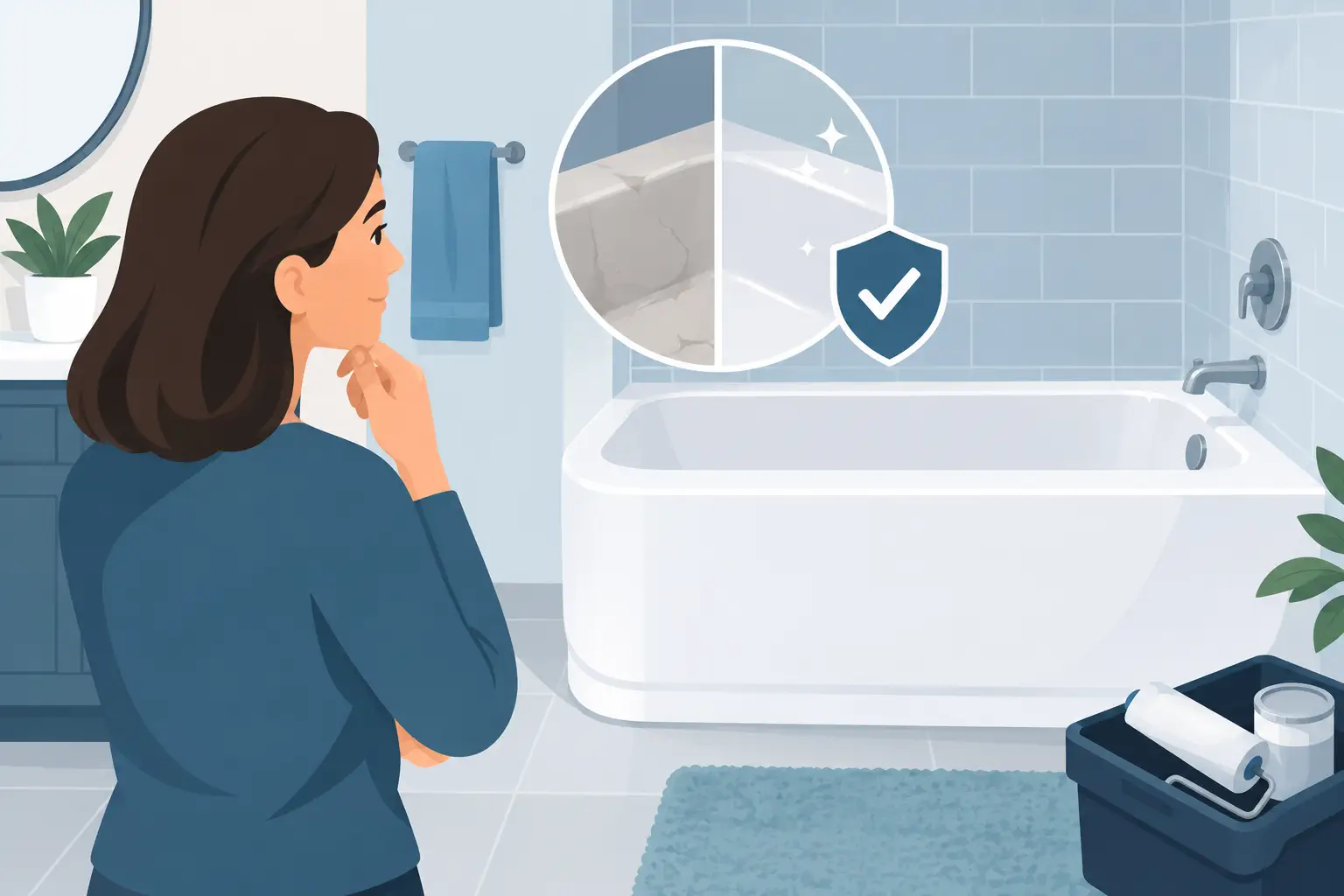
A stained, chipped tub can make the whole bathroom feel worn out. Replacement sounds simple until you factor in demolition, plumbing, tile damage, and days of disruption. So, is reglazing safe? Yes, when it is done by trained professionals who control the prep work, ventilation, materials, and curing process.
Bathtub reglazing uses professional coatings and careful surface preparation to restore a tub, shower, sink, or tile surface. Those materials are strong for a reason. They need to bond tightly and stand up to water, soap, and daily use. That also means the work area must be handled correctly from start to finish.
Is Reglazing Safe During the Work?
The short answer is that professional reglazing is safe when the crew follows proper procedures. The process can create fumes and dust during cleaning, sanding, repair, and spraying. A qualified refinishing technician plans for those conditions instead of treating them as an afterthought.
The bathroom should be isolated from the rest of the home. Nearby surfaces should be masked and protected. The technician should use the right personal protective equipment and ventilation equipment designed to move air out of the work area. This is not a job for an open window and a household fan.
During application, homeowners, children, pets, and anyone with respiratory sensitivities should stay out of the bathroom and away from the immediate work zone. If your home has someone with asthma, severe allergies, COPD, or chemical sensitivities, mention it before scheduling. A professional can explain the work plan and help you decide whether being away from the home during the application makes sense.
The strongest smell is usually present during prep and spraying. Good ventilation helps, but it does not mean the bathroom is ready for use right away. The coating needs time to cure.
Why Professional Ventilation Matters
Reglazing coatings release vapors while they are being applied and cured. Professional refinishing crews use controlled ventilation to direct those vapors outside rather than allowing them to spread through the home.
The exact setup depends on the bathroom layout, access to an exterior door or window, and the type of surface being refinished. In a small Florida bathroom, airflow matters even more. Warm, humid conditions can affect drying and curing times, so the job should never be rushed just to finish faster.
Proper ventilation does more than reduce odor. It helps protect indoor air quality, supports a better finish, and helps the coating cure as intended. A poorly ventilated job can leave a lingering smell, uneven sheen, or a finish that does not hold up well.
That is one major difference between professional refinishing and a do-it-yourself kit. Store-bought kits may look affordable, but they often put homeowners in charge of chemical handling, surface prep, spraying, and ventilation. A weak bond or poor application can also lead to peeling, chipping, and another repair bill.
What Happens Before a Tub Is Reglazed?
Safe reglazing starts before any coating is sprayed. The surface must be cleaned to remove soap film, body oils, mineral buildup, and old caulk. Chips, cracks, and damaged areas are repaired. The surface is then prepared so the new coating can bond correctly.
This prep work can involve sanding or using specialized cleaning products. A professional should contain the area and collect debris rather than allowing dust to settle throughout the bathroom. Fixtures, floors, walls, cabinets, and nearby surfaces should be carefully masked.
If the tub has been refinished before, that matters too. Old coating may need additional preparation or repair before new material is applied. The condition of the existing tub determines the right approach. A reputable contractor will inspect it first instead of promising the same solution for every surface.
Older homes can require extra care. If you have concerns about old paint, damaged tile, or materials that may need special handling, bring them up during the estimate. Good contractors do not guess about conditions hidden under failing finishes.
How Long Should You Stay Out of the Bathroom?
Your refinishing technician should give you clear instructions based on the coating system used and the conditions in your home. In many cases, the bathroom should remain off limits until the finish has had time to cure. Do not use the tub early just because it looks dry.
A coating can feel dry to the touch before it is fully hardened. Using the tub too soon can leave marks, dull spots, or damage that shortens the life of the finish. It can also expose you to lingering vapors before the area has fully aired out.
Plan ahead. Use another bathroom if possible. Remove personal items, towels, rugs, shower curtains, and medications from the room before the crew arrives. Keep pets away from the work area and do not allow children to enter out of curiosity.
After the curing period, air out the room according to the technician’s instructions. If there is still a noticeable odor, give it more time and keep the room ventilated. Never cover up a strong chemical smell with candles, air fresheners, or incense. Fresh air is the better solution.
Is Reglazing Safe for Your Tub Long Term?
Once properly cured, a professionally applied reglaze coating is designed to be used as a normal bathroom surface. The safety question then shifts from fumes to maintenance. A durable finish stays in better shape when it is cleaned the right way and protected from damage.
Avoid abrasive powders, harsh scrub pads, and aggressive chemical cleaners unless your refinisher specifically approves them. These products can scratch or dull the coating. Do not leave bath mats with suction cups in place for long periods, since trapped moisture can damage the finish. Repair drips promptly. Constant water exposure around a failing faucet can stain or weaken any bathtub surface.
A good refinishing company should provide care instructions when the job is complete. Follow them. This is a practical part of protecting your investment and keeping the surface looking clean.
When Reglazing May Not Be the Right Choice
Reglazing is a strong option for many worn tubs, showers, sinks, and tile walls, but it is not a fix for every problem. Severe structural damage, major rust that has eaten through the tub, active plumbing leaks, or significant movement in the surface may need repair or replacement first.
The same goes for mold or water damage behind walls. Refinishing the visible surface will not solve a moisture problem underneath. A dependable contractor should tell you when a repair is outside the scope of reglazing. That honesty saves you from paying for a finish that cannot perform as it should.
For sound fixtures with cosmetic wear, reglazing can be a safe and practical alternative to replacement. It avoids much of the demolition involved in a full remodel and gives an outdated bathroom a clean, updated look without tearing out a usable tub.
Questions to Ask Before You Hire a Reglazing Company
You do not need to become a coating expert. You do need straight answers. Ask how the company ventilates the work area, how long the tub must cure, and what you should do to prepare the bathroom. Ask what warranty comes with the work and what maintenance the finish requires.
You should also ask whether the company handles chips, cracks, rust spots, and old failed coatings. The answer tells you whether they are prepared to restore the surface or simply spray over the problem.
At The Tub Guy, the focus is on doing the preparation right, protecting the home during the job, and standing behind the finished surface. A five-year warranty means more when the company is prepared to return and correct an issue.
A bathroom update should not leave you guessing about fumes, cure time, or durability. Choose a refinishing professional who explains the process plainly, gives you clear aftercare instructions, and treats safety as part of quality workmanship. Then you can enjoy the fresh look of a restored tub without the cost and mess of replacement.