
Table of Contents
- Understanding Bathtub Reglazing Cure Time
- How Long to Wait After Reglazing Before Using Your Tub
- Factors Affecting Drying Time After Reglazing
- What Happens If You Use Your Tub Too Soon
- How to Clean a Newly Reglazed Tub
- Bathtub Refinishing Maintenance Tips for Long-Term Durability
- Signs Your Reglazed Tub Is Fully Cured and Ready for Regular Use
- Frequently Asked Questions
Last Updated: October 4, 2026
Understanding Bathtub Reglazing Cure Time
When you refinish a bathtub through reglazing, the waiting period is crucial. The coating must harden and chemically bond to the surface, a process that determines whether your tub lasts years or fails within months.
Drying vs. Curing: What’s the Difference?
Drying is when the surface feels hard to the touch. Curing is when the chemical bond fully develops throughout the coating. Drying happens in hours as solvent evaporates, but curing, the chemical bonding to the tub surface, continues for days. Like concrete, a reglazed tub feels dry after a day but continues curing for weeks.
Typical Waiting Periods by Coating Type
Epoxy coatings require 24-48 hours before light use and 7 days for full cure. Polyurethane coatings cure faster: 24 hours for light use, 5-7 days for full cure. Acrylic coatings are quickest: 12-24 hours for light use, 3-5 days for full cure, though they may not last as long.
How Long to Wait After Reglazing Before Using Your Tub
The answer depends on what you mean by “use.” Light use and full use are different, and timing matters.
The First 24 Hours: Critical Hardening Phase
The first 24 hours is critical. The coating hardens but the chemical bond is still forming, leaving the surface fragile despite feeling dry.
What you can do: Look at it. What you cannot do: Shower, bathe, splash water, or expose it to moisture, even humidity from a hot shower in the next room interferes with curing.
Days 2-7: Surface Strengthening
From day 2-7, the coating continues hardening and light use is permitted: quick showers without prolonged water exposure, with immediate drying. Avoid soaking baths and standing water. By day 7, most coatings reach functional strength; full cure occurs by day 7-14. Only then should you use the tub normally with long soaks and frequent showers.
Factors Affecting Drying Time After Reglazing
Several environmental factors influence cure speed. Understanding these factors explains why waiting times vary and why shortcuts fail.
The Chemistry: Drying vs. Curing in Environmental Context
Reglazing coatings cure through solvent evaporation (surface feels hard within hours) and chemical cross-linking (resin molecules bond to the tub surface). A tub can feel dry while still curing, as environmental conditions affect each phase differently.
Room Temperature and Humidity Impact
Chemical reactions accelerate with heat; for every 10°F increase, most coatings cure 20-30% faster. Ideal conditions: 70-75°F with humidity below 50%. Cold (below 60°F): Epoxy may add 3-5 days, polyurethane 2-3 days. Very cold (below 50°F): Curing can stall; many contractors won’t apply coatings below 50°F.
Humidity affects curing: some polyurethane coatings require atmospheric moisture, so very dry air (below 30%) can slow them.
Ventilation and Air Circulation: Balancing Solvent Escape and Moisture Control
Proper ventilation during and after reglazing affects curing speed, but the goal is nuanced: you want solvent to escape quickly while preventing moisture from entering.
During reglazing: Your contractor should ensure the bathroom is well-ventilated so chemical fumes escape and solvent evaporates properly.
After reglazing, the critical balance:
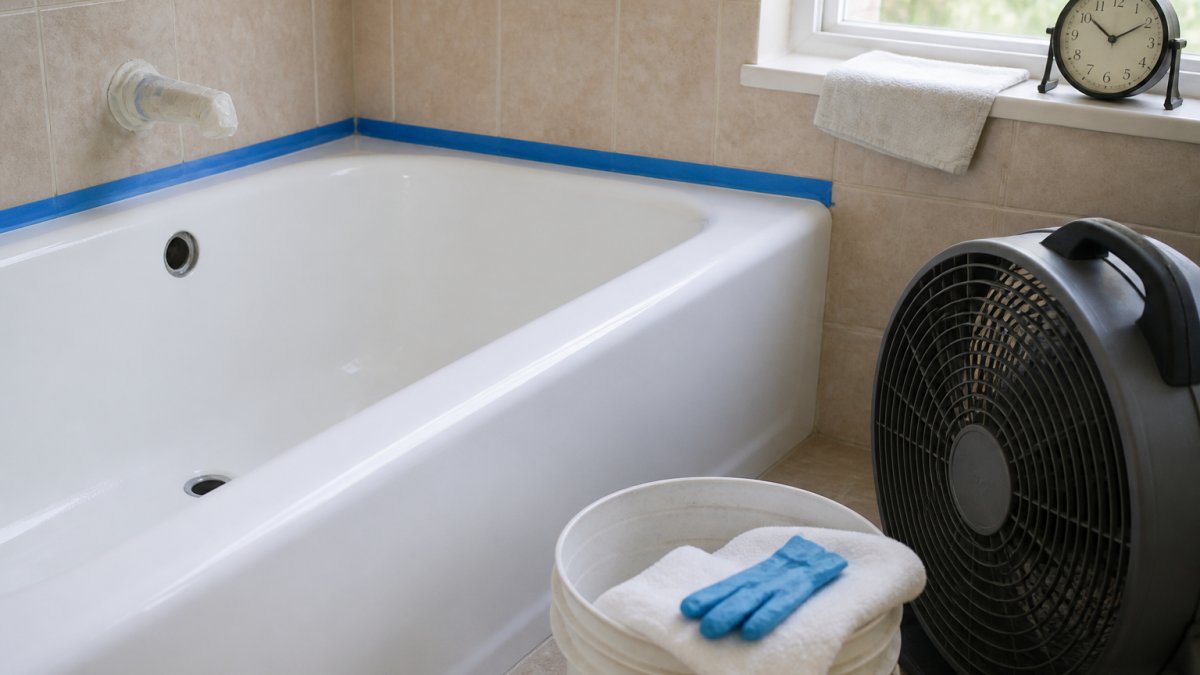
- First 24 hours: Keep the door closed to prevent humidity from other areas of the home from entering. Crack a window slightly or use the exhaust fan on low for 15-30 minutes every few hours. The goal is gentle air circulation, not aggressive ventilation.
- Days 2-7: Continue moderate ventilation. Run the exhaust fan on low for short periods (15-30 minutes) after any moisture exposure (e.g., after a shower in an adjacent bathroom). Avoid running the fan continuously, which can create excessive air movement and uneven curing.
- Avoid: Leaving windows wide open (creates drafts and temperature swings), running exhaust fans continuously (pulls moisture in from other areas), or sealing the bathroom completely (traps moisture and slows solvent evaporation).
The goal is gentle, intermittent circulation, stagnant air slows drying while excessive air movement causes uneven hardening.
Seasonal and Geographic Considerations
Winter: Cold temperatures slow curing; add 3-5 extra days. Summer: Humidity often dominates; add 2-3 extra days. Coastal/humid regions: Plan for 50% longer cure times. High-altitude areas: Discuss with your contractor if above 5,000 feet.
Your contractor should assess your specific climate and adjust the waiting period accordingly.
What Happens If You Use Your Tub Too Soon
Using your reglazed tub before it’s fully cured can ruin the finish. Understanding what goes wrong helps you avoid costly mistakes.
The Damage Mechanisms: Why Premature Use Fails
When water or moisture contacts an incompletely cured coating, several failure modes can occur:
1. Blistering and Bubbling
Water trapped under an incompletely cured coating creates pressure pockets.
- What it looks like: Raised bumps or bubbles in the finish, often appearing within 24-48 hours of premature use.
- Why it happens: The chemical cross-linking hasn’t completed, so the coating isn’t fully adhered. Water finds its way underneath.
- Is it fixable? Once blisters form, they’re difficult to repair without re-reglazing the entire tub. Attempting to pop or sand them usually spreads the damage.
2. Soft Spots and Incomplete Hardening
- What it feels like: Pressing on the surface yields slightly, or the finish feels tacky or sticky in patches.
- What it looks like: Dull or cloudy areas where the finish should be glossy and hard.
- Why it happens: The chemical reaction is interrupted and doesn’t resume properly once disturbed.
3. Delamination (Coating Separation)
Delamination occurs when the coating separates from the tub surface.
- What it looks like: The coating peels or flakes away from the tub, often starting at edges or corners. You may see white substrate showing through.
- Why it happens: The coating hasn’t chemically bonded to the tub. Water breaks the weak mechanical adhesion.
- Is it fixable? Delamination requires professional repair or complete re-reglazing. It spreads rapidly once it starts.
4. Peeling and Chipping
Early use causes stress on a coating that hasn’t reached full strength.
- What it looks like: Edges or corners of the coating lift away from the tub surface. Chips or flakes appear.
- Why it happens: The coating lacks the tensile strength to resist the stress of water weight and movement.
- Is it fixable? Small chips can sometimes be touched up, but peeling usually requires re-reglazing.
5. Discoloration and Cloudiness
Moisture interference during curing can cause the finish to cure unevenly, resulting in cloudy patches, yellowing, or dull spots.
- What it looks like: The finish is no longer uniformly glossy and clear. Cloudy or hazy areas appear, or the color shifts.
- Why it happens: Water vapor interferes with the chemical reaction, causing localized incomplete curing.
- Is it fixable? Cloudiness is difficult to repair without re-reglazing. It’s primarily a cosmetic issue but indicates underlying cure problems.
Recognizing Damage: Signs to Watch For
Watch for blisters, soft spots, peeling, cloudiness, strong chemical smell beyond day 3, or water spots that won’t dry. If you notice any of these, stop using the tub and contact your contractor.
What to Do If You Use the Tub Too Early
Immediate steps: Stop using the tub, dry it thoroughly with soft cloths, increase ventilation by cracking a window, do not apply heat, document damage with photos, and contact your contractor immediately.
Assessment (48-72 hours after accidental use): No visible damage means wait the full cure time and monitor for delayed issues. Minor soft spots or cloudiness may resolve but warrant contractor guidance.
Professional repair options:
- Spot repair: Small, isolated damage can sometimes be spot-repaired but may leave a visible seam.
- Full re-reglazing: Extensive damage requires full re-reglazing, the most reliable but costly fix.
- Warranty coverage: Most 5-year warranties exclude damage from premature use, though some contractors may offer repair discounts.
Why the Wait Is Worth It
The waiting period is the difference between a finish lasting 5+ years and one failing within months. Re-reglazing costs $400-$1,500, far exceeding the inconvenience of waiting 7-14 days. If unsure whether the tub is fully cured, wait longer.
How to Clean a Newly Reglazed Tub
Once cured, proper cleaning keeps the finish looking new and extends its lifespan.
Cleaning During the First Week
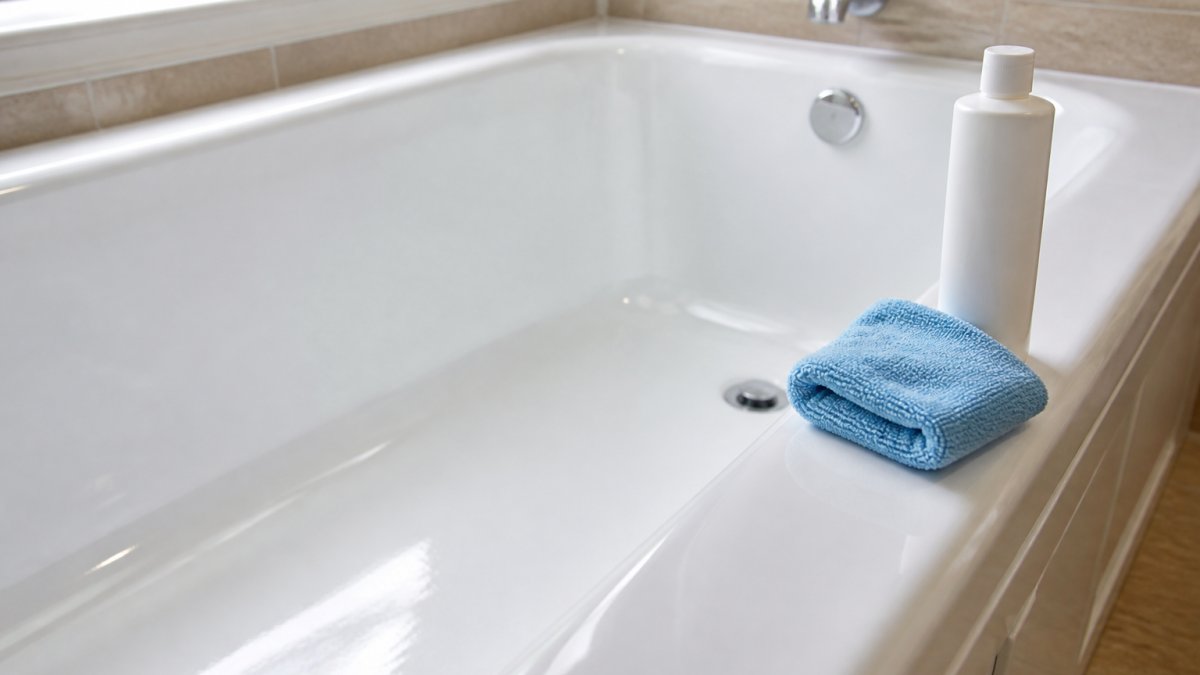
During the first week, use only water and a soft cloth, no cleaners or scrubbing. Wipe dry after each use. Avoid bubble bath, bath bombs, oils, and salts, which can stain or damage the coating.
After day 7, introduce mild cleaning products with soft cloths and non-abrasive solutions.
Products to Use and Avoid
Once your tub is fully cured, cleaning becomes easier. But some products will damage the finish.
Safe products:
- Mild dish soap and water
- Non-abrasive all-purpose cleaners
- Specialized tub and tile cleaners designed for glazed surfaces
Products to avoid:
- Abrasive cleaners or scouring powders
- Bleach-based cleaners
- Acidic cleaners (vinegar, lemon juice)
Abrasive cleaners scratch the coating; bleach and acidic products discolor or damage it. Test new cleaners in inconspicuous spots first.
Bathtub Refinishing Maintenance Tips for Long-Term Durability
Your reglazed tub is built to last, but the finish’s lifespan depends partly on how you care for it.
Weekly and Monthly Care Routines
Weekly: Wipe dry after each use and clean with mild soap and water. Monthly: Deep clean with non-abrasive tub cleaner and check for chips, cracks, or peeling. These habits keep your finish looking new.
Preventative Care to Extend Your 5-Year Warranty
Your warranty covers manufacturing defects and normal wear, not damage from neglect or misuse. Preventative care keeps your warranty valid.
Prevent mold: Ventilate well after showers. Avoid standing water: Drain and wipe dry after use. Prevent chemical damage: Don’t leave cleaning products, salts, or oils in the tub. Protect against impact: Don’t drop objects or stand on the edge. Use the right cleaners: Wrong cleaners are the leading cause of finish damage in years 2-5.
Signs Your Reglazed Tub Is Fully Cured and Ready for Regular Use
How do you know when your tub is actually ready? Here are the signs that full cure has been reached.
Day 7 or later: Most coatings reach functional cure by day 7. No chemical smell: Sharp or strong smells mean curing is still in progress. Uniform hardness: Press gently, soft spots mean curing isn’t complete. No tackiness: The surface should feel smooth and hard. No cloudiness: The finish should be clear and glossy.
Frequently Asked Questions
Can I shower 24 hours after tub reglazing?
No. While the surface may feel dry after 24 hours, the coating is still in early stages of hardening. Most epoxy and polyurethane coatings require 48-72 hours before water exposure. Showering too soon can cause the finish to soften, bubble, or peel. Follow your contractor’s specific instructions, they know the exact product and conditions used on your tub. Waiting the full recommended time protects your 5-year warranty and ensures the coating bonds properly to the surface.
Does humidity affect bathtub reglazing cure time?
Yes, significantly. High humidity slows the chemical curing process because moisture interferes with the bonding reaction between the coating and the surface. In humid conditions, add 24-48 hours to the standard cure time. Low humidity speeds curing slightly but can cause uneven drying. Ideal conditions are 50-60% relative humidity and temperatures between 65-75°F. Use exhaust fans or open windows to control moisture, but avoid drafts that create temperature swings.
What happens if I use my bathtub too soon after refinishing?
Premature use can cause the coating to soften, wrinkle, or develop bubbles and peeling. Water exposure before full cure breaks the chemical bond between the epoxy or polyurethane and the tub surface. Early damage is often irreversible and may void your warranty. In worst cases, you’ll need a complete re-refinishing, which costs time and money. Patience during the curing window protects your investment and ensures the finish lasts the full 5 years.
What cleaning products are safe for a newly reglazed tub?
After the first week of full cure, use only non-abrasive, pH-neutral cleaners. Avoid harsh chemicals, bleach, scouring powders, and abrasive scrubbers, these damage the coating. Mild dish soap and warm water work well for routine cleaning. For stubborn spots, use a soft cloth or non-scratch sponge. During the first 7 days, limit cleaning to a damp cloth with plain water only. Always rinse thoroughly and dry with a soft towel to prevent water spots and maintain the finish’s durability.
Your newly reglazed tub is an investment in your home’s comfort and appearance. Respecting the cure time protects that investment. The Tub Guy’s professional reglazing process delivers results that last, but only if you follow the waiting period and care instructions we provide. The 5-year warranty we stand behind covers your finish when it’s properly maintained. Request a free estimate today to learn how reglazing can transform your bathroom at a fraction of the cost of replacement.