
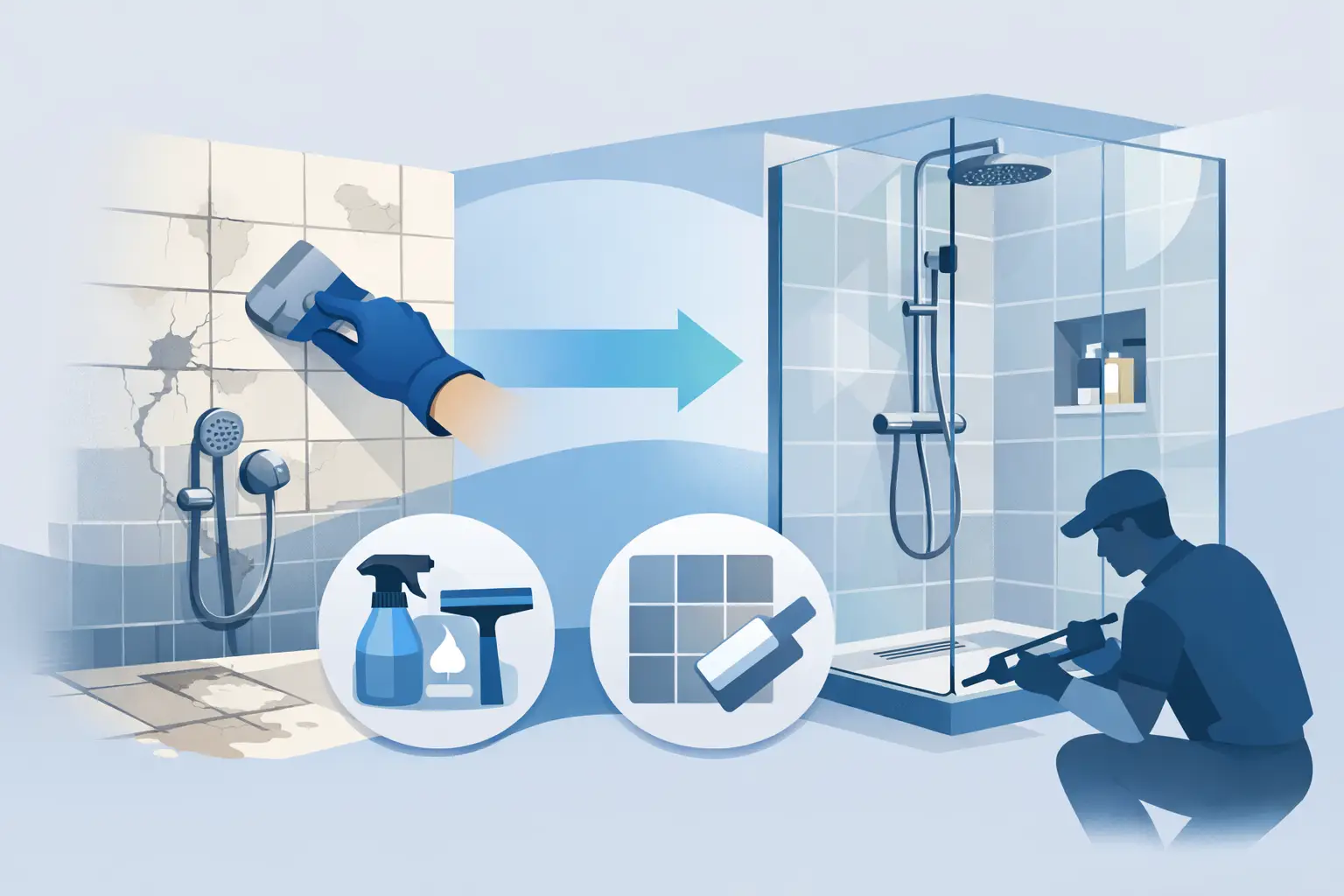
A stained shower can make the entire bathroom feel old, even when the rest of the room is clean. Cracked tile, worn fiberglass, rust spots, peeling finishes, and dark grout lines are frustrating to live with. This guide to shower restoration options helps you decide whether a repair, professional refinishing, partial update, or full replacement makes the most sense for your home.
The right answer depends on the condition of the shower, the material underneath, your budget, and how long you plan to stay in the home. Not every worn shower needs demolition. In many cases, a professional restoration can deliver a clean, bright, like-new finish for far less than replacement.
Start With the Condition of Your Shower
Before choosing a restoration method, look past the surface dirt. A shower can look rough because of hard-water buildup, mildew staining, cracked caulk, damage to the finish, or a bigger moisture problem behind the walls. Those issues do not all call for the same fix.
If the shower is structurally sound, restoration is often a practical choice. That means the base is stable, the walls are secure, and there is no ongoing leak causing soft drywall, loose tile, or water damage. Cosmetic wear is different from structural failure. A faded fiberglass shower or dated tile may look beyond saving, but the surface can often be repaired and refinished.
On the other hand, active leaks and major wall damage need attention first. Covering up a water problem only delays a more expensive repair. A good restoration professional will tell you when refinishing is a smart investment and when replacement is the better call.
Shower Restoration Options to Consider
Deep cleaning, recaulk, and grout work
Sometimes the shower needs maintenance, not a new finish. Professional cleaning can remove mineral deposits, soap scum, and surface staining that normal household products cannot touch. Replacing cracked or missing caulk can also make a big visual difference while helping keep water where it belongs.
Grout repair is useful when tile is in good condition but the joints are stained, chipped, or falling out in spots. This option costs less than a full restoration, but it will not fix cracked tile, a worn shower pan, or a dated color. It is best for showers that are basically in good shape and need a refresh.
Chip, crack, and rust repair
Small damage does not always mean the shower needs to be replaced. Chips in porcelain, cracks in fiberglass, and rust spots around metal fixtures can often be repaired before refinishing. The damaged area is stabilized, filled, shaped, and prepared so it blends into the restored surface.
The key is dealing with the cause. Rust may point to exposed metal or a failed finish. A crack may be cosmetic, or it may mean the shower base is flexing. Repairs can last when the underlying surface is solid. If the base moves underfoot or the crack keeps returning, a more involved solution may be needed.
Professional shower refinishing
Refinishing, also called reglazing or resurfacing, is one of the best options for a shower that is ugly, worn, stained, or stuck in an outdated color but still structurally sound. The process restores the existing surface instead of tearing it out.
A professional prepares the shower carefully, repairs minor damage, applies a durable coating system, and creates a clean new finish. This can work on many common bathroom surfaces, including fiberglass, acrylic, cultured marble, porcelain, ceramic tile, and some older shower units.
For Florida homeowners, refinishing is especially appealing when the bathroom needs an update without the dust, noise, and downtime of a full remodel. You keep the existing shower in place. There is no need to open walls, replace plumbing, or haul out a heavy unit just because the finish has seen better days.
Color change is another major advantage. A dated almond, pink, blue, or yellow shower can often be restored to a brighter, more current color. White remains a popular choice because it makes smaller bathrooms look cleaner and larger. The right finish can also help a rental property, guest bath, or home sale show much better.
Refinishing is not a shortcut when it is done right. Surface preparation matters. Repairs matter. Proper curing matters. The finished result depends on workmanship, not just the coating itself.
Tile shower resurfacing
Tile showers present a different decision. If the tile is secure and the walls are dry, resurfacing can give old tile a uniform new look without the cost of removal. It can cover stubborn discoloration, dated colors, and worn surfaces while reducing the visual distraction of old grout lines.
This option is not right for loose tile, failing grout throughout the enclosure, or water getting behind the walls. Those conditions should be repaired before any coating is applied. But for solid tile that simply looks tired, resurfacing can save substantial time and money compared with a full tile tear-out.
Shower liners and wall systems
A liner or wall system covers the existing shower with new material. It can be a reasonable choice when you want a different look or need to cover surfaces that are difficult to restore. Installation can be quicker than a full remodel, depending on the product and condition of the existing shower.
There are trade-offs. Liners can cost more than refinishing, and poor installation may leave places where moisture can become a problem. They also do not solve hidden leaks or structural damage. Ask how seams are sealed, what happens around valves and drains, and whether the existing walls are inspected before installation.
Full shower replacement
Replacement makes sense when the shower has serious structural issues, extensive water damage, recurring leaks, or a layout that no longer works for your household. It is also the better option if you are moving plumbing, enlarging the shower, adding accessibility features, or changing the entire bathroom design.
The downside is cost and disruption. Replacement may involve demolition, plumbing work, tile work, drywall repair, and several trades. It can also uncover hidden damage once the old shower is removed. That does not mean replacement is wrong. It means it should be chosen for a real need, not simply because the surface looks worn.
How to Choose the Best Option for Your Budget
Think about what you need the shower to do. If you want a clean, durable visual upgrade and the shower is sound, professional refinishing is often the strongest value. If you have a few small chips or cracks, repair and refinishing may be enough. If water has damaged the walls or the base is failing, replacement may protect your home from a bigger problem.
Also consider your timeline. A full remodel can disrupt daily life for weeks. Restoration is usually much faster because the existing shower stays in place. That matters in a one-bathroom home, a busy household, or a rental property between tenants.
Price should not be the only factor. Cheap surface work that skips prep or uses poor materials may peel, stain, or fail early. Ask what preparation is included, how repairs are handled, what care the new surface needs, and whether the work is backed by a written warranty. A company willing to stand behind its work gives you a clearer picture of the value you are getting.
What to Expect After Shower Refinishing
A newly refinished shower needs reasonable care to protect the finish. Use non-abrasive cleaners. Avoid harsh scouring powders, steel wool, and suction-cup bath mats that can pull against the surface. Fix dripping faucets quickly, since constant water exposure can wear any finish over time.
Follow the curing instructions before using the shower. This is not optional. A quality coating needs time to harden properly. Once it has cured, regular cleaning and prompt attention to caulk or plumbing issues will help keep the shower looking its best.
For homeowners who want a practical upgrade without turning the bathroom into a construction zone, restoration is worth a close look. The Tub Guy can evaluate the surface, explain what can be repaired, and help you choose a solution that makes the bathroom look right again without paying for work you do not need.