
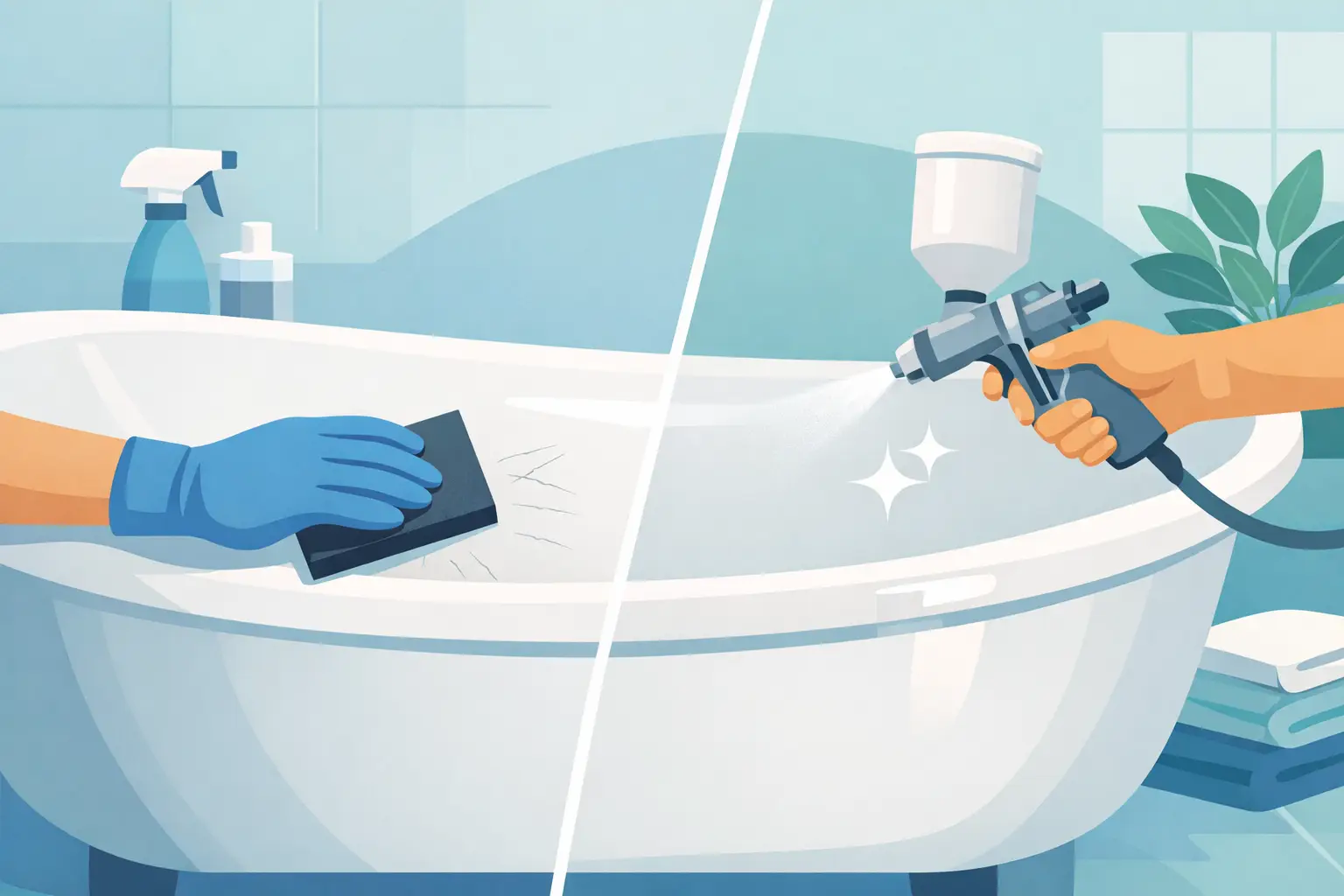
A bathtub can look worn out long before it actually needs replacement. Surface scratches, dull spots, soap film damage, and small chips make the whole bathroom feel dated. So, does refinishing remove scratches? In many cases, yes. Professional refinishing can repair or hide most surface-level scratches and leave the tub with a smooth, bright new finish.
The key is knowing what kind of scratch you have. A light mark in an old finish is very different from a deep gouge that reaches the tub material underneath. A good refinishing job addresses both the damage and the tired coating around it, so the repair does not stand out like a patch.
Does Refinishing Remove Scratches or Just Cover Them?
Refinishing does more than paint over a scratch. Done correctly, the process starts with cleaning and preparing the entire surface. The technician removes built-up residue, addresses damaged areas, sands the existing finish, and repairs chips or scratches as needed. Then a new durable coating is applied across the full surface.
For light scratches, sanding and the new coating usually make the marks disappear completely. The old finish is leveled out, and the new topcoat creates a uniform surface.
For deeper scratches, the area may need filler before refinishing. This is common with gouges from dropped shower fixtures, sharp tools, or years of aggressive scrubbing. The filler is shaped and sanded smooth before coating, so the finished tub looks even rather than repaired in one small spot.
The goal is not to leave a scratch hidden under a thin layer of coating. The goal is to restore the surface so it feels smooth, looks clean, and holds up to normal daily use.
Which Scratches Can Be Repaired?
Most homeowners are dealing with cosmetic damage, and refinishing is often a strong fit for it. Surface scratches in porcelain, fiberglass, acrylic, cultured marble, and older reglazed tubs can usually be corrected.
Light scratches are the easiest. These are often caused by abrasive cleaners, scouring pads, bath mats with rough undersides, or cleaning tools that were too aggressive for the surface. They may look gray, dull, or chalky under bathroom lighting. A professional refinishing process can remove the worn appearance and restore an even gloss.
Moderate scratches may be visible enough to catch dirt or discolor over time, but they do not go all the way through the fixture. These can often be sanded, repaired, and refinished with excellent results.
Deep scratches and gouges can also be repaired in many cases. If the damage reaches the base material, it needs more attention before coating begins. The area must be stabilized, filled, and leveled properly. Rushing this step can lead to a repair that shows through later.
Small chips near the drain, on the tub floor, or around the rim are common, too. Refinishing can address these areas as part of a full restoration. That gives you one consistent color and sheen instead of several mismatched touch-up spots.
When Scratches Point to a Bigger Problem
Not every damaged tub should be refinished immediately. Sometimes scratches are only the visible part of a larger issue.
If a fiberglass or acrylic tub flexes when you stand in it, the base may need repair or support before refinishing. If there are cracks that move, spread, or feel soft around the edges, coating alone will not solve the problem. The underlying surface has to be made sound first.
Rust is another concern, especially on older cast-iron or steel tubs. A small rust spot can often be repaired during refinishing. But widespread rust, holes, or severe corrosion may require more extensive repair. The same goes for water damage behind loose tile or around a failing shower enclosure.
A professional inspection helps separate a surface problem from a structural one. That matters because a beautiful finish only lasts when the surface underneath is properly prepared and stable.
Why DIY Scratch Repair Often Looks Different
Hardware store touch-up kits can help with a tiny chip in a pinch. They are not the same as full professional refinishing. Most DIY kits are designed for spot coverage, not complete surface restoration.
The biggest problem is color and sheen. White tubs are not all the same white, and a small brush-on repair can look yellow, too bright, or too dull against the existing finish. Even if the color is close, the texture may not match.
Preparation is another issue. Bathroom surfaces collect body oils, soap residue, mineral deposits, and cleaning chemicals. If those contaminants are not removed correctly, a coating may not bond well. It can peel, chip, or wear unevenly.
Professional refinishing uses proper surface preparation, repair materials, and commercial-grade coatings. The work also covers the entire fixture, which is why the final result looks consistent. For a tub with multiple scratches, dullness, or an outdated color, full refinishing is usually a better value than chasing one touch-up after another.
What a Proper Tub Refinishing Process Looks Like
A durable result comes from the prep work. The coating is important, but it cannot make up for a rushed surface repair.
First, the tub is cleaned and stripped of residue. Old caulk around the tub is usually removed so the finish can be applied cleanly to the edges. The surface is then prepared to create the right profile for bonding.
Next, scratches, chips, and small damaged areas are repaired. This may involve sanding, filling, and more sanding until the surface is level. The technician checks the repair by touch as well as sight. If you can feel a ridge before coating, it can show up after coating.
Once repairs are complete, the tub is masked off to protect the surrounding bathroom. The new finish is applied in controlled coats for an even appearance. After the coating has cured as directed, new caulk can be installed where needed.
The result is a tub that looks refreshed from edge to edge. That is a major difference from a single spot repair, especially in a bathroom where bright lighting makes every flaw easier to see.
How Long Will a Refinished Tub Stay Scratch-Free?
No bathtub finish is completely scratch-proof. A refinished surface is durable when it is properly applied and properly cared for, but it still needs reasonable treatment.
Avoid abrasive powders, steel wool, rough scouring pads, and harsh chemical cleaners. These can dull or scratch both original and refinished surfaces. Use a non-abrasive bathroom cleaner and a soft sponge or cloth instead.
Be careful with metal objects, too. Dropping a showerhead, razor, tool, or heavy bottle can chip any tub surface. If you use a bath mat, choose one that is non-abrasive and remove it regularly so moisture and residue do not stay trapped underneath.
In Florida, hard water and mineral buildup can make a finish look dull even when it is not scratched. Regular gentle cleaning keeps deposits from becoming a bigger problem. It also helps you spot a small chip early, before moisture and grime work into the damaged area.
Is Refinishing Worth It for a Scratched Tub?
If the tub is solid, comfortable, and the right size for your bathroom, refinishing is often the practical answer. Replacement can mean demolition, plumbing work, tile repairs, disposal costs, and days or weeks of disruption. A scratched tub can turn into a full bathroom project fast.
Refinishing gives you a clean new look without tearing out a fixture that still has years of life left. It can also change the color of an outdated tub, sink, tile surround, or shower surface. That makes it a smart option when the room needs a visible upgrade but a full remodel is not in the plan.
The Tub Guy approaches scratch repair as part of the whole surface, not as a quick cover-up. Proper prep, solid repairs, and a complete refinished coating are what produce the before-and-after difference homeowners want. Work is backed by a five-year warranty, so you have clear accountability after the job is done.
If your tub has light scratches, chips, dull areas, or a finish that has seen better days, do not assume replacement is your only choice. Have the surface evaluated first. A well-done refinishing job can give your bathroom the clean, smooth look you wanted without the mess of starting over.