
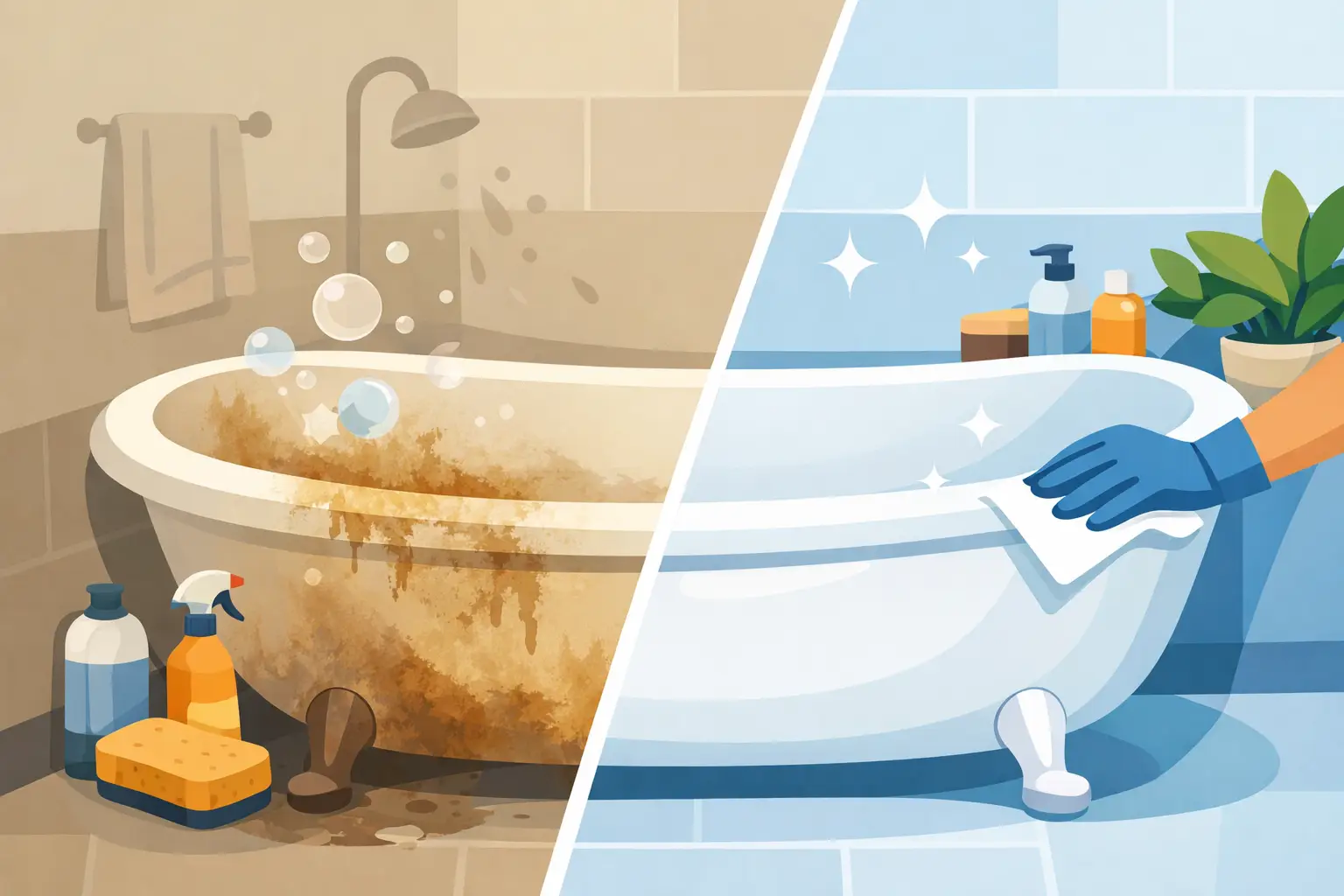
A bathtub can make the whole bathroom look neglected, even when the rest of the room is clean. Brown marks around the drain, a yellowed surface, rust rings, or dull gray patches are hard to ignore. So, can stained tubs be restored without tearing out the old fixture? In many cases, yes. The right solution depends on what caused the stain and whether the tub’s original surface is still sound.
For homeowners in Pinellas County and St. Petersburg, professional bathtub refinishing is often the practical middle ground. It can transform a worn tub without the cost, dust, plumbing work, and downtime that come with replacement.
Can Stained Tubs Be Restored? It Depends on the Surface
Not every stain is the same. Some sit on top of the tub and respond to a thorough cleaning. Others have worked into damaged porcelain, enamel, fiberglass, or an old coating. A tub may also look stained when the real issue is worn finish, mineral buildup, rust, or previous repair work.
A professional inspection separates a cleanable surface problem from a restoration problem. That matters because harsh DIY cleaners can make the damage worse. If the finish has become thin, rough, or porous, scrubbing harder will not bring back a smooth white tub. It may remove more of the remaining finish.
Refinishing is usually a strong option when the tub is structurally solid but looks old, stained, chipped, faded, or discolored. The process restores the visible surface. It does not require removing the tub from the bathroom.
Common Tub Stains and What They Mean
Hard Water and Mineral Stains
Florida water can leave behind mineral deposits, especially around faucets, drains, and the waterline. These marks may look white, orange, yellow, or chalky. Light buildup can sometimes be cleaned away. Heavy buildup can permanently dull the surface underneath.
If cleaning removes the deposits but leaves a rough or faded area, refinishing can restore the tub’s smooth appearance. Once the new coating is applied, proper cleaning helps keep minerals from building up again.
Rust Stains Around the Drain or Overflow
Rust often shows up as orange or brown staining around metal fixtures. Sometimes the stain comes from a leaking drain assembly or corroded hardware. Other times, moisture has reached exposed metal beneath a damaged surface.
The source of the moisture needs to be addressed before restoration. Then the damaged area can be repaired, sealed, and refinished. Covering active rust without fixing the cause is not a lasting repair.
Yellowing and General Discoloration
A white tub can turn yellow over time for several reasons. Age, cleaners, body oils, bath products, sun exposure, and an old failing coating can all change the color. Fiberglass and acrylic tubs are especially prone to dulling and yellowing as their factory finish wears down.
When the tub is still stable, refinishing gives it a fresh, uniform color. White is the most common choice, but color changes are possible for homeowners updating an outdated bathroom without a full remodel.
Dark Stains, Mold, and Mildew Marks
Dark marks near caulk lines, corners, and non-slip textures may be mildew, soap residue, or staining trapped in a worn finish. Surface mildew needs to be cleaned and the moisture issue corrected. Failed caulk or poor ventilation can bring the problem right back.
If discoloration remains after cleaning because the tub finish is porous or deteriorated, restoration can seal the surface and make routine cleaning easier. A smooth, properly refinished tub gives grime fewer places to cling to.
Chips, Cracks, and Worn Spots That Look Like Stains
Sometimes a stain is actually exposed material below the finish. A chip in porcelain may reveal a dark base. A fiberglass crack can collect dirt and discoloration. Old reglazing may peel, leaving uneven patches that look permanently dirty.
These issues often can be repaired before refinishing. The key is preparing the area correctly so the repair blends in and the new finish adheres properly.
When Refinishing Makes More Sense Than Replacement
Tub replacement sounds simple until demolition begins. The old fixture may be enclosed by tile, connected to plumbing, or difficult to remove without damaging walls and flooring. Even a basic tub replacement can turn into a larger bathroom project fast.
Professional refinishing is a good fit when the tub itself is solid and the problem is mostly cosmetic. You keep the existing fixture and avoid much of the disruption. The bathroom can look dramatically different without rebuilding the room around it.
This approach is especially useful for cast iron and steel tubs. Many older tubs are built better than inexpensive modern replacements. Their problem is usually the worn surface, not the tub body. Restoring that surface can be a smart investment.
Replacement may be the better choice if the tub has severe structural cracks, major movement, extensive hidden water damage, or persistent leaks behind the walls. A reputable refinishing professional should tell you when restoration is not the right answer.
What Professional Tub Restoration Involves
A durable result starts with preparation. This is not the same as rolling on a store-bought coating over a dirty or damaged tub. Professional work includes cleaning away soap residue and contaminants, repairing chips or cracks, treating problem areas, and preparing the surface for adhesion.
The tub is then coated with professional-grade materials designed for bathroom use. The goal is a smooth, even finish that looks clean and feels right under your hand. Fixtures, walls, and floors are carefully masked to protect the rest of the bathroom during the work.
The exact process varies by tub material and condition. Porcelain, fiberglass, acrylic, cultured marble, and previously refinished tubs each need a different approach. That is why an in-home assessment is useful. It allows the technician to identify the surface, the damage, and the right repair plan before work begins.
How Long Does a Restored Tub Last?
A professionally refinished tub can provide years of service when it is properly prepared, applied, and maintained. The lifespan depends on how heavily the tub is used, the condition of the original fixture, and the cleaning products used afterward.
The biggest mistake homeowners make is using abrasive powders, harsh scrub pads, or strong chemicals after refinishing. Those products can scratch or dull a new coating. A soft cloth or non-abrasive sponge with a mild cleaner is the better choice.
It also helps to rinse away soap and shampoo residue after use. Do not leave suction-cup bath mats on the surface for long periods, since they can trap moisture. Fix dripping faucets and failing caulk promptly. Small maintenance steps protect the finish and help it stay bright.
At The Tub Guy, workmanship is backed by a five-year warranty, with a commitment to return and make things right if an issue comes up. That kind of accountability matters when you are choosing between a quick cosmetic fix and a professional restoration built to last.
Is DIY Tub Refinishing Worth It?
DIY kits can look appealing because the upfront price is low. They can be useful for a temporary touch-up in some situations. But the trade-off is usually durability, surface quality, and preparation.
Bathroom surfaces have to handle heat, water, cleaners, and daily use. If the tub is not cleaned, repaired, etched, and coated correctly, a DIY finish can peel, chip, or discolor sooner than expected. Poor ventilation and strong chemical fumes can also make the job difficult for homeowners.
If the tub is lightly stained and the original finish is intact, start with a gentle cleaning approach. If it is yellowed, rough, chipped, rusty, or worn through, professional refinishing is usually the better value. It gives you a finish that looks more consistent and avoids the risk of turning a tired tub into a bigger problem.
A Clean Tub Can Change the Whole Bathroom
A stained bathtub does not automatically mean you need a demolition crew. Many tubs that look beyond help can be cleaned, repaired, and refinished for a fraction of replacement cost. The first step is finding out whether the stain is on the surface or whether the surface itself has failed.
A straightforward inspection can give you that answer. If the tub is solid, restoration may be the fastest way to get a bathroom that feels clean, updated, and ready to use again.