
Table of Contents
- What Affects Your Bathtub Refinishing Price Estimate
- Bathtub Refinishing vs Replacement Cost
- How Long Does Bathtub Refinishing Last
- Bathtub Refinishing Warranty Expectations
- DIY vs Professional Refinishing: Cost and Quality Trade-offs
- Getting an Accurate Bathtub Refinishing Price Estimate
- Frequently Asked Questions
Last Updated: September 28, 2026
What Affects Your Bathtub Refinishing Price Estimate
A bathtub refinishing price estimate depends on several critical factors: tub material, surface condition, scope of work, and local labor rates. Understanding these drivers helps you budget accurately.
Tub material and condition
Tub material affects preparation complexity. Porcelain requires acid etching for coating adhesion; fiberglass may need chemical stripping if heavily damaged; acrylic refinishes more easily but requires careful handling to avoid cracking.
Condition directly impacts bathtub refinishing price. Minor discoloration requires basic cleaning and sanding; deep cracks, chips, and peeling demand extensive repair work that extends timelines and labor costs.
Surface stains respond to cleaning and acid treatment quickly; structural damage requires skilled repair work and takes longer. Describe whether damage is deep or surface-level when requesting estimates.
Project scope and complexity
Tub-only refinishing is the simplest scope. Adding a sink, shower surround, or tile work expands scope and multiplies labor hours, affecting bathtub refinishing price.
Color changes affect scope. Refinishing in original white is straightforward; bold colors like navy or gray may require primer coats, adding time and materials to bathtub refinishing price.
Accessibility affects cost. Ground-floor tubs with clear access cost less than cramped upstairs bathrooms. Tubs requiring faster turnaround affect labor scheduling and pricing.
Labor rates and service call fees
Professional contractors assess material, condition, scope, and complications during a site inspection. This allows for an accurate bathtub refinishing price estimate tailored to your situation rather than a generic quote.
Labor rates vary by region and expertise. Experienced, licensed contractors command higher rates because quality depends on proper preparation, application, and curing. Rushing to save on labor often results in premature peeling.
Professional-grade materials and equipment factor into costs. Contractors using modern epoxy coatings, proper ventilation, and professional tools invest more, ensuring durability and safety reflected in pricing.
Bathtub Refinishing vs Replacement Cost
Deciding between refinishing and replacing your bathtub requires comparing not just the immediate bathtub refinishing price, but the total cost of ownership, durability, and disruption to your home.
When refinishing makes financial sense
Refinishing is financially superior when tub structure is sound but appearance has deteriorated. If it holds water without leaks and has no substrate cracks, refinishing restores it at a fraction of replacement cost.
Refinishing makes sense for color changes and aesthetic updates. Transforming a dated tub into contemporary colors costs significantly less than replacement, which requires plumbing work and tile removal.
Refinishing takes one to three days; replacement takes weeks and makes your bathroom unusable. For homeowners who cannot afford extended downtime, refinishing is the practical choice.
When replacement is the better choice
Replacement is necessary when structural damage compromises integrity. Multiple deep cracks, rust-through, or persistent leaks indicate the fixture is failing, and a bathtub refinishing price estimate won’t address these problems.
Replacement makes sense if upgrading to a different fixture type (freestanding soaking tub, walk-in tub, combination unit) or planning a comprehensive bathroom remodel where the tub will be removed anyway.
A tub 30+ years old showing multiple signs of wear may be nearing end of life. If staying long-term, a new tub with warranty may provide better value than refinishing an aging fixture.
How Long Does Bathtub Refinishing Last
The durability of a refinished bathtub depends on the quality of materials used, the skill of the application, and how well you maintain the finish after completion.
Professional bathtub refinishing using modern epoxy or polyurethane coatings typically lasts with proper maintenance. The Tub Guy backs refinished tubs with a 5-year warranty.
Maintenance directly impacts longevity. Avoid abrasive scrubbers and harsh chemicals; use gentle cleaning and dry after each use. Proper maintenance extends refinishing life by several years.
DIY kits typically last 1 to 3 years due to lower-quality materials and inadequate preparation. Many homeowners end up needing professional work afterward, spending more than professional refinishing would have cost initially.
Bathtub Refinishing Warranty Expectations
Understanding what a warranty covers protects you from unexpected costs if the refinishing fails prematurely.
What professional warranties cover
A professional warranty typically covers peeling, chipping, or cracking under normal use. If the finish fails within the warranty period due to defects, the contractor will repair or re-refinish at no cost.
Warranties cover labor and materials for repairs. Small peeling sections are re-coated; extensive failure may result in full re-refinishing.
A warranty is only as good as the contractor’s commitment. Established contractors with experience and proper licensing stand behind their work; others may disappear when claims arise.
Warranty limitations and exclusions
Warranties typically exclude damage from misuse, such as dropping heavy objects in the tub, using abrasive scrubbers, or exposing the finish to harsh chemicals. They also exclude wear and tear from normal aging.
Damage from poor maintenance voids most warranties. If you fail to follow the recommended cleaning and care instructions, the warranty may not apply. This is why contractors provide detailed maintenance guidance after refinishing.
Environmental factors like extreme humidity, poor ventilation, or temperature fluctuations can affect coating longevity.
Pre-existing structural damage that wasn’t disclosed during the initial inspection may also be excluded from warranty coverage. This is why an honest assessment during the site inspection matters.
DIY vs Professional Refinishing: Cost and Quality Trade-offs
The choice between DIY refinishing kits and hiring a professional contractor involves weighing upfront cost savings against the risk of poor results and the time investment required.
Why DIY kits often fail
DIY kits use lower-quality acrylic-based finishes rather than professional epoxy or polyurethane.
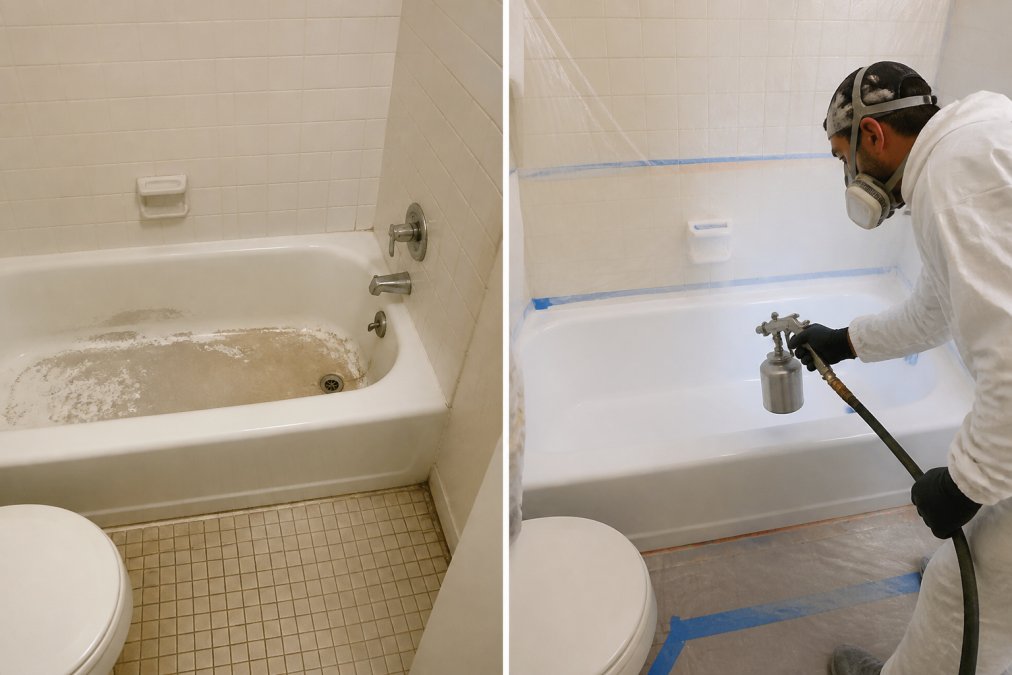
Most DIY attempts fail during application. Professional refinishing requires acid etching or chemical stripping for proper adhesion; DIY kits often skip these steps, causing bubbling, peeling, or cracking within months.
Professional contractors control humidity, temperature, and airflow during curing. DIY applications in typical bathrooms lack adequate ventilation, causing improper curing and premature failure.
Professional refinishing takes one to three days. DIY projects require careful preparation, multiple steps, extended curing, and cleanup, most homeowners underestimate the time and end up with rushed results.
Professional-grade materials and process
Professional contractors use epoxy or polyurethane coatings engineered for durability, adhesion, and moisture resistance. They cure to a harder finish that resists chipping and peeling.
The professional application process begins with thorough surface preparation. All contaminants, mold, and mildew are eliminated. This preparation step is what most DIY attempts skip or rush through.
Professional application uses spray equipment that ensures even coating thickness and proper coverage. Spray application provides a smooth, professional finish that looks like new.
Curing happens in controlled conditions. Professional contractors ensure proper temperature, humidity, and ventilation during curing. They keep the tub sealed and undisturbed for the full curing period. This patience ensures the coating hardens completely and develops its full durability.
The result is a finish that looks professionally done and lasts significantly longer than DIY work. The bathtub refinishing price estimate for professional work reflects these superior materials, skill, and process. When you factor in the cost of fixing failed DIY work, professional refinishing becomes the economical choice.
Getting an Accurate Bathtub Refinishing Price Estimate
Obtaining accurate quotes requires understanding what contractors evaluate during site inspections and how to compare proposals fairly.
What to expect during a site inspection
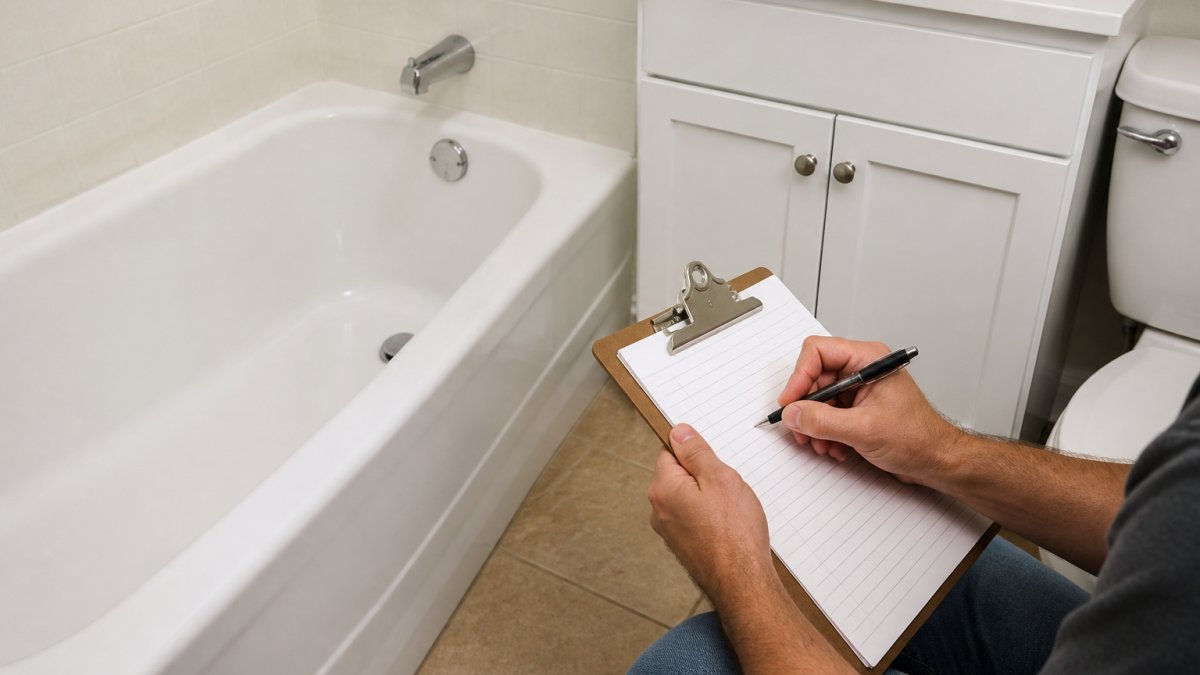
A professional site inspection is where the contractor assesses all factors that affect your bathtub refinishing price estimate. The contractor will examine the tub’s material. They’ll assess the current condition, noting cracks, chips, discoloration, and areas where the existing coating is failing.
The contractor will ask about your intended use and any specific concerns. Do you want to change the color? Are you refinishing just the tub or including the shower surround or sink?
How to compare quotes and avoid overcharging
Comparing refinishing quotes requires looking beyond the total price to understand what’s included and the quality of materials and process being proposed.
Frequently Asked Questions
Is bathtub reglazing worth it?
Yes, bathtub reglazing is worth it for most homeowners. Refinishing costs a fraction of replacement and restores your tub to like-new condition. With proper maintenance and a professional-grade coating, the results last years. The main exceptions: if your tub has structural damage beyond the surface, or if you’re planning to move soon and won’t recoup the investment.
How much does bathtub refinishing typically cost?
Bathtub refinishing price estimates vary based on material type, tub condition, and labor rates in your area. Request a free estimate from a professional refinisher for an accurate quote specific to your project. They’ll assess your tub during a site inspection and provide flat-rate pricing or itemized costs so you know exactly what to expect.
How long will reglazing a tub last with proper maintenance?
Professional bathtub refinishing typically lasts with proper care. The durability depends on the epoxy coating quality, surface preparation, curing time, and how well you maintain it. Avoid abrasive scrubbers and harsh chemicals; use gentle cleaners instead. A 5-year warranty is standard from reputable contractors, with many finishes lasting considerably longer.
What’s the difference between DIY refinishing kits and professional reglazing?
Professional refinishing uses industrial-grade epoxy coatings, proper acid etching for surface preparation, and controlled curing conditions. DIY kits lack professional-grade materials and application expertise, leading to bubbling, peeling, and poor adhesion within months. Professionals ensure finish quality that DIY methods cannot match.
Can bathtub refinishing fix deep cracks and heavy discoloration?
Professional refinishing can address surface discoloration, stains, and minor chips effectively. Deep structural cracks may require repair before refinishing. A site inspection lets the contractor assess whether your tub is a good candidate for reglazing or if replacement is more practical. Many damaged tubs are successfully restored at a fraction of replacement cost.
How long does the refinishing process take, and when can I use my tub again?
The actual refinishing work typically takes one day. However, the epoxy coating needs proper curing time before use. Your contractor will provide specific instructions on when it’s safe to use the tub and how to care for it during the curing period. Plan accordingly so your family’s bathroom access isn’t disrupted longer than necessary.