
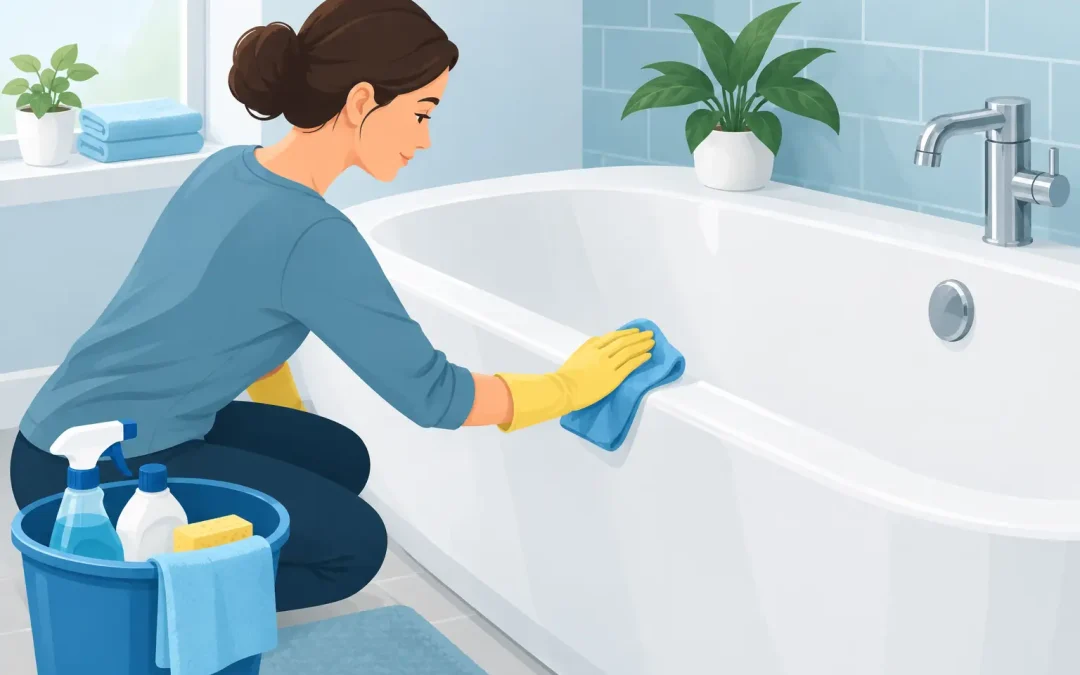
A freshly refinished tub can make the whole bathroom look cleaner. The key is keeping that finish intact. To clean a reglazed bathtub, use gentle products, a soft touch, and a simple routine. Treat it like the durable painted surface it is – not like old porcelain that can take aggressive scrubbing.
Reglazing gives a worn, stained, or outdated tub a smooth new surface without the cost and mess of replacement. With proper care, that surface can stay bright and attractive for years. The wrong cleaner or tool, however, can dull the shine, scratch the coating, or cause it to wear before its time.
Why Reglazed Tubs Need Different Care
A reglazed bathtub has a professionally applied coating over the existing tub surface. That coating is made to handle normal daily use, soap, water, and regular cleaning. It is not meant for harsh abrasives, strong solvents, or constant heavy-duty scrubbing.
This is where homeowners often run into trouble. A cleaner that worked fine on an old cast iron or porcelain tub may be too rough for a refinished surface. Powder cleansers, rough scouring pads, and harsh chemical sprays can slowly take away the smooth finish you paid for.
Good maintenance is not complicated. It is mostly about avoiding damage before it starts.
How to Clean a Reglazed Bathtub Safely
Start with a non-abrasive liquid cleaner. A mild dish soap mixed with warm water works well for routine cleaning. You can also use a cleaner clearly labeled as safe for acrylic, fiberglass, or refinished surfaces. Read the label before using any new product.
Spray or apply the cleaner to the tub. Let it sit briefly if there is soap residue, body oil, or light grime. Do not leave cleaner sitting for a long time. Wipe the surface with a soft sponge, microfiber cloth, or soft nylon brush. Then rinse the tub well with clean water.
Drying the tub after cleaning is a smart final step. A soft towel or microfiber cloth removes leftover water spots and helps prevent mineral buildup. This matters even more in areas with hard water.
For most homes, cleaning once a week is enough. If the tub gets heavy daily use, a quick wipe-down every few days will make the weekly cleaning much easier.
The best tools for the job
Use soft materials only. A microfiber cloth, non-scratch sponge, or soft nylon brush will clean the finish without wearing it down. A gentle spray bottle and a small squeegee can also help keep the surface clean between deeper cleanings.
Avoid anything that feels rough in your hand. If it can scratch a nonstick pan, it does not belong on a reglazed tub.
A simple weekly routine
After bathing, rinse away soap and shampoo residue. Once a week, clean the tub with a mild liquid cleaner and a soft sponge. Rinse completely, then dry the surface.
That routine takes only a few minutes. It also prevents the buildup that makes people reach for harsh cleaners later.
Cleaners and Tools to Avoid
The biggest mistake is assuming more aggressive means more effective. On a reglazed tub, harsh products can do more harm than good.
Stay away from abrasive powders, gritty creams, steel wool, scouring pads, and rough scrub brushes. Do not use cleaners containing bleach unless your refinishing professional specifically approves them. Strong acids, drain cleaners, oven cleaners, acetone, paint thinner, and other solvents are also off limits.
Be careful with popular cleaning shortcuts, too. Baking soda can feel mild, but it is still abrasive when scrubbed into a coated surface. Magic eraser-style pads can also dull the finish because they work like very fine sandpaper. Use a soft cloth instead.
If you are unsure about a product, test it in a small, hidden area first. Better yet, choose a mild cleaner and avoid the risk altogether.
Removing Soap Scum and Mineral Deposits
Soap scum is common in any bathroom, especially in a tub used every day. The good news is that fresh buildup usually comes off with warm water, mild dish soap, and a soft cloth.
For tougher soap residue, apply your approved non-abrasive cleaner and let it work for a few minutes. Wipe gently rather than scrubbing hard. Repeat if needed. Several gentle passes are safer than one aggressive cleaning session.
Mineral deposits can be more stubborn. This is common in Florida homes where water can leave a visible film around the drain, faucet area, and waterline. Start with the mildest method first. If the buildup does not release, contact your refinishing professional before trying acidic cleaners or home remedies.
The right approach depends on the product used to reglaze the tub and the age of the finish. A professional can recommend a safe option without putting the coating at risk.
Prevent Damage Between Cleanings
Cleaning matters, but everyday habits matter just as much. Do not use suction-cup bath mats on a reglazed bathtub. The suction can pull against the coating and may cause damage over time. Choose a non-slip mat that sits outside the tub, or ask your refinishing professional about safe non-slip options.
Do not leave shampoo bottles, soap dishes, wet washcloths, or metal cans sitting in the tub for long periods. Moisture trapped under these items can leave marks or encourage buildup. A rusting shaving cream can is especially hard on any tub surface.
Keep pets, tools, and heavy objects from banging against the finish. If you bathe a dog in the tub, place a soft towel on the bottom to protect against claw scratches. Never use the tub as a work surface for paint cans, ladders, or home improvement supplies.
Also watch the faucet. A constant drip can stain the finish and create mineral deposits. Fix leaks promptly. It is a small repair that protects your tub and saves water.
What to Do if the Finish Looks Dull or Damaged
A dull spot does not always mean the reglaze has failed. It may be soap film, hard-water residue, or cleaner buildup. Try a gentle cleaning first, then rinse and dry the area completely.
If you see peeling, chipping, cracking, deep scratches, or rust coming through, stop scrubbing. Do not try to sand, paint, or patch the area with a hardware-store kit. Those quick fixes often create a larger repair later.
Take clear photos and call the company that refinished the tub. A reputable refinishing company should explain what happened, tell you whether the issue is a cleaning problem or coating damage, and help you find the right repair path. The Tub Guy stands behind its refinishing work with a five-year warranty and a commitment to make issues right.
Common Questions About Reglazed Tub Care
Can I use vinegar to clean a reglazed bathtub?
Vinegar is often recommended for bathroom cleaning, but it is acidic. It may not be the best choice for every refinished surface, especially when used often or left sitting. Use only products approved for your specific tub finish, and ask a professional if you are unsure.
Can I use bleach on a reglazed tub?
Avoid bleach unless your refinishing professional has given you clear approval. Bleach can be too harsh for some coatings and may cause discoloration or premature wear.
How long should a reglazed tub last?
It depends on the quality of the preparation, materials, application, and aftercare. A professionally refinished tub that is cleaned properly and protected from damage can provide years of service. Regular gentle cleaning helps you get the most from the finish.
A reglazed bathtub is one of the fastest ways to improve a tired bathroom without tearing it apart. Keep the cleaning routine simple, skip the harsh products, and address small concerns early. Your tub will keep doing its job and keep looking like a bathroom upgrade instead of a bathroom problem.