
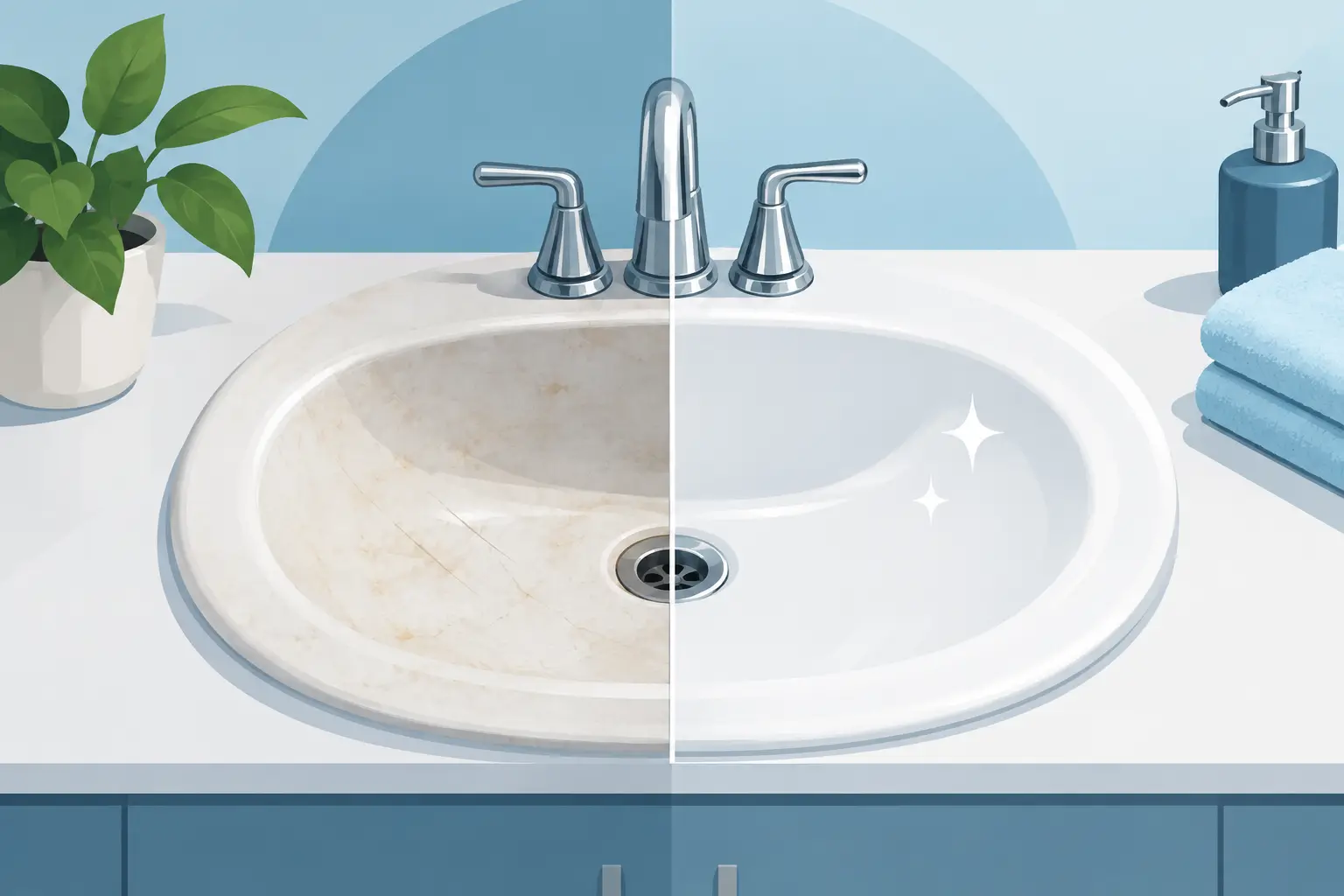
A sink can make an otherwise clean bathroom look worn out. Rust marks around the drain, stubborn stains, hairline cracks, and dull color all stand out. Porcelain sink restoration gives homeowners a practical way to fix that problem without tearing out a vanity, replacing plumbing, or turning a small bathroom into a construction zone.
For many Florida homeowners, restoration costs far less than replacement and can deliver a dramatic before-and-after result. The key is knowing whether the sink is a good candidate, what the work involves, and how to protect the new finish once the job is done.
When Porcelain Sink Restoration Makes Sense
A worn sink does not always need to be replaced. Many surface problems can be repaired and refinished successfully, including chips, scratches, discoloration, dull glazing, light rust staining, and minor cracks. A professional can also update the color when an old almond, pink, or yellow sink is holding back the whole room.
Restoration is often the right call when the sink is solid, the drain and plumbing are in good shape, and the issue is mostly cosmetic. It is also a smart option when the sink is built into a countertop or vanity. Removing one of those fixtures can lead to damaged counters, wall repairs, plumbing changes, and extra labor that quickly pushes up the cost.
Replacement may be the better choice if the sink has major structural damage, severe cracking through the body of the fixture, loose mounting, or extensive corrosion in metal components. A reputable refinishing contractor should tell you plainly when a repair will not deliver a lasting result.
What a Professional Sink Refinishing Process Looks Like
Good porcelain sink restoration is not a quick coat of paint. The finished look depends on careful prep work, the right repair materials, and a coating system made for wet bathroom surfaces.
First, the sink is cleaned to remove soap residue, mineral buildup, oils, and old caulk. This step matters more than most homeowners realize. Even a small amount of contamination can keep a new coating from bonding properly.
Next, chips, pits, and small cracks are repaired. Rust stains around a drain may need extra attention, especially in older sinks. The surface is then prepared so the new finish can grip the existing porcelain or enamel instead of sitting on top of it.
After masking the surrounding countertop, faucet, walls, and fixtures, the technician applies a durable refinishing coating. Spraying creates a smooth, even finish that is difficult to get with a brush-on repair kit. Once the coating has cured, the sink has a clean, glossy appearance that can make the entire vanity area feel newer.
The work is detailed, but it is far less disruptive than replacement. There is no demolition pile, no search for a matching sink size, and usually no need to disturb the countertop or plumbing.
Can Every “Porcelain” Sink Be Refinished?
Homeowners often use the word porcelain for several different sink materials. A technician may find porcelain enamel over cast iron or steel, vitreous china, cultured marble, or another coated surface. Each material needs the right preparation and repair method.
That is why an in-home assessment is useful. It confirms what the sink is made of, identifies any hidden damage, and helps set clear expectations for the finished result. A professional should also inspect the drain area, where water exposure and old corrosion often cause the most trouble.
Restoration vs. Replacement: The Real Trade-Off
Replacing a bathroom sink sounds simple until the work begins. The new sink must fit the existing opening, work with the faucet layout, and match the countertop. If it does not, the project can turn into countertop cutting, cabinet work, plumbing adjustments, and backsplash repair.
Restoration avoids much of that expense. It preserves the fixture you already own and focuses the budget on the visible problem: the worn surface. This makes sense for homeowners preparing to sell, updating a rental, refreshing a guest bath, or improving a bathroom without committing to a full remodel.
The trade-off is that a refinished surface needs proper care. It is durable, but it is not invincible. A restored sink should be cleaned with non-abrasive products and treated with the same common sense you would use with a newly installed fixture.
If you already plan to replace countertops, change the vanity, or move plumbing, replacement may fit better into the larger project. But if the sink is sound and the room needs a fast visual upgrade, refinishing is usually the lower-cost, lower-mess path.
How Long Does a Restored Sink Last?
Longevity comes down to two things: workmanship and maintenance. Proper surface prep and professional-grade materials give the finish its foundation. Daily care protects it over time.
Avoid harsh powders, steel wool, rough scouring pads, and strong chemical cleaners. These can scratch or wear down the finish. Use a soft cloth or non-abrasive sponge with a mild cleaner instead. Rinse away toothpaste, soap, hair dye, and cleaning products rather than letting them sit for long periods.
Do not leave metal cans, tools, or sharp objects in the sink. Keep rubber mats and suction-cup accessories out of the basin as well. They can trap moisture or pull at a coating over time. If a small chip does occur, have it addressed early. A minor repair is easier than allowing water to work beneath a damaged area.
In humid Florida bathrooms, ventilation also helps. Run the exhaust fan during showers and give the room time to dry out. The sink is designed for water, of course, but reducing constant moisture around drains and seams is always good practice.
Why DIY Sink Repair Kits Often Fall Short
A store-bought touch-up kit can hide a tiny chip in a pinch. For a small, out-of-the-way blemish, that may be enough. But it is not the same as full refinishing.
DIY kits often struggle with color match, surface bonding, and smoothness. Brush marks, uneven sheen, and peeling are common when the old surface is not properly prepared. Bathroom sinks take daily wear from water, cosmetics, cleaning products, and temperature changes. A shortcut repair may look acceptable at first, then fail where it is most visible.
Professional restoration is especially worthwhile when the damage covers a large area, the sink has multiple chips, rust is present, or you want to change the color. The goal is not to make damage less noticeable. The goal is to make the sink look clean, even, and ready to use again.
Questions to Ask Before Hiring a Refinishing Company
Price matters, but the lowest quote is not always the best value. Ask what surface preparation is included, how chips and cracks are repaired, and how long the sink needs to cure before use. You should also ask what cleaning products are recommended after the work is complete.
Warranty coverage deserves a direct question. A company that stands behind its refinishing work should explain what is covered and what happens if there is a workmanship issue. The Tub Guy backs its restoration work with a five-year warranty and a commitment to correct problems if they arise.
Look for clear answers, not vague promises. You want a contractor who can explain the condition of your sink, the likely outcome, and any limits before work starts.
A Better Bathroom Without a Full Remodel
A stained or chipped sink can make the whole bathroom feel older than it is. Restoring it can be one of the fastest ways to improve the room without the cost, mess, and downtime of replacement.
If your sink is structurally sound but looks beyond cleaning, get it evaluated before you assume demolition is the only answer. The right restoration can give you a smooth, bright surface and one less reason to put off enjoying your bathroom.