
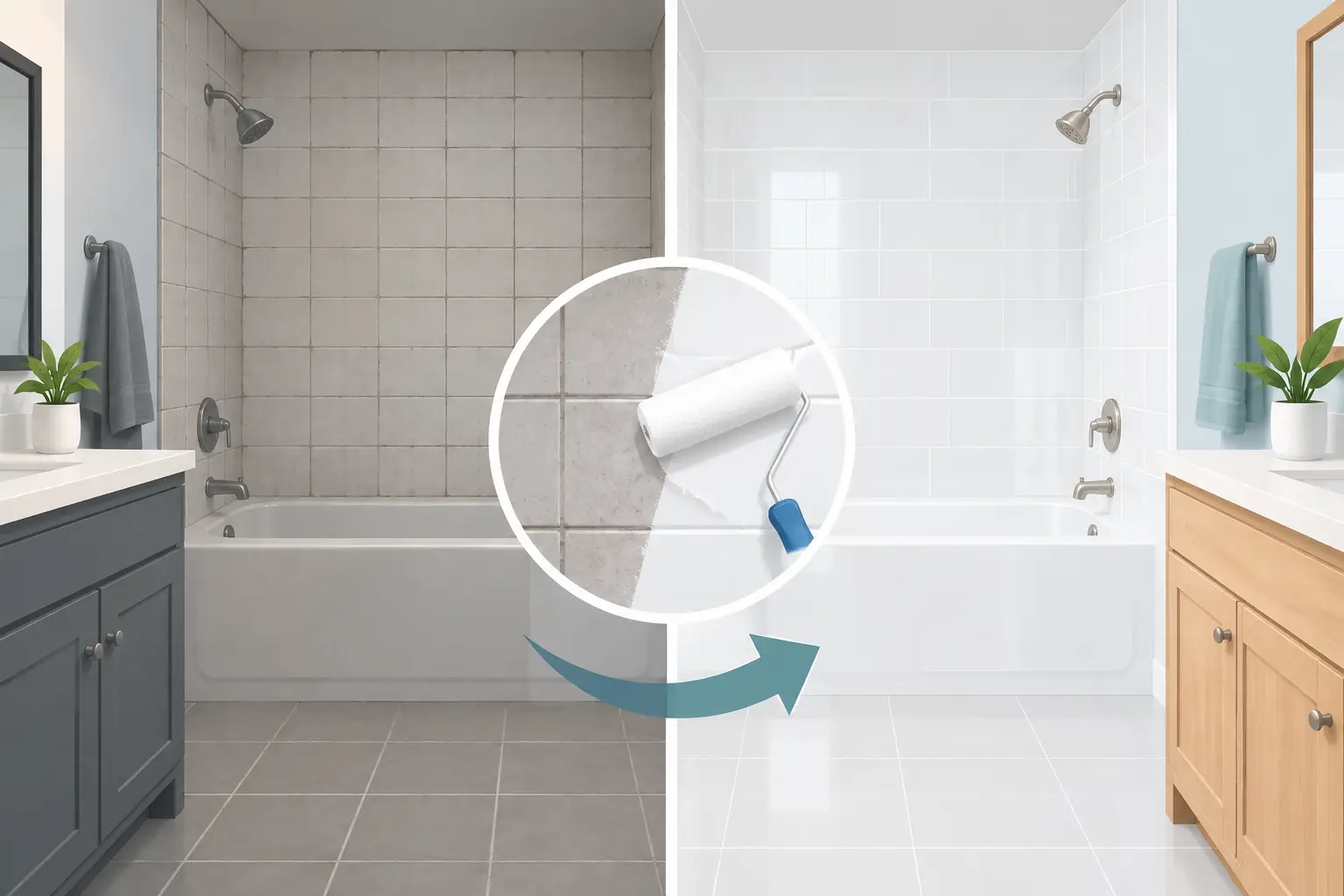
That stained, dated tile may not need to come out. Tile refinishing can restore the look of a bathroom without the demolition, dust, and high replacement cost that come with a full remodel. For many Pinellas County and St. Petersburg homeowners, it is the practical way to make a tired bathroom look clean, bright, and updated again.
The right refinishing job does more than cover a bad color. It creates a new, durable finish over sound tile and helps the whole room look like it belongs together. The key is knowing when refinishing is the smart move and when the underlying tile needs repair or replacement first.
What Is Tile Refinishing?
Tile refinishing is a professional surface restoration process. A trained technician deep-cleans the tile, repairs minor chips or cracks, prepares the surface for adhesion, and applies a specialized coating. Once cured, the coating gives the tile a fresh, even finish.
It is often called tile reglazing, resurfacing, or restoration. The goal is the same: change the appearance of worn, stained, or outdated tile without tearing it off the wall.
This process works especially well for bathroom wall tile, shower surrounds, tub surrounds, and certain vanity or countertop tile surfaces. It can also work on floor tile in the right setting, though floors need a coating system built for foot traffic and proper prep is critical.
A professional refinishing job can cover old colors, stubborn discoloration, faded patterns, and a dull finish. White remains a popular choice because it makes small bathrooms feel cleaner and brighter. Other color options may be available when homeowners want a more updated look.
Why Homeowners Choose Tile Refinishing
Removing tile is a major project. It can mean broken walls, damaged backer board, plumbing concerns, dust throughout the house, and days or weeks of disruption. Then comes the cost of new tile, materials, labor, and cleanup.
Refinishing avoids much of that mess. The existing tile stays in place. There is no need to haul away debris or rebuild the bathroom simply because the color is stuck in another decade.
The savings can be significant, but cost is not the only reason to refinish. Many homeowners simply do not want their bathroom out of commission for a long renovation. A properly planned refinishing project is faster and far less invasive than replacement.
It also makes sense when the tile layout is still functional. If the walls are solid, the tile is firmly bonded, and the shower has no hidden water damage, replacing everything may be more work than the bathroom needs.
When Tile Can Be Refinished
Tile refinishing works best when the problem is on the surface. Stains, faded color, minor chips, worn glaze, and dated style are all good reasons to consider it.
Your tile may be a good candidate if it is secure, mostly intact, and the surrounding walls show no signs of moisture damage. Small areas of damage can often be repaired before the new coating is applied. Old grout lines can also be refreshed as part of the finished look.
A good inspection matters. Bathroom surfaces deal with heat, moisture, soap residue, hard water, and daily use. A contractor should look beyond the cosmetic issue before recommending a solution.
Tile refinishing is not a fix for every problem. Loose tile, major cracks, crumbling walls, active leaks, soft flooring, or mold caused by water intrusion need to be addressed first. Coating over a failing surface only delays a bigger repair.
The same goes for badly damaged grout or open joints around a tub or shower. Caulk and seals must be in good condition to keep water from getting behind the finish. A professional will explain what can be restored and what needs repair before the work begins.
The Tile Refinishing Process
Good results come from preparation. The coating is important, but it cannot make up for a surface that has not been cleaned, repaired, and properly prepared.
First, the tile is cleaned to remove soap scum, body oils, mineral buildup, silicone residue, and old cleaning products. Any contamination left behind can affect adhesion. The technician then makes needed repairs, addresses chips, and prepares the tile surface so the coating can bond.
Next, the surrounding area is masked and protected. Fixtures, floors, walls, and nearby surfaces should be covered carefully. Professional ventilation is also a major part of the process, especially in a small bathroom.
The refinishing coating is then applied in controlled layers for an even finish. After curing, the tile has a smooth, renewed appearance that can make the tub, shower, and walls look dramatically different.
The bathroom cannot be used immediately. Cure time depends on the coating system, temperature, humidity, and the specific surface being refinished. Florida humidity is one reason homeowners should follow the technician’s instructions instead of rushing to use the shower early.
How Long Does Refinished Tile Last?
A professionally refinished tile surface can last for years with proper care. The exact lifespan depends on the condition of the original tile, how the surface is used, how well it was prepared, and how it is cleaned afterward.
A guest bathroom with light use will have different wear than a busy family shower used several times a day. Shower walls also face more water exposure than a tiled vanity backsplash. These details matter when setting expectations.
The biggest factor is workmanship. Surface preparation, repairs, coating quality, ventilation, and cure time all affect durability. This is not a job where a quick paint-over produces the same result as professional refinishing.
At The Tub Guy, the work is backed by a five-year warranty because accountability matters. Homeowners should not be left guessing what happens if there is an issue after the job is complete. A company that stands behind its work gives you more confidence in the result.
Caring for Refinished Tile
Once the surface has fully cured, care is simple. Use a soft sponge or cloth and a non-abrasive bathroom cleaner. Rinse away soap residue and wipe down high-use shower areas regularly.
Avoid harsh powders, abrasive pads, steel wool, and aggressive scrubbing tools. They can dull or scratch the finish over time. Do not use cleaners that are not recommended for refinished surfaces, especially products designed to strip buildup.
Keep the bathroom well ventilated. Run the exhaust fan during and after showers when possible. Wipe up standing water, and keep caulk lines in good condition. These small habits help protect both the finish and the structure behind the tile.
If you notice a chip, crack, or damaged caulk line, deal with it early. Small problems are easier to correct before water gets behind the surface.
Tile Refinishing vs. Replacement
Replacement is the better choice when the bathroom has serious water damage, failing walls, widespread loose tile, or a layout that no longer works for your household. It is also the right path when you want to move plumbing, enlarge a shower, or make a major design change.
But replacement is not automatically better because it is newer. If the tile is sound and your main issue is appearance, refinishing can deliver the visible transformation you want without turning your home into a construction zone.
Think about the goal. If you need a cleaner, brighter bathroom before guests arrive, a home sale, a rental turnover, or simply because you are tired of looking at old tile every morning, refinishing is often the more efficient answer. If the room is failing behind the surface, start with repairs instead.
Get a Clear Answer Before You Remodel
The best next step is a straightforward assessment of the tile, grout, caulk, and surrounding surfaces. You should know whether refinishing will solve the problem, what prep work is needed, how long the bathroom will be unavailable, and how to care for the finish afterward.
A bathroom does not have to be torn apart to look right again. When the tile is structurally sound, a professional refinish can give you the clean, updated result you want while keeping the project practical.