
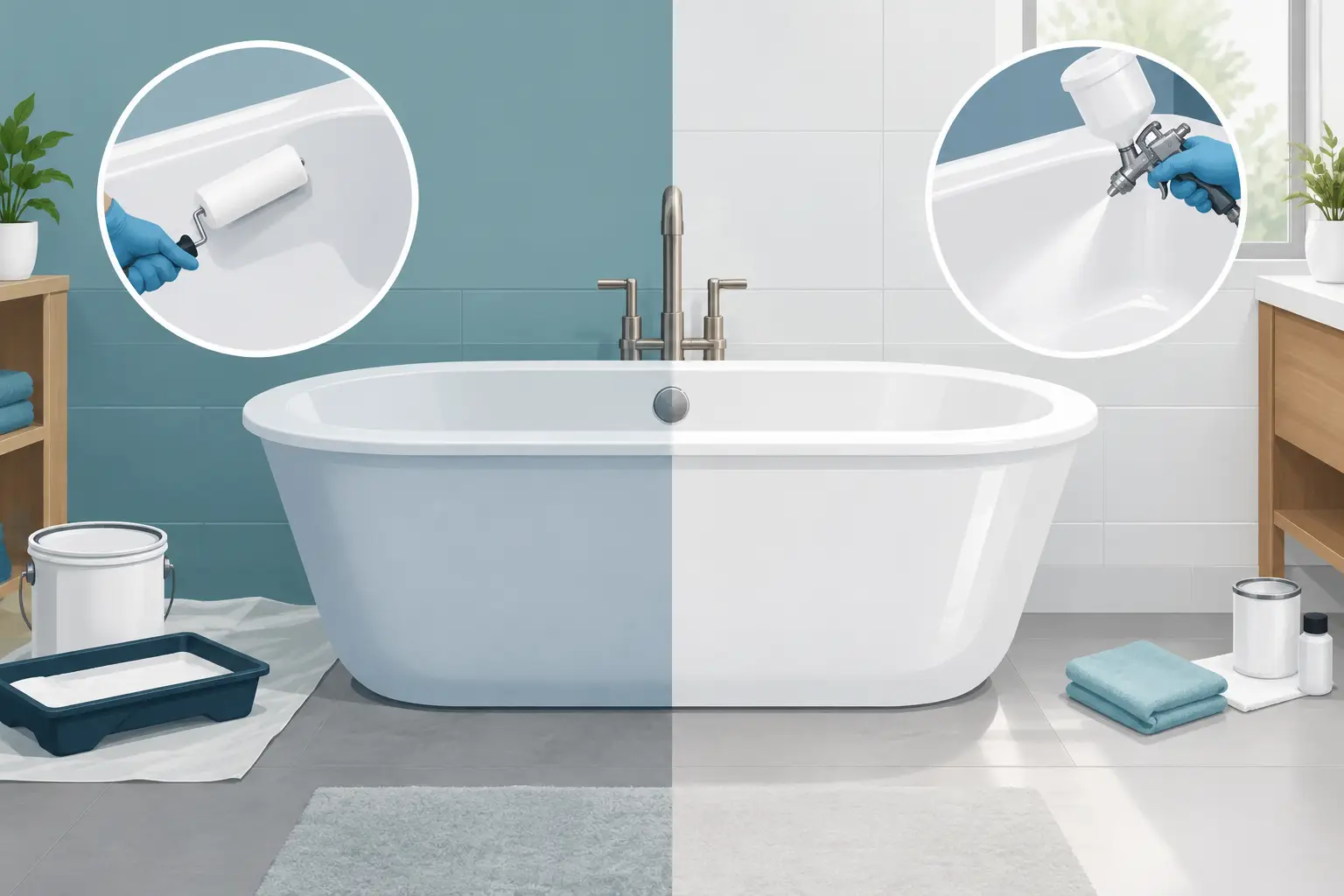
A tub can look tired long before it is ready to be replaced. Stains, chips, dull color, and rough spots make the whole bathroom feel dated. When homeowners compare epoxy paint versus reglazing, they are usually looking for the fastest way to get a clean, bright surface without tearing out a perfectly usable tub.
Both options change the appearance of a bathtub. They are not the same job, though. Epoxy paint is usually a do-it-yourself coating. Professional reglazing is a surface restoration process built around prep work, repairs, commercial-grade coatings, and controlled application. The right choice depends on the condition of your tub, how long you need the finish to last, and how much risk you want to take on.
Epoxy Paint Versus Reglazing: The Real Difference
Epoxy paint is sold in kits at home improvement stores. Most kits are designed for homeowners to apply with a brush, roller, or aerosol. They can cover discoloration and make an old fixture look better for a while. For a small budget or a short-term cosmetic fix, that can be appealing.
Reglazing is not simply painting a tub. A professional refinisher first cleans and decontaminates the surface, removes failing material, repairs chips and cracks, and prepares the tub for adhesion. The new finish is then sprayed in multiple controlled coats. The goal is a hard, smooth surface that looks more like a factory finish than a painted fixture.
The product matters. The preparation matters even more. A coating will only perform as well as the surface beneath it allows.
Why Prep Work Decides How Long the Finish Lasts
Bathroom surfaces hold more than visible dirt. Soap residue, body oils, hard-water minerals, silicone, and old cleaners can all interfere with adhesion. If those contaminants are not fully removed, the new coating may peel, blister, or wear early.
This is where DIY epoxy kits often run into trouble. The instructions may call for cleaning, sanding, and mixing the coating. That sounds simple until you are working around a drain, overflow plate, caulk lines, tile walls, and a slick porcelain or fiberglass surface. Missing one spot can leave a weak point.
Professional reglazing includes detailed masking and surface preparation. Chips are repaired before color is applied. Rust areas are addressed rather than hidden. Old caulk is removed where needed, so the finish can reach the edge of the fixture cleanly. This work takes time, but it is the difference between a finish that looks good for a few months and one that holds up under daily use.
Appearance: Brushed-On Coating vs. Sprayed Finish
A DIY epoxy kit can make a stained tub look noticeably better. That is its main strength. But many homeowners can still see roller texture, brush marks, uneven sheen, dust specks, or thin areas once the coating dries. Those flaws stand out under bathroom lighting.
A professionally reglazed tub is sprayed for a smoother, more even result. The finish can restore a faded white tub, cover stubborn staining, or change an outdated color. That matters in older Florida homes where avocado green, pink, powder blue, and worn beige fixtures are still common.
No refinishing process turns a damaged fixture into a brand-new replacement. Deep structural cracks, major corrosion, or a tub that has flexed for years may need more than a new finish. But for a sound tub with cosmetic wear, reglazing can deliver a dramatic before-and-after change without demolition.
Durability and Daily Use
Epoxy paint can work for a lightly used bathroom, especially when the fixture is in decent condition and the application is done carefully. It is often chosen for a guest bath, a rental turnover, or a temporary improvement before a larger renovation.
The trade-off is durability. Store-bought epoxy systems are typically less forgiving under daily wear. Hot water, dropped shampoo bottles, suction-cup bath mats, abrasive cleaners, and standing water can shorten their life. Once the coating starts failing, moisture can get underneath it and make the problem spread.
Professional reglazing is intended for regular household use when it is performed correctly and maintained properly. It is still a refinished surface, not indestructible armor. It needs non-abrasive cleaning and reasonable care. But a properly prepared and applied finish has a much better chance of staying smooth, glossy, and easy to clean.
For a primary bathroom, durability is usually worth more than the lowest upfront price. Saving money on a kit does not feel like much of a win if you need to redo the tub a year later.
Cost: The Cheapest Option Is Not Always the Best Value
Epoxy paint kits cost less at the start. That is the clear advantage. Homeowners can buy a kit, spend a weekend on the project, and avoid paying for professional labor.
But the total cost can change quickly if the job goes wrong. You may need extra supplies, ventilation equipment, new caulk, repair material, and cleaning products. If the finish peels or cures poorly, removing a failed DIY coating before professional refinishing can add work to the next job.
Professional reglazing costs more than a paint kit, but far less than replacing a tub and rebuilding the surrounding bathroom. Replacement can involve plumbing work, tile repair, flooring damage, disposal, and days or weeks of disruption. Reglazing keeps the existing fixture in place and focuses the investment on restoring what you already own.
For many homeowners, that is the practical middle ground. You get a real visual upgrade without turning a worn tub into a full remodeling project.
The Florida Factor: Humidity, Ventilation, and Cure Time
Florida bathrooms put finishes through a lot. High humidity, frequent showers, and limited ventilation can keep moisture in the room. That makes proper cure time and bathroom ventilation especially important.
A coating that has not cured fully can be damaged by water, cleaning, or even a bath mat. DIY jobs are more vulnerable because temperature, humidity, mixing ratios, and application thickness are harder to control. A finish may feel dry but still not be ready for use.
Professional refinishers plan around these conditions. They use specialized products, control the work area, and give clear instructions for when the tub can be used again. After the job, running the bath fan, keeping the room aired out, and wiping down standing water will help protect the finish.
When Epoxy Paint Makes Sense
Epoxy paint is not always the wrong choice. It can make sense if the tub is in fair shape, you need a low-cost short-term improvement, and you are comfortable doing detailed prep work. It may also be reasonable for a fixture that sees very little use.
Go in with realistic expectations. Read the cure instructions closely. Do not rush the cleaning, sanding, masking, or drying stages. And do not expect a brushed-on kit to match the smoothness or life span of a professionally sprayed finish.
If the surface already has peeling paint, deep chips, rust, cracks, or visible repairs, a kit is less likely to solve the underlying issue. It may only cover it temporarily.
When Professional Reglazing Is the Better Call
Reglazing is usually the better option when the tub is used every day, the bathroom is a key part of your home, or you want a finish that looks clean and consistent. It is also a strong choice when you want to update the color without replacing the fixture.
A professional can assess whether your tub, sink, tile, shower, or countertop is a good candidate for refinishing. That assessment matters. Honest surface restoration starts with knowing what can be repaired and what truly needs replacement.
The Tub Guy approaches refinishing as a workmanship job, not a quick coat of paint. Proper prep, careful repairs, a smooth finish, and clear maintenance guidance all protect the result. A five-year warranty also gives homeowners assurance that if something is not right, it will be addressed.
How to Protect a Reglazed Tub
Once a tub has been professionally refinished, maintenance is simple. Use a soft sponge or cloth and a non-abrasive bathroom cleaner. Avoid harsh scouring powders, steel wool, abrasive pads, and strong chemicals that can dull or scratch the surface.
Do not use suction-cup bath mats. The cups can pull against the coating and create damage over time. Use a non-slip mat that sits flat or apply a recommended non-slip solution if safety is a concern.
Fix dripping faucets and keep standing water from sitting in the tub whenever possible. Small habits help a restored surface stay bright and smooth for years.
A worn tub does not automatically mean a costly replacement is coming. If the fixture is structurally sound, professional reglazing can give your bathroom the clean, updated look you want without the mess of demolition. The best choice is the one that matches how you use the space and gives you a finish you will still be happy to see every morning.