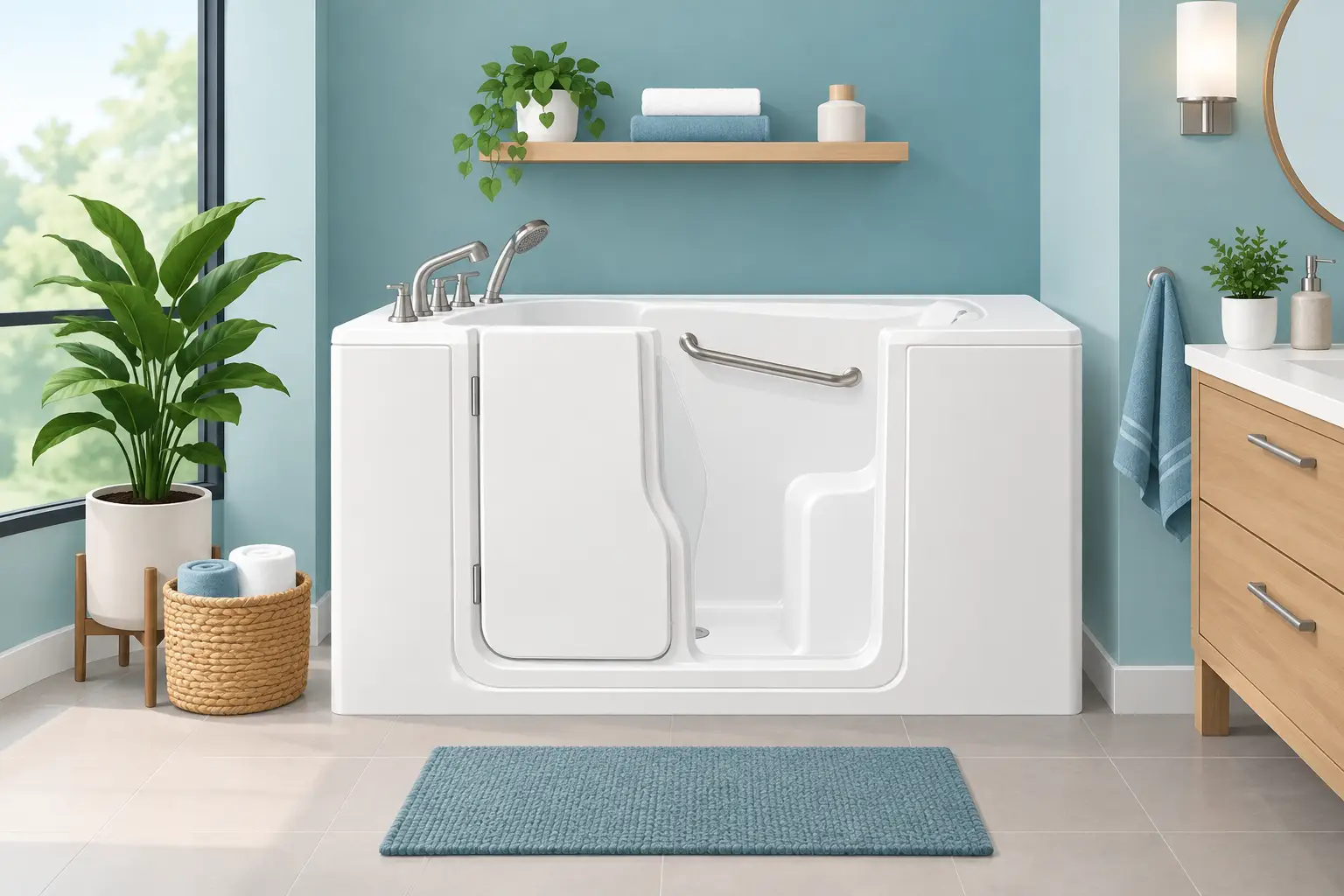
A walk-in tub should make bathing easier, not give you another bathroom problem to manage. If the finish is dull, the floor feels slick, the fixtures leak, or the enclosure looks dated, the right walk in bathtub upgrades can make a major difference without tearing out the whole room.
For many Florida homeowners, full replacement is more work than they need. It can mean demolition, plumbing changes, tile repair, and weeks of disruption. A targeted upgrade can improve the way the tub looks and works while keeping the project manageable.
Start With the Tub Surface
A worn tub surface affects more than appearance. Chips, rough spots, staining, and faded color make a bathroom feel old fast. They can also make regular cleaning harder. Soap film and mineral deposits cling to damaged surfaces more easily than to a properly restored finish.
Professional refinishing is often one of the best upgrades for a walk-in bathtub that is structurally sound but looks tired. The old surface is cleaned, repaired, prepared, and coated to create a smooth, updated finish. White remains a popular choice, but color changes can also help bring an older bathroom in line with the rest of the home.
This is not the same as applying a quick store-bought coating. A short-term paint job may peel, discolor, or wear down around the drain and seat. Proper preparation is what separates a finish that looks good for a season from one that holds up to daily use.
Refinishing makes sense when the tub shell is solid, the door operates correctly, and the plumbing is in good condition. If there are deep cracks, major leaks, or movement in the tub itself, repair or replacement may be the smarter call. A professional inspection should come before any surface work.
Add a Non-Slip Surface Where It Counts
Walk-in tubs are designed with safety in mind, but smooth wet surfaces can still be slippery. This is especially true around the seat, floor, and step-in area. A non-slip surface treatment is a practical upgrade that improves traction without making the tub difficult to clean.
Avoid oversized bath mats inside the tub. They can trap moisture, encourage mildew, and create an edge that catches water or feet. A professionally applied non-slip texture is more permanent and keeps the floor clear.
The right level of texture matters. Too little may not provide enough grip. Too much can feel rough and collect grime. A good installer can recommend a finish that improves footing while still feeling comfortable under bare feet.
Upgrade Grab Bars and Placement
A grab bar only helps if it is where you need it. Many older bathrooms have one bar placed as an afterthought, often too high, too low, or too far from the entry point. Walk-in bathtub upgrades should account for how the person using the tub actually moves.
Think through the full process: opening the door, stepping over the low threshold, sitting down, standing up, and exiting after the tub drains. A sturdy grab bar near the entry may help with balance. Another near the seat can make standing safer.
Grab bars must be secured to proper backing or framing. Suction-cup bars are not a reliable substitute for a professionally installed safety bar. They may be useful as a temporary aid, but they should not carry your full weight.
If the bathroom walls are tiled, installation takes more care. The goal is to avoid cracked tile, poor anchoring, and water intrusion behind the wall. This is a job worth doing right the first time.
Replace Worn Fixtures and Controls
A tub can have a fresh new finish and still feel outdated if the faucet, showerhead, and controls are corroded or hard to operate. Replacing worn fixtures can improve comfort and make the entire setup look cleaner.
Look for controls with easy-grip handles. Lever-style handles are usually simpler to operate than small round knobs, especially for homeowners with limited hand strength. A handheld showerhead is another useful addition. It makes rinsing easier and simplifies cleaning around the seat, door, and lower walls.
Temperature control also deserves attention. Water that gets too hot too quickly is a safety concern. A plumber can inspect the mixing valve and make sure the water temperature is set appropriately. This is particularly important when children, older adults, or anyone with reduced sensation uses the tub.
Do not choose fixtures based on appearance alone. Make sure replacement parts are available and that the finish will hold up to Florida’s humidity and regular cleaning.
Check the Door, Seal, and Drainage
The door is the feature that makes a walk-in tub work. If it sticks, drips, or requires too much force to close, it needs attention. A worn seal can lead to frustrating leaks and water damage outside the tub.
Door adjustments, seal replacement, and hardware repairs may be possible depending on the model and condition. The key is to address a small leak early. Water that repeatedly reaches the floor can damage surrounding flooring, baseboards, and walls.
Drain time matters, too. Most walk-in tubs need to drain completely before the door can open. A slow drain leaves the user sitting in cooling water longer than necessary. Have the drain checked for buildup, partial blockage, or plumbing issues. In some cases, improving the drain setup can make daily bathing more comfortable.
Improve the Surrounding Walls and Tile
A clean-looking tub can still be surrounded by stained tile, cracked grout, or a dated shower wall. If demolition is not in the plan, resurfacing nearby bathroom surfaces can create a more complete result.
Tile refinishing can cover worn color, dull glaze, and surface stains without removing the existing tile. It is a practical option when the tile is secure and the layout works, but the room looks stuck in another decade. Sink and countertop refinishing can also help tie the bathroom together.
This approach works best when there is no major water damage behind the walls. Loose tile, soft drywall, persistent mold, and failed waterproofing need repair first. Surface restoration is designed to improve a sound surface, not hide a structural problem.
Choose Upgrades Based on Daily Use
The best walk in bathtub upgrades are not always the most expensive ones. They are the ones that solve a real issue in your home. A homeowner who struggles with slippery footing may benefit most from a non-slip surface and better grab bars. Someone preparing to sell may get more value from refinishing the tub, tile, and sink for a clean, updated look.
If you plan to stay in your home for years, focus on comfort and maintenance. Easy-to-use fixtures, sound seals, proper drainage, and durable finishes will matter more than trendy details. If the bathroom serves an aging parent or a family member with mobility concerns, safety features should lead the decision.
It also helps to set priorities before requesting estimates. Start with leaks, cracks, unstable surfaces, and worn safety features. Then move to cosmetic improvements. This keeps your budget focused on work that will make a difference every day.
Protect Your Investment After the Work Is Done
A restored walk-in tub needs basic care to keep its finish looking its best. Use non-abrasive cleaners and a soft sponge or cloth. Skip scouring powders, harsh solvents, steel wool, and abrasive pads. Those products can dull or scratch a refinished surface.
Rinse away soap residue after bathing when possible. Keep caulk lines clean and watch for gaps around the tub, wall, or door area. Small maintenance steps can prevent moisture problems from turning into larger repairs.
Ask about warranty coverage before hiring anyone for refinishing work. A company that stands behind its workmanship gives you more than a better-looking tub. It gives you a clear path forward if a problem appears after the job is complete. The Tub Guy backs qualifying refinishing work with a five-year warranty and a commitment to make the result right.
A walk-in tub does not need a full remodel to feel safer, cleaner, and more comfortable. Start with the issue that frustrates you most, then choose upgrades that make bathing easier every single day.