
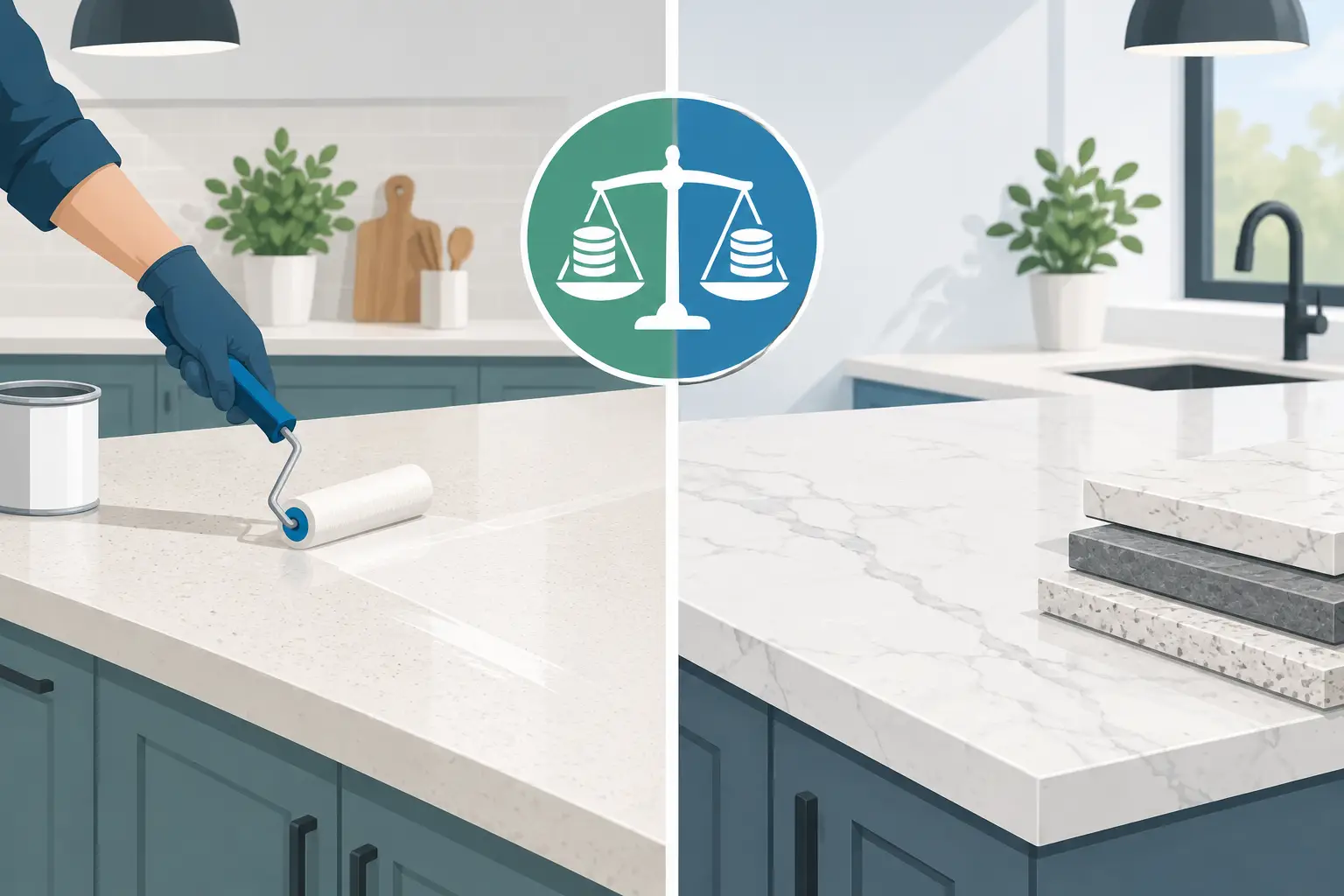
A bathroom vanity can make the whole room look tired. Stains, burns, chips, faded color, and worn finishes stand out every morning. When that happens, countertop refinishing versus replacement becomes a real decision. One option restores the surface you have. The other starts over with new materials, new labor, and often more disruption.
For many Florida homeowners, refinishing is the practical answer. But not every countertop should be refinished. The right choice comes down to the condition of the surface, the result you want, and how much time and money you want to put into the project.
Countertop Refinishing Versus Replacement: The Real Difference
Refinishing means restoring the existing countertop surface. A professional cleans, repairs, prepares, and applies a durable new finish. The countertop can look clean, smooth, and updated without tearing out the vanity or changing plumbing.
Replacement means removing the old countertop and installing a new one. That may sound simple, but it can involve disconnecting the sink, replacing faucets, repairing walls, adjusting cabinets, and waiting on material delivery. If the old top is part of an integrated vanity or cultured marble unit, replacement can become an even bigger job.
Both choices can improve a bathroom. The difference is how much work happens behind the scenes.
When Refinishing Makes Sense
Refinishing works best when the countertop is structurally sound but looks worn out. The surface may be stained, scratched, faded, chipped, or simply stuck in an outdated color. Those are cosmetic problems, and cosmetic problems are often good candidates for restoration.
It is especially useful when you like the size and layout of your vanity. If the cabinets are solid, the sink is in good shape, and the countertop fits the room well, there may be no reason to tear everything out just because the finish looks bad.
A professionally refinished countertop can give the vanity a fresh, uniform appearance. It also allows for a color change. That matters when you are trying to move away from a dated almond, pink, tan, or heavily speckled finish without paying for a full bathroom remodel.
Refinishing also keeps the project contained. There is no demolition mess spread through the house. In most cases, there is no need to hunt down matching replacement materials or deal with surprise cabinet repairs once the old top comes off.
For rental properties, guest bathrooms, home sales, and budget-conscious updates, this can be a smart use of money. You get a visible transformation without rebuilding a bathroom that otherwise works.
When Replacement Is the Better Call
Replacement is the better choice when the countertop has problems below the finish. A new coating cannot fix a countertop that is swollen from water damage, badly cracked through the substrate, loose from the cabinet, or failing around the sink opening.
You should also consider replacement if you are changing the vanity layout. Maybe you want a double sink, a larger top, a different bowl style, or a new cabinet configuration. Refinishing improves what is there. It does not resize the countertop or redesign the bathroom.
Material matters, too. Some surfaces are better refinishing candidates than others. A professional should inspect the surface before making promises. The goal is not to sell a quick fix. The goal is to choose a repair that will hold up.
If there is ongoing water intrusion, plumbing leaks, mold-damaged cabinetry, or soft particleboard underneath the top, solve those issues first. A new countertop installed over a bad cabinet is still a bad investment. The same is true for refinishing.
Cost Is More Than the Price of the Countertop
Homeowners often compare the cost of refinishing to the price of a new countertop at a store. That is not the full comparison.
Replacement costs can include the countertop, sink, faucet changes, plumbing work, removal and disposal, delivery, installation, backsplash work, wall touch-ups, and possible cabinet repairs. A simple upgrade can grow fast once the old materials come out.
Refinishing usually avoids many of those added costs because the existing countertop stays in place. You are paying for skilled surface preparation, repairs, materials, and workmanship rather than a chain of demolition and installation work.
That does not mean refinishing is always the cheapest option in every situation. A small, basic countertop may be inexpensive to replace. But if replacement affects plumbing, cabinetry, tile, or walls, the value of refinishing becomes much clearer.
Get an estimate based on the full scope of work. Ask what is included, what conditions could change the price, and whether damaged areas can be repaired before the new finish is applied. Clear answers upfront prevent frustration later.
Downtime Matters in a Busy Home
A replacement project can leave a bathroom out of service longer than expected. Materials may need to be ordered. Installers may need separate visits. Plumbing connections often happen after the countertop is set. If a wall, cabinet, or sink does not line up correctly, the schedule can stretch.
Refinishing is usually much less disruptive. The work is done in place, and there is no need to rip out the vanity just to improve its appearance. A trained refinisher protects the surrounding area, handles the preparation, and leaves you with care instructions for the finished surface.
That is a big deal in a home with one main bathroom, visiting family, or tenants waiting for repairs. Less disruption means less stress.
Durability Depends on the Prep Work
The finish is only as good as the prep work underneath it. That is why professional refinishing is different from rolling paint over a countertop on a Saturday afternoon.
Proper refinishing involves cleaning away buildup, addressing damage, repairing chips or cracks where appropriate, preparing the surface for adhesion, and applying coatings made for this type of work. Shortcuts show up later as peeling, rough texture, or weak spots around the sink and edges.
After refinishing, care matters. Use non-abrasive cleaners. Avoid harsh chemicals, scouring pads, and leaving standing water around seams. Do not cut directly on the countertop. Treat it like a finished surface, not a workbench.
Replacement materials have care needs too. Natural stone may need sealing. Laminate can swell if water gets into seams. Solid-surface tops can scratch. There is no countertop material that stays perfect without reasonable care.
The Look You Want Should Guide the Decision
If your goal is a clean, bright, updated vanity, refinishing can deliver a major visual improvement. It is a strong choice when you want a consistent color and a restored surface without changing the room layout.
If your goal is a completely different style, material, sink setup, or countertop shape, replacement gives you more design freedom. It is the larger project, and sometimes that is exactly what the bathroom needs.
Be honest about the rest of the room. A worn countertop in an otherwise solid bathroom may only need refinishing. A vanity with failing cabinets, outdated plumbing, damaged walls, and a poor layout may be ready for a broader renovation.
Questions to Ask Before You Decide
Before choosing either route, ask a contractor to look closely at the countertop, sink area, and vanity base. You need to know whether the damage is cosmetic or structural.
Ask how repairs will be handled, how long the bathroom will be affected, and what care the finished surface requires. If you choose refinishing, ask about the warranty and what it covers. A company that stands behind its work should be clear about the process and willing to correct problems.
The Tub Guy backs qualifying refinishing work with a five-year warranty because homeowners should not be left guessing after the job is done. The finished result should look right, feel right, and hold up with normal use.
A worn countertop does not automatically mean you need a costly tear-out. Start with a professional assessment, fix the problems that matter, and put your money toward the improvement that makes your bathroom feel good to use again.