
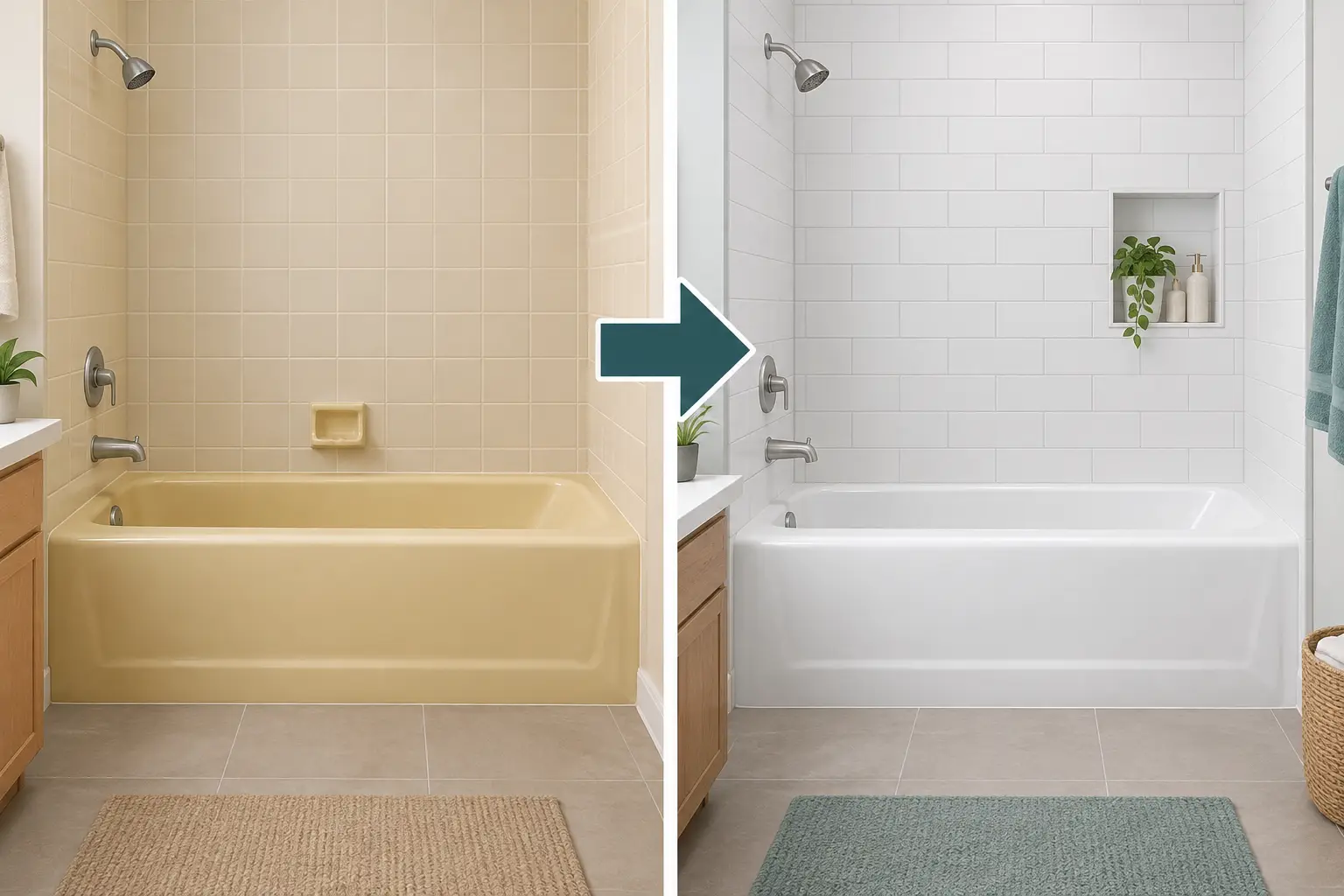
That avocado green tub may still be solid. The same goes for a faded pink, powder blue, harvest gold, or worn beige bathtub. If the surface has lost its shine but the tub itself is in good shape, a dated tub color transformation can give your bathroom a clean, current look without tearing out the fixture.
For many Florida homeowners, replacing a tub means more than buying a new tub. It can mean demolition, plumbing work, damaged tile, drywall repairs, and days or weeks without a working bathroom. Professional refinishing changes the visible surface and color of the tub while leaving the existing fixture in place.
What Is a Dated Tub Color Transformation?
A tub color transformation is a professional refinishing process that changes the finished color of an existing bathtub. The old surface is cleaned, repaired, prepared, and coated with a durable new finish. In most cases, homeowners choose white because it makes the room look brighter, cleaner, and easier to update around.
This is not a paint job from a hardware store. A proper refinishing job depends on surface prep, repair work, controlled application, and the right coating system. Skipping those steps can lead to peeling, rough texture, poor adhesion, or a finish that fails too soon.
The goal is simple: make an outdated tub look like it belongs in the bathroom you have now.
Why Homeowners Change Tub Colors
Bathroom color trends do not last forever. A tub that looked stylish 30 years ago can make the whole room feel dated, even when the vanity, flooring, and fixtures are still in decent shape.
White remains the most common choice because it works with nearly every bathroom style. It pairs well with gray, beige, black, brass, chrome, and brushed nickel fixtures. It also makes it easier to sell or rent a home because buyers do not have to imagine living with a pink or green bathtub.
Color changes also help when the tub has uneven discoloration. Old beige finishes can yellow. Blue and pink tubs can show dull spots, soap buildup, and worn areas more clearly than a fresh white finish. A new finish covers the old color and gives the surface a uniform appearance.
Refinishing vs. Replacing the Tub
Replacement is sometimes necessary. If a tub is badly rusted through, cracked beyond repair, structurally unstable, or damaged around the drain and overflow areas, refinishing may not be the right answer. A qualified technician should inspect the condition before promising results.
But when the tub is structurally sound, refinishing is often the smarter path. It avoids the mess of removing a heavy cast iron or steel tub. It can also prevent damage to surrounding tile, flooring, walls, and plumbing connections.
Replacement projects grow quickly. Once the old tub comes out, homeowners may find water damage, broken tile, outdated plumbing, or wall repairs waiting behind it. A dated tub color transformation keeps the project focused on the surface you want to change.
The trade-off is straightforward. A new tub gives you a completely new fixture. Refinishing gives you a new-looking surface and color at a much lower cost and with far less disruption. For a sound existing tub, that can be the better value.
How Professional Tub Color Changes Work
A lasting result starts long before the new color goes on. First, the technician removes soap residue, mineral buildup, body oils, and old caulk from the work area. These contaminants can interfere with adhesion if they are not properly addressed.
Next comes surface preparation. Chips, cracks, scratches, and small damaged areas are repaired. The surface is then prepared so the new coating can bond correctly. Fixtures, walls, floors, and surrounding areas are masked off to protect the rest of the bathroom.
The finish is applied in controlled coats to create an even color and smooth appearance. Once the tub has cured according to the coating system’s requirements, it is ready for normal use. The exact timeline depends on the condition of the tub, needed repairs, humidity, and the product being used.
Florida humidity can affect curing and drying conditions. That is one reason professional application matters. A technician knows how to prepare the space and manage the job so the finish has the best chance to perform as intended.
Can Any Tub Be Changed to White?
Many can. Cast iron, steel, fiberglass, acrylic, cultured marble, and other common bathroom surfaces may be candidates for refinishing. The material, existing damage, prior coatings, and overall condition all matter.
Fiberglass and acrylic tubs deserve a closer look. These tubs can flex, and heavy flexing can put stress on any finish. A professional can check for cracks, weak spots, and poor support before recommending a color change.
Previously refinished tubs also need inspection. If an old coating is peeling or failing, it may need to be removed and repaired before a new finish is applied. Covering a failing surface without correcting the cause is not a long-term fix.
White is the most requested color, but it is not the only option. Depending on the project and coating system, other neutral colors may be available. Still, homeowners looking for the broadest appeal and easiest future updates usually choose white.
What a Refinished Tub Can Fix
A color change is often part of a larger restoration. It can address common problems that make a bathtub feel old and neglected, including:
- Faded or yellowed finishes
- Pink, blue, green, gold, or beige colors from past decades
- Light chips, scratches, and worn spots
- Stains that do not come clean
- Dull surfaces that no longer shine
Not every stain or defect can be made invisible. Deep corrosion, severe cracking, and structural damage may limit what refinishing can accomplish. A good contractor explains those limits before work begins instead of overpromising after the fact.
How Long Does a Color Transformation Last?
The life of a refinished tub depends on the original condition, the quality of preparation, the coating system, and how the tub is cared for after the job. Professional work should look smooth, even, and consistent from the start. It should not have obvious brush marks, rough overspray, or thin-looking areas.
Care matters after refinishing. Use non-abrasive cleaners. Avoid harsh powders, scouring pads, and strong chemical drain cleaners that sit on the surface. Do not use suction-cup bath mats, since they can pull against the finish over time. Fix drips quickly, especially around faucets and showerheads, to prevent constant water exposure in one spot.
The Tub Guy backs qualifying refinishing work with a five-year warranty. That matters because a color transformation should not be a one-time cosmetic gamble. You should know who to call if there is a workmanship issue that needs attention.
When It Makes Sense to Refinish More Than the Tub
A bright white tub can make old wall tile look even more dated. If the tile is solid but the color is wrong, refinishing the tub and tile together can create a more complete bathroom update without full demolition.
The same idea applies to sinks, shower pans, countertops, and vanities. You do not have to refinish every surface. Sometimes changing the tub alone is enough. But if several fixtures have mismatched colors or worn finishes, a coordinated resurfacing project can deliver a bigger visual change for far less than a full remodel.
This approach works especially well in rental properties, guest bathrooms, and homes being prepared for sale. The room looks cleaner and more current without putting a major renovation on the schedule.
Questions to Ask Before You Hire Someone
Ask whether the contractor performs repairs before coating the tub. Ask how they protect your walls, floors, and fixtures. Ask when the tub can be used again and what cleaning products are safe afterward.
You should also ask about warranty coverage and what happens if there is a problem. A low price is not always a bargain if the work fails early and the contractor will not return your calls. Look for a company that can clearly explain the process, the expected result, and the limits of the job.
Photos can help, but an honest assessment matters more. The right contractor will tell you if your tub is a good candidate for refinishing or if replacement is the better investment.
A dated tub does not have to dictate the look of your bathroom for another decade. If the fixture is solid, changing its color can be one of the fastest ways to make the room feel clean, current, and worth using again.