
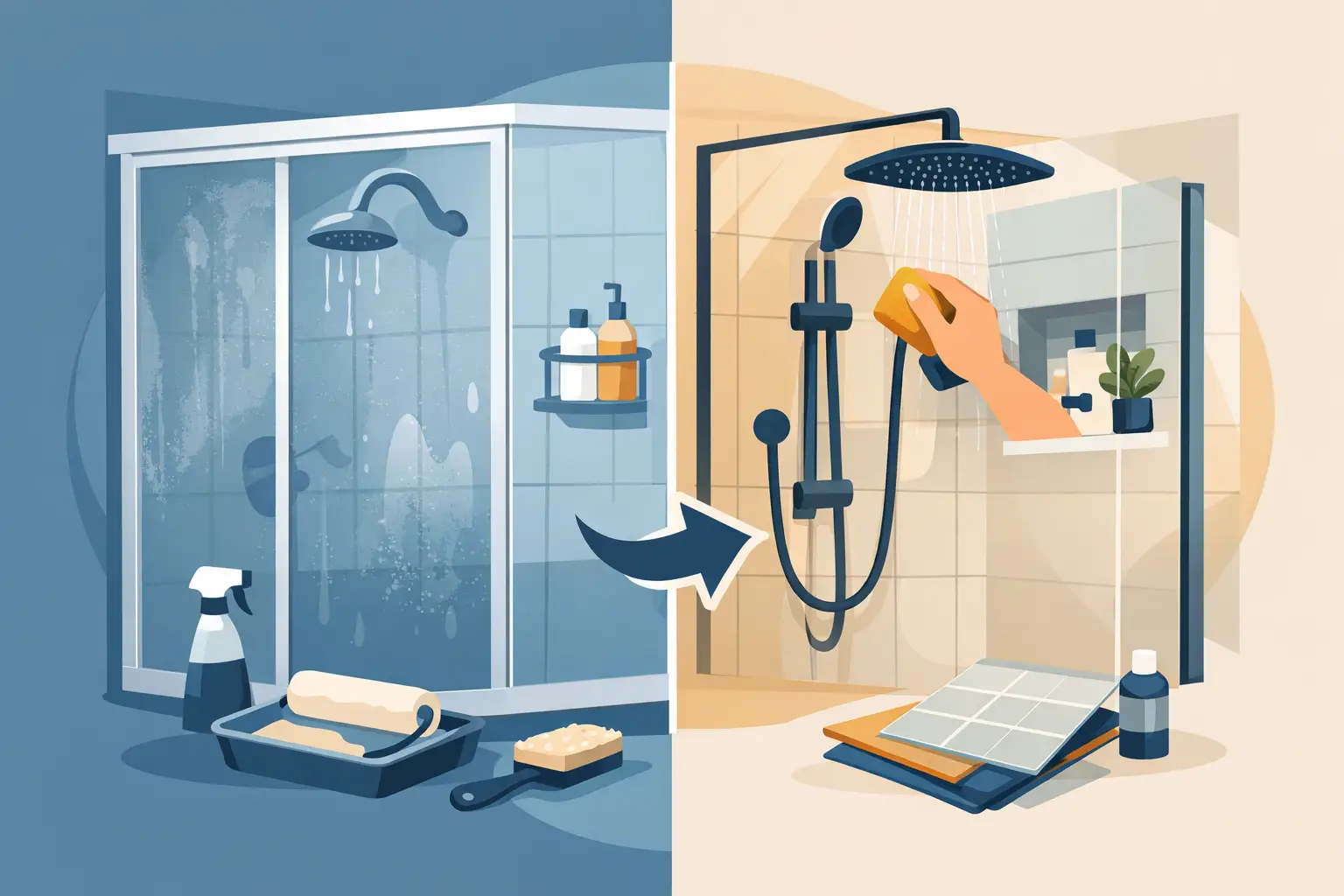
A shower can make the whole bathroom look old, even when the rest of the room is clean. Stained walls, dated tile color, chips, worn caulk, and a dull shower pan all stand out. For many Florida homeowners, the best way to update shower areas is not a full tear-out. It is fixing what is worn, refinishing surfaces that still have good structure, and replacing only the parts that truly need it.
That approach saves money, avoids demolition, and gets your bathroom back in service faster. But it only works when you choose the right update for the condition of your shower.
Start With What Is Actually Wrong
Before choosing new tile or calling a remodeler, look closely at the shower itself. Cosmetic problems and structural problems need different solutions.
A shower with surface stains, faded color, minor chips, rough texture, or old-fashioned tile may be a strong candidate for professional refinishing. The shower can look dramatically different without removing the walls or pan. A professional coating can also change the color, which is useful when you want a clean white finish or a more current neutral tone.
On the other hand, active leaks, soft walls, loose tile, mold behind the surround, or water damage around the floor are not cosmetic issues. Those problems need to be repaired first. Coating over damaged materials does not stop water from getting where it should not go.
This is the first decision that protects your budget. Do not pay for replacement just because a shower looks tired. Do not pay for refinishing if the shower has hidden damage that needs real repair.
The Best Way to Update Shower Surfaces on a Budget
When the shower is solid but worn, professional refinishing is often the practical answer. The existing shower walls, tile, fiberglass, or cultured marble are prepared, repaired where needed, and coated with a durable new finish. The result is a clean, uniform surface without the cost and mess of demolition.
This works especially well for homeowners dealing with dated tile colors, yellowed fiberglass, stubborn discoloration, small chips, or a shower that never seems to look clean. It also makes sense for rental properties, resale preparation, and bathrooms where a full remodel would create more disruption than value.
The biggest benefit is what you keep. You keep the existing layout. You keep the plumbing where it is. You avoid pulling out walls, hauling away debris, and possibly finding expensive issues behind old tile. In many cases, that means less downtime and a lower overall project cost.
Refinishing is not a shortcut when the prep work is done correctly. The surface must be cleaned, repaired, sanded, and properly coated. Rushed prep leads to peeling, rough spots, and poor adhesion. Quality workmanship matters more than the product name on the can.
When Replacement Is the Better Choice
There are times when a new shower is worth the added cost. If the base is cracked through, the walls move when pressed, tile is loose in several areas, or water has gotten behind the shower surround, replacement may be the safer option.
Replacement is also a better fit when you want to change the shower footprint, move plumbing, add a bench, install a low-threshold entry, or convert a tub into a walk-in shower. Those are layout changes, not surface updates.
Just go in with clear expectations. Full replacement can involve demolition, plumbing work, wall repair, tile installation, and more time without use of the bathroom. The initial estimate may not include every issue uncovered once the old shower is removed.
If your current shower is structurally sound, replacing it can be more work than you need. If it is failing underneath, refinishing alone is not enough. The right choice depends on the condition behind the finish, not just what you see on the surface.
Update the Details That Date a Shower
A refinished shower gets the biggest visual change from the surface itself. Small upgrades can help complete the look without turning the project into a major remodel.
Start with the shower trim. A new showerhead, handle trim, drain cover, and matching hardware can make an older shower look more intentional. Choose finishes that are easy to keep clean and match the rest of the bathroom. Chrome remains a practical choice. Brushed nickel can hide water spots better. Matte black looks sharp but may show mineral buildup more quickly in hard-water areas.
Next, look at the shower door or curtain. A cloudy, corroded, or heavy framed door can make a clean shower look dated. Replacing worn rollers, cleaning the track, or installing a simpler door can improve the whole space. If you use a curtain, choose a clean liner and a rod that does not rust.
Lighting matters too. A dim ceiling fixture can make even a white shower look gray. Brighter, properly rated bathroom lighting gives the space a cleaner look and makes daily use easier.
Finally, replace failing caulk. Fresh, neatly applied caulk at corners, seams, and around fixtures makes the shower look cared for. More importantly, it helps keep water out of the gaps where damage starts.
Do Not Cover Problems With a Quick Fix
Peel-and-stick panels, paint kits, and temporary wall coverings can look tempting because they are cheap upfront. Some have a place as a short-term solution. They are rarely the best long-term answer for a heavily used shower.
Showers see daily water, steam, soap residue, body products, and cleaning chemicals. A surface that is not designed or prepared for that environment can bubble, peel, discolor, or trap moisture. Once water gets behind a temporary covering, you may have a bigger repair than you started with.
DIY work can be reasonable for changing a showerhead, replacing a curtain rod, or renewing caulk. Surface refinishing is different. It requires careful preparation, ventilation, repair skill, and the right coating system. A poor DIY coating job may need to be removed before the shower can be professionally restored.
Ask These Questions Before Hiring Anyone
The best shower update should come with clear answers, not vague promises. Whether you are considering refinishing or replacement, ask what condition the contractor expects the shower to be in, what repairs are included, how long the work will take, and when the shower can be used again.
For refinishing, ask how chips and cracks are repaired, what prep work is performed, and what warranty covers the finished surface. You should also get simple care instructions. A durable finish still needs the right cleaning routine.
Avoid abrasive powders, harsh acids, and rough scrub pads. Use a non-abrasive cleaner and a soft cloth or sponge. Fix dripping fixtures quickly. Constant water hitting one spot can wear any shower surface over time. Good maintenance is not complicated, but it makes a real difference.
A contractor should be willing to explain the limits of the service. That is a good sign. Honest professionals do not claim that every damaged shower can be coated or that every replacement project will be easy.
A Better-Looking Shower Without a Bigger Project
Most homeowners do not need a bathroom project that takes weeks and turns the house upside down. They need a shower that looks clean, feels solid, and is easy to maintain. When the existing shower is in good condition, professional resurfacing can deliver that result at a fraction of replacement cost.
The Tub Guy helps homeowners restore worn showers, tile, tubs, and other bathroom surfaces with professional workmanship and a five-year warranty. The goal is simple: make the bathroom look right again without unnecessary demolition.
Look past the stains, the old color, and the chipped spots. If the shower structure is sound, a smart surface update may be all it takes to make the room feel new again.