
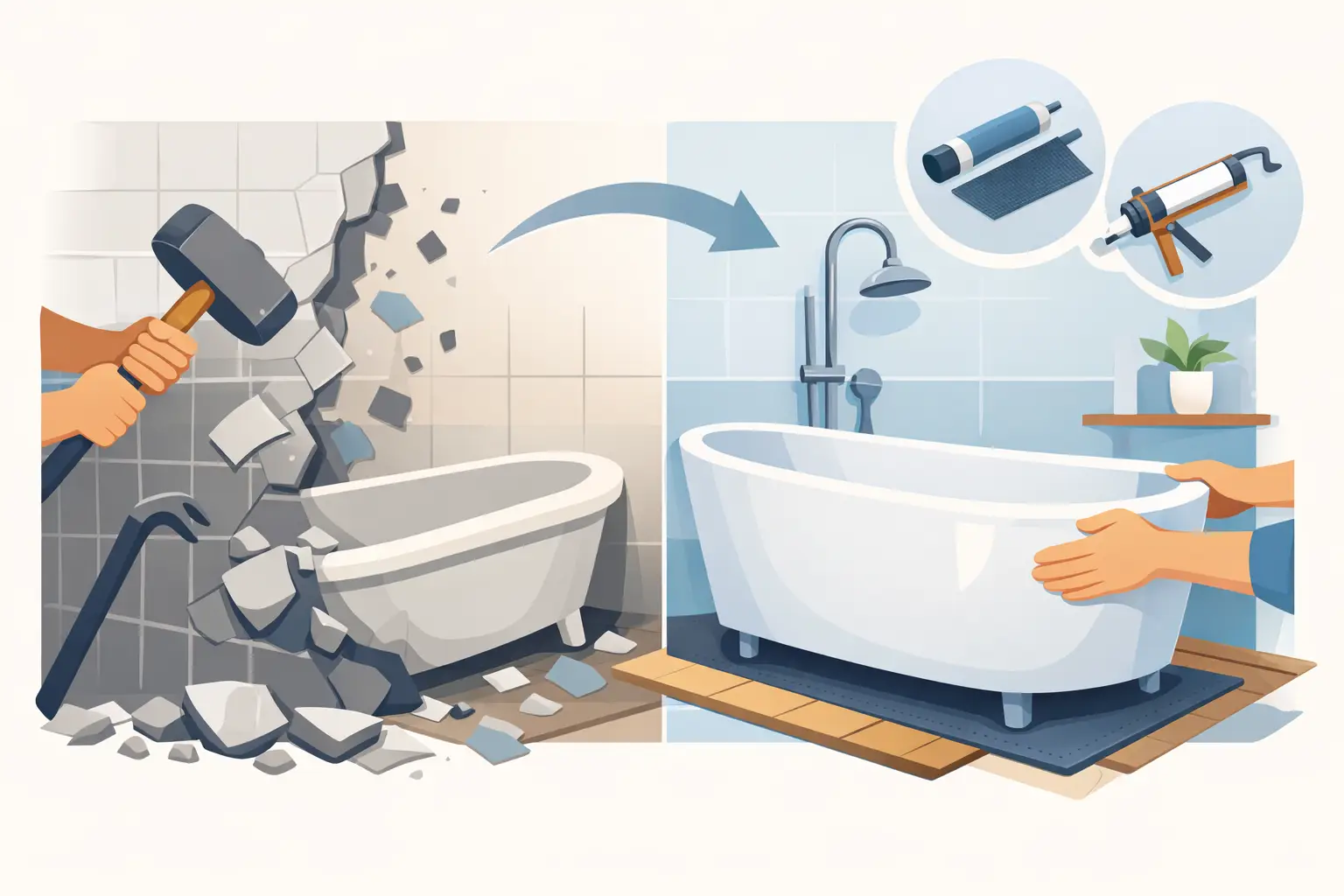
That stained, chipped bathtub can make the whole bathroom feel old. If you want to replace bathtub without demolition, the honest answer is that it depends on what you mean by “replace.” A true tub replacement usually involves removing the old fixture. But if your goal is a clean, updated, like-new tub without tearing up tile, walls, or flooring, professional refinishing can be the smarter answer.
For many Florida homeowners, the tub itself is not the real problem. The surface is. Years of hard water, cleaning products, dropped items, and daily use can leave it dull, scratched, stained, or worn through. Refinishing restores that surface without turning your bathroom into a construction zone.
Can You Replace a Bathtub Without Demolition?
A standard bathtub is installed before much of the surrounding bathroom is finished. The tub flange often sits behind the wall material. Tile, shower panels, drywall, plumbing connections, and flooring may all be tied into the installation.
That means removing the tub usually requires some demolition. At a minimum, a contractor may need to remove part of the wall around the tub and disconnect plumbing. In many cases, tile needs to come out too. Once the old tub is gone, there may be repairs to make before a new one can be installed.
There are exceptions. A freestanding tub can sometimes be replaced with less disruption. Some acrylic tub liners can be fitted over an existing tub. But neither option is right for every bathroom, and neither is always as simple as it sounds.
If the tub is structurally sound, refinishing is often the closest thing to a replacement-level visual change without demolition. You keep the fixture in place and restore the finish instead.
What Bathtub Refinishing Actually Does
Bathtub refinishing, also called reglazing or resurfacing, is not a quick coat of paint. Done correctly, it is a detailed surface restoration process.
The technician starts by cleaning the tub and removing buildup. Chips, cracks, rust spots, and other damage are repaired as needed. The surface is then prepared so the new coating can bond properly. After masking the surrounding bathroom for protection, a durable finish is professionally applied.
The result is a smooth, fresh-looking bathtub with a new color and finish. A tired almond, pink, gray, or yellowed tub can often be changed to clean white. Small chips and worn areas can disappear. What looked like a replacement project can become a restoration project.
The work is completed in the existing bathroom. There is no hauling a heavy cast-iron tub through the house. No torn-out tile. No open walls waiting for repairs.
When Refinishing Makes More Sense Than Replacement
Refinishing is a strong option when the tub is solid but ugly. That includes porcelain, fiberglass, acrylic, and many older cast-iron tubs with worn finishes.
It works especially well when the surrounding tile is still in good shape. Maybe you do not love the tub color, but the tile is clean and intact. Maybe the bathroom is dated, yet a full remodel is not in the budget or not worth the hassle. Restoring the tub can make the room feel dramatically cleaner without creating a much larger project.
It can also make sense before selling a home or preparing a rental property. Buyers and tenants notice a stained tub immediately. Refinishing improves the visual impact of the bathroom at a fraction of the cost and disruption of a full replacement.
For homeowners in Pinellas County and Saint Petersburg, avoiding a long bathroom shutdown matters. One-bathroom homes, busy households, and rental turnovers do not always have room for a multi-week renovation. A refinished tub offers a practical update with far less mess.
When You Should Not Avoid Demolition
Refinishing is not a fix for every tub problem. A professional should inspect the condition before recommending it.
If the tub has major structural damage, severe flexing, extensive rust that has eaten through the metal, or ongoing leaks behind the wall, replacement may be necessary. Water damage, mold, failed plumbing, and loose surrounding tile need to be addressed at the source. Covering a damaged surface will not solve a problem underneath it.
The same goes for a bathroom that needs a complete layout change. If you want to move the tub, convert it to a walk-in shower, relocate plumbing, or replace damaged wall systems, demolition is part of the job. It is better to do that work properly than try to save the existing tub at all costs.
A reliable contractor will tell you when refinishing is a good investment and when it is not. The goal is not to sell a surface treatment for a tub that needs deeper repair. The goal is to give you the right solution for the condition of your bathroom.
What About a Bathtub Liner?
A bathtub liner is another way to change the appearance of an existing tub without a full tear-out. It is a custom-made acrylic or PVC shell installed over the old fixture.
For some homeowners, a liner is appealing because it covers the existing surface. But it has trade-offs. The tub can lose a little interior space. The installation cost can be higher than refinishing. If moisture gets behind a poorly installed liner, it can create problems that are hard to see.
Linings also do not resolve structural tub damage or hidden plumbing issues. They simply cover the old fixture. A liner may be a fit in certain situations, but it is not automatically better than reglazing.
Refinishing keeps the original tub profile and restores its surface directly. It is often the more cost-effective choice when the tub is stable and the main concern is appearance, chips, stains, or a dated color.
Cost, Time, and Disruption Compared
A full tub replacement often carries costs beyond the price of the new tub. You may need demolition, disposal, plumbing work, tile repair, wall repair, flooring repair, paint, and labor for each step. The project can grow quickly once the walls are open.
Refinishing usually costs significantly less because the original tub stays in place. There is less labor, less material, and far less reconstruction. The bathroom also stays more contained. Instead of dust and debris throughout the home, the work area is masked and protected during the restoration process.
Timing matters too. Replacement can stretch from days into weeks depending on materials, scheduling, and what the contractor finds after demolition. Refinishing is commonly completed much faster. The exact return-to-use time depends on the coating system and conditions, so always follow the technician’s instructions before using the tub.
The lowest upfront price is not always the best value. A cheap DIY kit can look tempting, but bathtub coatings need serious preparation and proper application. Skipping steps can lead to peeling, rough texture, poor adhesion, or an uneven finish. Professional workmanship and a real warranty matter.
How to Make a Refinished Tub Last
A professionally refinished bathtub can provide long-lasting results when it is cared for properly. The finish needs basic, consistent maintenance, not special treatment every day.
Use non-abrasive cleaners recommended for refinished surfaces. Avoid harsh scouring powders, steel wool, and abrasive pads. Do not leave suction-cup bath mats attached to the tub because they can damage the coating over time. Fix dripping faucets promptly. Constant water hitting one spot can wear down any finish.
It also helps to avoid storing metal cans or sharp items on the tub ledge. Small habits protect the restored surface and keep it looking clean longer.
A reputable refinishing company should explain care clearly before the job is complete. At The Tub Guy, the work is backed by a five-year warranty because a good finish should come with accountability, not guesswork.
Start With the Condition of Your Tub
The best way to decide whether to replace or refinish is to look past the stains. Is the tub solid? Are there leaks? Is the surrounding tile worth keeping? Do you want a visual update, or are you changing the entire bathroom layout?
If the fixture is sound, you may not need demolition at all. You may just need skilled surface restoration that makes the tub look new again. A straightforward assessment can save you from an expensive remodel that solves more problems than you actually have.
Before you schedule a tear-out, get an honest estimate for refinishing. The bathroom you want may be much closer than you think.