
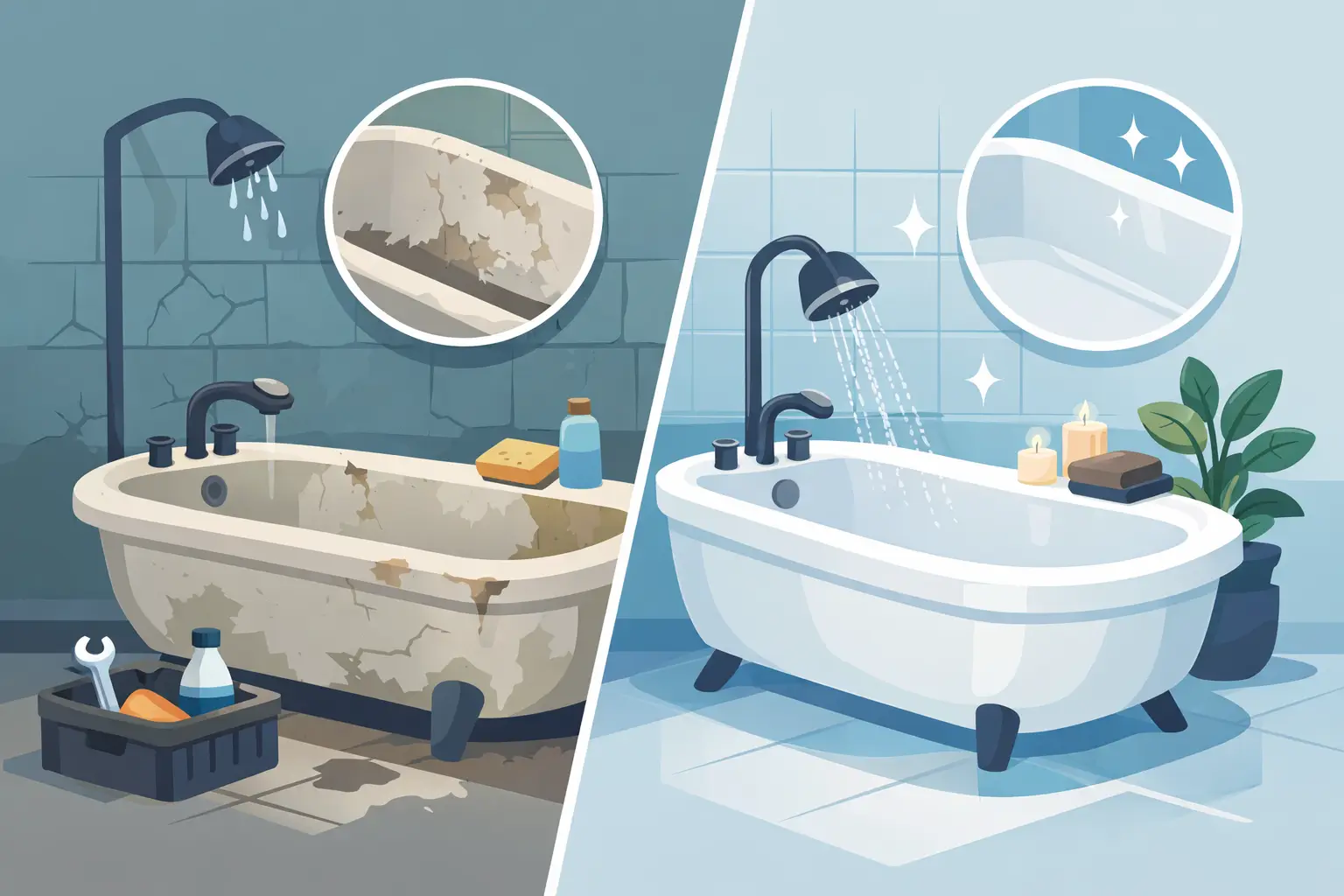
A stained, chipped, or outdated bathtub can make the whole bathroom feel worn out. But when should a bathtub be replaced instead of repaired or refinished? For many Florida homeowners, replacement is not the first or best answer. A professional refinish can restore the look of a solid tub without the mess, expense, and downtime of demolition.
The right choice depends on what is wrong with the tub, what it is made of, and whether the damage affects its structure. Cosmetic wear can often be fixed. Serious leaks, unstable floors, and major structural damage usually cannot.
When Should a Bathtub Be Replaced?
A bathtub should be replaced when the tub itself is no longer safe, stable, or repairable. That means more than a few scratches or an ugly color. Replacement is usually the better move when there is damage below the surface or a problem with the plumbing and framing around the tub.
The tub is cracked through or flexes under weight
Acrylic and fiberglass tubs can develop cracks over time. Small surface cracks may be repairable, depending on their location and depth. But a crack that goes all the way through the shell can allow water to reach the area below the tub.
If the bottom of the tub flexes, feels soft, or moves when someone stands in it, there may be a support problem underneath. That is not a cosmetic issue. The tub may need to be removed so the base, subfloor, and plumbing can be inspected and repaired.
There is ongoing leaking or water damage
Water stains on the ceiling below the bathroom, damp flooring, soft walls, or mold around the tub area deserve immediate attention. The leak may come from a drain, overflow, faucet valve, tile joint, or a damaged tub body.
Do not assume the tub needs replacement until the source is identified. A plumber may be able to repair a drain or valve without removing the tub. But if water has damaged the surrounding structure, replacement and rebuilding may be necessary.
Rust has eaten through a steel or cast-iron tub
Surface rust around a drain or chip can often be treated during professional refinishing. Rust that has eaten holes through the metal is different. Once the tub has lost material, a coating alone cannot rebuild its strength.
A badly corroded tub may continue to deteriorate under a new finish. In that case, replacement is the more dependable investment.
The tub has been repaired repeatedly and keeps failing
One quality repair can make sense. A history of failed patches, peeling coatings, deep chips, or recurring cracks may point to a larger problem. This is especially true if a fiberglass tub is flexing or an older tub has severe corrosion.
A professional inspection helps separate a tub that needs proper preparation and refinishing from one that has reached the end of its service life.
Signs Your Bathtub Is a Good Candidate for Refinishing
Most homeowners call about appearance first. The tub is yellowed, dull, scratched, hard to clean, or stuck in a color that dates the bathroom. Those are often strong reasons to refinish, not replace.
Refinishing works best when the tub is structurally sound. The surface is restored with professional repair, preparation, and a durable new coating. The result can make an old tub look clean, bright, and updated without tearing out walls or disturbing tile.
Chips, scratches, stains, and worn finishes
Porcelain, enamel, fiberglass, and acrylic tubs all show wear eventually. Chips can expose dark material underneath. Scratches hold dirt. Hard-water staining and years of cleaner buildup can leave a tub looking permanently dirty even after a deep scrub.
If the tub is solid and the damage is on the surface, refinishing is often the practical fix. Small chips and worn areas are repaired before the new finish is applied.
An outdated color is the only real problem
A perfectly usable avocado green, powder blue, pink, or almond tub can make a bathroom feel decades old. Replacing it may mean removing tile, cutting plumbing connections, repairing drywall, and buying a new fixture.
Refinishing gives homeowners the option to change the color without a full renovation. A clean white finish can brighten the bathroom and work with nearly any future update.
The tub is difficult to clean but not damaged
A dull or porous old surface can trap soap scum and grime. Homeowners may think the tub is impossible to clean when the real problem is worn finish, not poor housekeeping.
A properly refinished surface is smooth, sealed, and easier to maintain with the right care. It also eliminates the need to live with a tub that looks stained every time guests walk into the bathroom.
Replacement Costs More Than the New Tub
A new bathtub price is only one part of the project. The bigger cost often comes from the work required to get the old tub out and install the new one.
In many bathrooms, the tub is surrounded by tile, wall panels, flooring, plumbing fixtures, and trim. Removing it can mean breaking tile, opening walls, disconnecting plumbing, hauling debris, and rebuilding the surrounding area. A simple tub replacement can quickly become a larger bathroom remodel.
Refinishing avoids most of that disruption. There is no tub demolition, no dumpster, and usually no need to replace surrounding tile just because the tub finish looks tired. For a structurally sound tub, it can deliver a major visual change at a fraction of replacement cost.
That does not mean refinishing is always the right answer. It means the tub should be judged on its condition, not just its appearance.
How Long Does a Refinished Bathtub Last?
The lifespan of a refinished bathtub depends on the quality of preparation, the materials used, and how the tub is maintained. Professional work is not the same as a do-it-yourself coating kit. Lasting results require careful cleaning, repair work, surface preparation, and proper application.
After refinishing, use non-abrasive cleaners and a soft sponge or cloth. Avoid harsh powders, steel wool, and suction-cup bath mats. Those products can scratch or pull on the finish over time.
A quality company should also stand behind its work. The Tub Guy backs refinishing work with a five-year warranty and a commitment to correct issues if they arise. That gives homeowners more confidence than a quick cosmetic patch or a weekend paint kit.
Ask These Questions Before You Decide
Before replacing or refinishing your bathtub, look at the full condition of the bathroom. Is the tub leaking? Does it flex? Is there mold or soft flooring nearby? Are you already planning to remove the tile and change the plumbing layout?
If the answer is yes, replacement may fit the larger project. If the tub is solid and you simply want it to look clean, modern, and easier to maintain, refinishing is usually worth considering first.
It also helps to think about timing. If you are preparing to sell, refinishing can improve a bathroom’s appearance without taking on a major remodel. If you plan to stay in the home, a durable refinish can give you years of better use while you save a full renovation for later.
Get the Tub Evaluated Before Tearing It Out
Do not let a few stains or chips push you into an expensive replacement. A good inspection can tell you whether the problem is cosmetic, repairable, or structural. That one answer can save you from unnecessary demolition and help you put your bathroom budget where it matters most.
If your bathtub is solid but looks like it has seen better days, refinishing may be the practical next step. You can get a fresh surface, a color update, and a bathroom that feels cared for without turning your home into a construction zone.