
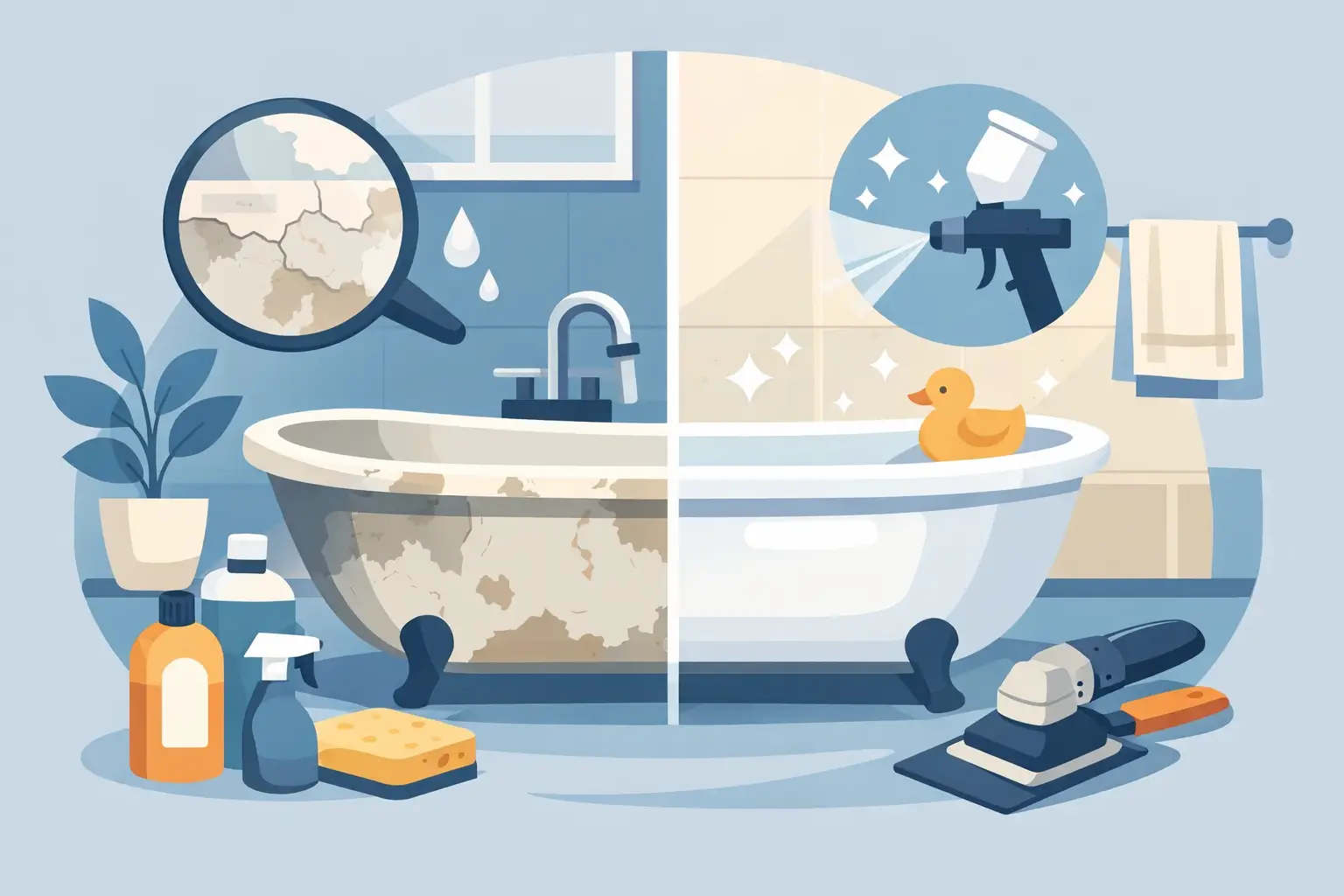
A bathtub can make an otherwise clean bathroom look worn out. You may scrub it hard, switch cleaners, and still see stains, chips, or a dull finish every morning. Those are often the top signs your tub needs refinishing, not more elbow grease.
Professional refinishing restores the surface you already own. It can give a dated, damaged tub a clean, smooth, like-new look without tearing out tile, plumbing, or walls. For many Florida homeowners, that means less cost, less mess, and far less disruption than replacement.
Top Signs Your Tub Needs Refinishing
1. The finish is dull, rough, or permanently stained
A healthy tub surface should feel smooth and look clean after normal washing. When the finish becomes worn, it can turn dull, chalky, or rough to the touch. Soap scum and mineral deposits grab onto that rough surface, making the tub look dirty again fast.
Hard water, cleaning products, age, and daily use all take a toll. In older homes, the original porcelain or fiberglass finish may simply be at the end of its useful life. If staining remains after proper cleaning, refinishing can seal the worn surface and bring back a bright, even color.
This is especially common with white tubs that have yellowed or developed gray, brown, or rust-colored staining around the drain and bottom of the basin.
2. You see chips, cracks, or scratches
A dropped bottle, a heavy showerhead, or years of use can leave chips in porcelain, enamel, fiberglass, or acrylic tubs. Small chips may look like a cosmetic problem, but they can get worse. Once the protective finish is broken, moisture and cleaning chemicals can work into the damaged area.
Hairline cracks deserve attention too. On fiberglass and acrylic tubs, they may point to surface wear or movement beneath the tub. A professional can determine whether the damage is a good candidate for repair and refinishing or whether a deeper structural issue needs to be addressed first.
Minor damage does not always mean you need a new bathtub. In many cases, targeted repairs followed by refinishing deliver a clean, uniform result.
3. Rust is showing near the drain or along the edges
Rust around a drain, overflow plate, or chipped area is never something to ignore. Cast iron and steel tubs can rust when the finish wears away and exposes the metal underneath. Left alone, rust can spread, weaken the area, and create pits that are harder to repair later.
Surface rust is often repairable. The damaged area can be treated, filled when needed, and refinished as part of the restoration process. The key is acting before rust creates a hole or points to a larger plumbing leak.
If you notice soft flooring, water damage below the tub, or recurring moisture around the drain, have that issue checked before refinishing. A new finish cannot solve an active leak.
4. The tub color makes the whole bathroom look dated
Sometimes the tub is in solid shape, but the color is the problem. Almond, avocado, pink, blue, or heavily yellowed finishes can make a bathroom feel stuck in another decade. Replacing a color you dislike often leads to a larger remodel because the tub is tied into surrounding tile and plumbing.
Refinishing gives homeowners a practical way to change the look without demolition. White remains the most popular choice because it makes the room feel cleaner and works with nearly any wall color, tile, or vanity. Other color options may be available when you want to match an existing bathroom design.
Color change is a smart option when your tub is structurally sound but visually outdated.
5. Cleaning no longer gets the tub clean
If you have tried several cleaners and still cannot get the tub to look fresh, the problem may be the surface itself. Worn finishes become porous. They hold onto soap residue, body oils, mildew stains, and mineral buildup in a way a smooth finish does not.
This is not a sign that your housekeeping is lacking. It is usually a sign that the tub has lost its protective coating. Refinishing creates a new, smooth surface that is easier to maintain with routine non-abrasive cleaning.
Avoid trying to solve the problem with harsh powders, steel wool, or aggressive acid cleaners. They can scratch the finish further and make stains settle in faster.
6. There are peeling or flaking areas from an old reglazing job
Not every previous refinishing job was done the right way. Peeling, bubbling, flaking, or lifting around the drain may mean the old coating failed. Poor surface preparation, low-quality materials, moisture, and improper cleaning can all contribute.
The good news is that a failed coating does not automatically mean the tub must be replaced. A qualified refinishing professional can assess the surface, remove failed material as needed, make repairs, and apply a new coating system correctly.
Ask about preparation, repair methods, cure time, maintenance, and warranty coverage. A refinishing job should not be treated like a quick coat of paint. The prep work is what supports a durable finish.
7. The tub looks worse than the rest of the bathroom
Maybe you updated the vanity, mirror, lighting, and fixtures, but the tub still looks worn and tired. That mismatch can drag down the entire room. Since the tub is one of the largest visible surfaces in a bathroom, restoring it often makes a bigger difference than homeowners expect.
Refinishing is also useful before selling a home, preparing a rental, or making a guest bathroom presentable. It delivers a visible before-and-after change without the timeline and expense of a full renovation.
When Refinishing Makes Sense – And When It Does Not
Refinishing is usually a strong choice when the tub is solid, stable, and free of major structural damage. It works well for porcelain, cast iron, steel, fiberglass, and many acrylic surfaces. It can also be a practical answer when surrounding tile would need to be removed to replace the tub.
Replacement may be the better call if the tub has severe cracks, large holes, unstable support, major water damage, or a layout that no longer works for your household. For example, a homeowner who needs easier access may decide a walk-in tub or shower conversion fits their long-term needs better.
The decision comes down to the condition of the fixture, the source of any damage, and your goals for the space. A professional inspection helps separate a surface problem from a replacement problem.
What to Expect From Professional Tub Refinishing
A proper refinishing project starts with preparation. The tub is cleaned, damaged areas are repaired, and the surface is prepared so the new coating can bond correctly. Fixtures, walls, floors, and nearby surfaces are protected before the finish is applied.
The finished tub needs time to cure before use. Your technician should give clear instructions on when it is safe to use and how to clean it afterward. In general, use non-abrasive cleaners and soft sponges. Do not use suction-cup bath mats, harsh scouring pads, or products that can damage the new finish.
Quality workmanship matters here. A low upfront price is not a bargain if the coating peels early or the repair is obvious. Look for a company that explains the process plainly, stands behind its work, and offers real warranty protection.
Don’t Wait for Small Tub Problems to Grow
A chipped, stained, or outdated tub rarely improves on its own. Small surface issues can become harder to repair, while a dull old finish keeps making your bathroom feel less clean than it is.
If your tub is sound but looks past its prime, refinishing may be the practical middle ground between living with it and ripping out the whole bathroom. The Tub Guy can assess the condition, explain your options, and help you get a bathroom surface you are proud to use again.