
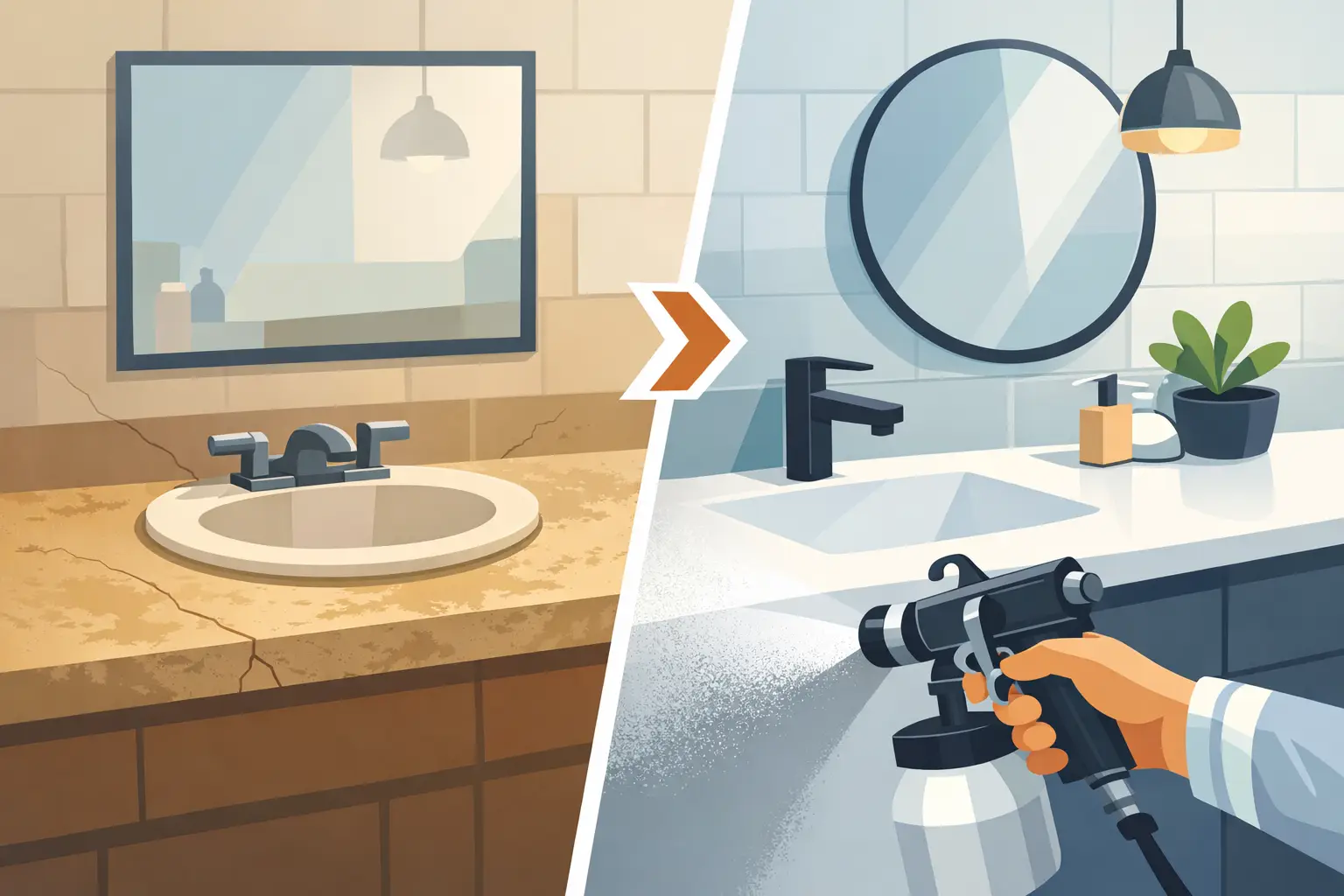
A worn vanity top can make the whole room look tired, even when the rest of the bathroom is clean. Stains around the sink, chips at the edge, outdated colors, and dull finishes are common problems in Florida homes. Countertop resurfacing in a bathroom gives you a practical way to change that surface without tearing out cabinets, replacing plumbing, or turning a small project into a full remodel.
For many homeowners, the right question is not, “Can this countertop be replaced?” It is, “Does it need to be?” If the top is structurally sound, professional resurfacing can deliver a major visual improvement for far less cost and disruption than replacement.
What Bathroom Countertop Resurfacing Does
Bathroom countertop resurfacing restores the visible surface of a vanity top. A trained refinishing technician cleans and prepares the area, repairs minor damage, applies professional-grade coatings, and creates a new, durable finish.
The goal is not to cover up a problem with a quick coat of paint. Proper resurfacing is a preparation-heavy process. The existing surface must be cleaned, sanded, repaired, and treated correctly so the new finish bonds as it should.
A resurfaced countertop can help update common materials, including cultured marble, laminate, fiberglass, and certain solid-surface vanity tops. It can also change the color. That matters when a pink, beige, almond, or heavily patterned countertop is making an otherwise functional bathroom feel stuck in another decade.
The finished result is smooth, clean-looking, and easier to maintain than a worn surface with scratches and staining. It can also make an old vanity work with a refreshed tub, tile, shower, or sink.
When Resurfacing Is the Smart Choice
Resurfacing works best when the countertop is still solid. Cosmetic wear is exactly what refinishing is designed to address. That includes discoloration, dullness, light scratches, small chips, surface stains, and an outdated color.
It is also a strong option when you want to keep the existing cabinet base. Replacing a countertop often sounds simple until the work begins. The new top may not fit the old vanity exactly. Sink openings may need adjustment. Faucets and plumbing may need to be disconnected. Wall tile, mirrors, or backsplash can get damaged during removal.
A professional finish avoids much of that hassle. There is no countertop demolition to manage and no need to hunt for a replacement top that fits an older vanity.
For a rental property, guest bath, condo, or home you plan to sell, resurfacing can be especially practical. It improves the appearance of the room without spending renovation-level money on a surface that does not need to be torn out.
When Replacement Makes More Sense
Resurfacing is not the answer for every countertop. A reputable contractor should be clear about that.
Replacement may be the better route if the vanity top has major cracks, soft spots, severe water damage, structural movement, or a failing cabinet underneath. The same is true when you want to change the layout, install a larger sink, move plumbing, or replace the vanity as part of a complete redesign.
Heavy damage around the sink cutout also needs a close inspection. Small chips and surface flaws can often be repaired. But a countertop that is breaking down or separating from the cabinet needs more than a new finish.
The condition of the surface matters more than its age. A 30-year-old cultured marble top can be a good resurfacing candidate if it is stable. A newer laminate top with serious water damage may not be.
Why Professional Work Matters
DIY countertop kits are easy to find. The problem is that a bathroom vanity gets daily use. It sees water, soap, toothpaste, cosmetics, hot styling tools, and cleaners. A finish that looks acceptable on day one can fail early if the surface was not prepared correctly or the coating was not applied under the right conditions.
Professional countertop resurfacing uses commercial materials and a process built for adhesion and durability. Preparation is where the job is won or lost. Old caulk, oils, soap residue, and silicone must be dealt with. Chips need to be repaired. The surface must be properly etched or sanded before coatings go on.
A technician also knows how to protect surrounding walls, floors, mirrors, cabinets, and fixtures. Overspray, poor masking, and uneven coating are common problems with rushed work. These are bathroom surfaces, not a weekend craft project.
The Tub Guy backs qualified refinishing work with a five-year warranty. That gives homeowners a clear point of accountability if something is not right. A warranty does not replace good workmanship. It shows the company expects its workmanship to hold up.
The Real Cost Advantage
Replacing a bathroom countertop can mean more than the cost of the new material. You may also pay for removal, disposal, plumbing disconnects, a new sink, faucet adjustments, backsplash repairs, cabinet repairs, and installation.
Resurfacing is usually more affordable because it keeps the existing top in place. Labor is focused on restoring what you already own rather than removing and rebuilding around it.
The exact savings depend on the countertop size, material, condition, and repair needs. A vanity with multiple chips, burn marks, or previous failed coatings will require more preparation than a lightly worn single-sink top. Still, for homeowners who want a clean update without a major renovation bill, refinishing is often the better value.
It also saves time. Full replacement can stretch out when materials are delayed or hidden damage appears after removal. Resurfacing is a more direct project when the existing countertop is a good candidate.
Choosing the Right Color and Finish
White remains a popular choice because it makes a small bathroom look brighter and cleaner. Soft gray, warm neutral tones, and clean off-white finishes can also update an older vanity without making the room feel cold.
Your countertop should work with the tub, shower tile, flooring, and cabinet color. If the tub is being refinished at the same time, coordinate the finishes before work begins. A bright white vanity next to an old almond tub may make the color difference more obvious.
Keep expectations realistic. Resurfacing creates a fresh, uniform coating. It does not turn a laminate vanity into natural stone. If you want the specific depth, veining, and texture of marble or quartz, replacement is likely the better fit. If you want a clean, updated, durable surface at a sensible price, resurfacing does the job well.
How to Care for a Resurfaced Vanity Top
A refinished countertop is easy to care for, but it should be treated like a finished surface, not a workbench. Use a soft cloth or non-abrasive sponge with mild soap and water. Wipe up standing water, hair dye, nail polish, and harsh products as soon as possible.
Avoid abrasive powders, scouring pads, strong solvents, and harsh chemical cleaners. Do not place hot curling irons or hair tools directly on the surface. Use a heat-resistant holder instead.
Also pay attention to caulk around the sink and backsplash. Sound caulk helps keep water from getting where it does not belong. If you notice cracking or separation, address it early.
Good care is simple. It protects the finish and helps your bathroom keep that just-restored look for years.
Start With the Surface You Have
A bathroom does not need to be gutted to look better. If your vanity top is worn, stained, chipped, or simply the wrong color, resurfacing may be the practical fix. Have the surface inspected, ask what repairs are possible, and choose a contractor willing to stand behind the work.
The best bathroom update is often the one that solves the problem cleanly, stays within budget, and lets you get back to using your home without weeks of renovation mess.