
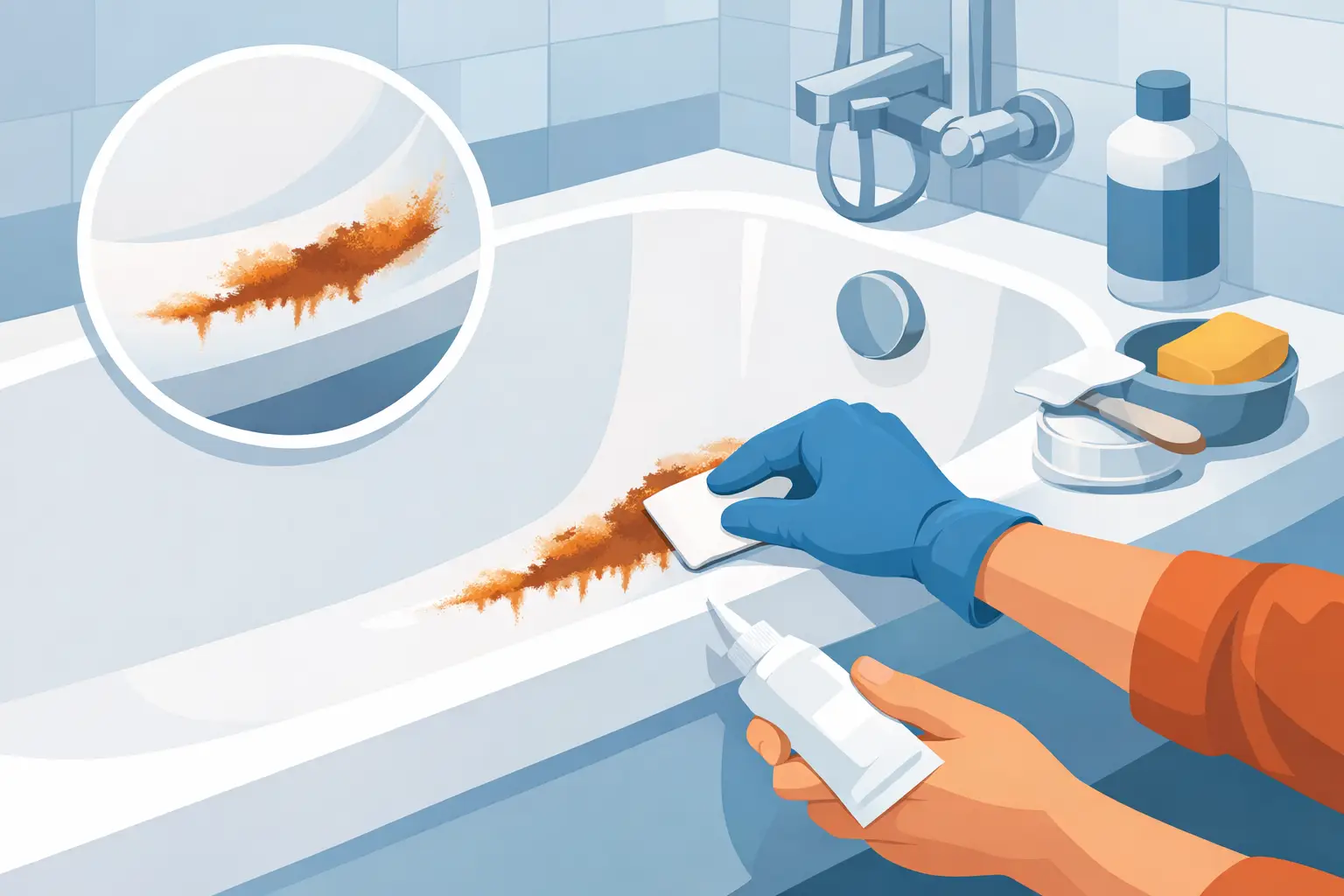
A search for “repair rust stains bathtub” usually means you are tired of looking at orange-brown marks that make the whole bathroom feel dirty. The good news is that not every rust stain calls for a new tub. The right fix depends on what caused the stain, how long it has been there, and whether the tub surface is still intact.
A light stain from a metal can or shaving cream container may clean up quickly. Rust coming through chipped porcelain, exposed steel, or a worn-out finish is different. That is not just a cleaning problem. It is a surface repair problem.
First, Find Out Where the Rust Is Coming From
Rust stains do not always mean the bathtub itself is rusting. In many Florida homes, the mark comes from a metal item left on the tub ledge, a leaking faucet, old water pipes, or mineral-heavy water. If the stain is smooth and sits on top of the finish, it may be removable.
Look closely at the affected area. If the surface underneath feels smooth, solid, and glossy, start with careful cleaning. If it feels rough, chipped, pitted, or soft around the edges, moisture may have reached the metal beneath the finish. That requires more than a cleaner.
Cast iron and steel tubs are especially prone to this issue once their original porcelain coating is damaged. A small chip can let water reach the metal. Rust then expands under the coating and can cause more chipping over time.
How to Repair Rust Stains in a Bathtub Safely
Start with the least aggressive option. Harsh cleaners and abrasive pads can remove a stain while also dulling or scratching the finish. That leaves the tub more likely to stain again.
For a light surface stain, use a non-abrasive cleaner made for bathroom surfaces and a soft cloth or non-scratch sponge. Apply it as directed, let it work for a few minutes, and rinse thoroughly. Do not attack the spot with steel wool, a wire brush, or a rough scouring pad.
If a mild cleaner does not work, a rust-removing product may help. Choose one labeled safe for the specific material in your tub. Porcelain, fiberglass, acrylic, and a previously refinished tub all need different care. Test any product in a small hidden area first.
Avoid mixing cleaning products. Never combine bleach with acids, ammonia, or other bathroom cleaners. The fumes can be dangerous, and the chemical reaction can damage the bathtub finish.
Once the stain is gone, dry the area and watch it for a few days. If the orange color returns in the exact same place, the source is likely still active. That could be a dripping fixture, a metal object, or rust under the tub coating.
When Cleaning Will Not Fix the Problem
A bathtub with rust that keeps coming back needs repair, not stronger chemicals. The biggest warning signs are chips, bubbling, flaking, pinholes, rough patches, and dark spots under the finish.
With a steel or cast iron tub, water can get behind the porcelain or old coating and rust the metal underneath. Scrubbing may remove the visible stain for a short time, but it will not stop corrosion below the surface. In fact, aggressive scrubbing can make the damaged area larger.
Fiberglass and acrylic tubs do not rust themselves, but they can show rust stains from plumbing, metal fixtures, or water. They can also crack or wear thin, which creates a separate repair issue. The cause still matters. There is no value in refinishing a tub if a constant leak is going to keep staining the new surface.
Before repairing the finish, address any dripping faucet, leaking drain, failing caulk, or plumbing issue. A dry, stable surface gives the repair a real chance to last.
Spot Repair vs. Bathtub Refinishing
A small, isolated chip with minor rust around it may be a good candidate for a spot repair. The damaged material is removed, the area is treated, filled, sanded, and color matched as closely as possible. This can be a practical option when the rest of the tub finish is in good shape.
The trade-off is appearance. Even a well-done spot repair may be slightly visible in certain light, especially on an older tub with a faded or uneven finish. It solves the damaged area, but it does not reset the whole tub.
Full refinishing is usually the better choice when rust spots are widespread, the finish is worn across the basin, or previous DIY repairs have left rough patches. A professional refinishing job prepares the entire surface, repairs damaged areas, and applies a new durable coating. The result is a clean, even finish without the cost, demolition, and disruption of tub replacement.
For many homeowners, that is the deciding factor. Replacing a tub can mean removing tile, opening walls, changing plumbing, and repairing surrounding finishes. Refinishing keeps the existing tub in place and restores the look of the bathroom much faster.
Do Not Use These Rust Removal Shortcuts
Some online remedies sound simple but can create a bigger repair bill. Pumice stones, steel wool, sanding discs, and harsh powdered cleansers can scratch porcelain and strip a refinished coating. Once the surface loses its smooth protective layer, soap scum and minerals hold on more easily.
Acid-based rust removers can also be risky. They may work on a stain, but they can etch porcelain, damage grout, discolor surrounding tile, or weaken an older reglazed surface if left too long. If you do use a product like this, follow the label exactly, ventilate the room, wear gloves, and rinse completely.
Painting over rust is another short-term fix that rarely holds up. If rust is active beneath the surface, it needs to be removed and treated before any coating is applied. Otherwise, the new finish can bubble or peel.
Keep Rust Stains From Coming Back
Prevention is simple once the surface is repaired. Do not leave metal cans, razors, or wire shower racks directly on the tub. Use a plastic shower caddy or a tray with non-metal feet. Wipe standing water from the tub ledge and basin after use, especially around chips or drain areas.
If your faucet drips, repair it. Even a slow drip can leave mineral deposits and feed corrosion in one small spot. Clean the tub regularly with a non-abrasive cleaner and a soft sponge. Skip harsh chemicals unless the product is approved for your tub material and finish.
A refinished tub also needs the right care. Give the coating time to cure as instructed. After that, use gentle cleaners and avoid bath mats with suction cups, which can trap moisture and pull at the finish over time.
When It Is Time to Call a Professional
Call for an evaluation if the rust is spreading, the tub feels rough or weak, or the finish is cracking and peeling. These are signs that a cleaner will not solve the underlying problem. A qualified refinishing specialist can tell you whether the tub needs a targeted repair or a full reglazing job.
The Tub Guy helps homeowners restore worn tubs without turning a bathroom problem into a full renovation. Professional surface preparation matters because it is what separates a quick cover-up from a finish built to last. A five-year warranty also gives you confidence that the work will be made right if an issue comes up.
A rust stain does not have to become a replacement project. Fix the source, avoid damaging shortcuts, and choose repair or refinishing based on the condition of the tub. That is how you get back to a bathroom that looks clean, solid, and worth using every day.