
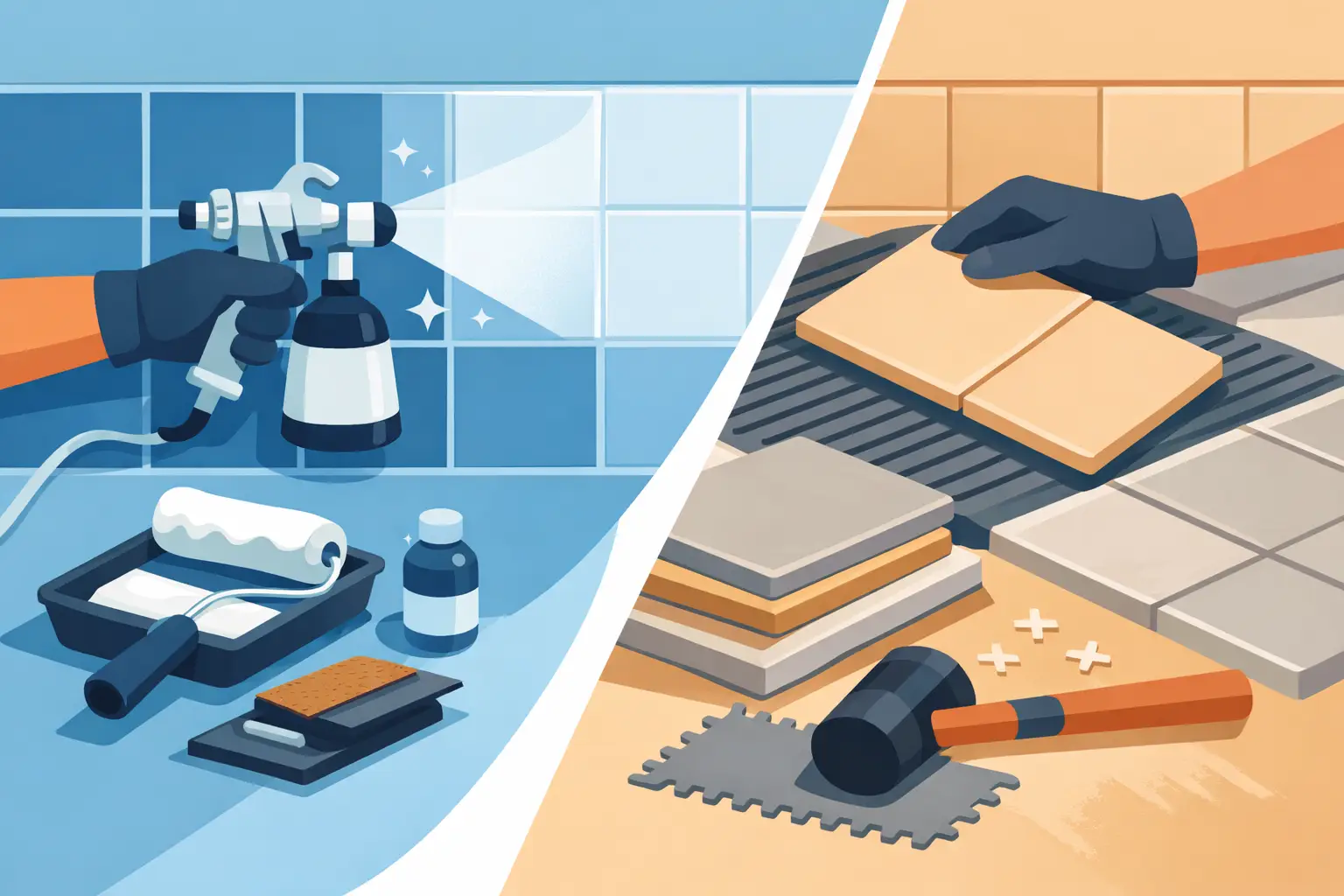
A dated tile wall can make the whole bathroom feel worn out, even when the room is clean. Stains in the grout, a faded color, chips around the tub, and dull tile surfaces are frustrating. When comparing tile refinishing vs retiling, most homeowners want one clear answer: can this bathroom look better without tearing it apart?
Often, yes. Professional tile refinishing can restore a sound tile surface for far less money and disruption than replacement. But it is not the right fix for every bathroom. The condition of the tile, the source of any damage, and your plans for the space all matter.
What Tile Refinishing Actually Does
Tile refinishing, also called reglazing or resurfacing, is a professional coating process. The existing tile stays in place. The surface is cleaned, repaired, prepared, and coated with a durable finish designed for bathroom use.
This is more than painting tile. A proper refinishing job requires detailed prep work. Soap residue, body oils, loose caulk, and mineral buildup must be removed. Chips and small cracks are repaired. The surface is prepared so the new coating can bond correctly.
Once complete, refinishing can give old tile a clean, uniform color and a glossy, like-new appearance. It works especially well on ceramic tile around tubs and showers, bathroom wall tile, vanity tops, and other hard surfaces that are structurally sound but look tired.
For many Florida homeowners, refinishing is the practical answer to an outdated pink, green, beige, or heavily stained bathroom. You get a major visual change without demolition dust moving through the house.
Tile Refinishing vs Retiling: The Main Difference
Retiling means removing existing tile, preparing the wall or floor underneath, installing new tile, grouting it, and finishing the edges and fixtures around it. It is a full replacement project.
Refinishing changes the finish of the surface you already have. Retiling replaces the surface itself.
That difference affects cost, timeline, and risk. Once old tile is removed, hidden problems can show up. The installer may find water damage, mold, weak backer board, or plumbing issues. Those repairs may be necessary, but they add time and cost to the project.
Refinishing avoids that level of construction when the tile and substrate are still in good shape. There is no need to tear out walls just because the color is dated or the finish has lost its shine.
When Refinishing Is the Better Choice
Refinishing makes sense when your tile is firmly attached, the wall behind it is dry, and the main problem is appearance. Dull surfaces, stubborn discoloration, light scratches, minor chips, and outdated colors are all strong candidates.
It is also a smart choice when you need the bathroom back quickly. A professional refinishing project is usually completed much faster than a tile replacement job. That matters when the bathroom is your only full bath, when guests are coming, or when you simply do not want a renovation taking over your home.
Cost is another major factor. Retiling involves labor for demolition, disposal, prep work, tile installation, grout, trim, and sometimes plumbing or drywall repairs. Refinishing uses the existing surface, so there are fewer moving parts and fewer surprise expenses.
A homeowner who plans to sell soon may also benefit from refinishing. A clean, bright bathroom photographs better and feels more cared for. You can improve the look of the room without putting major renovation dollars into a space you may soon leave.
When Retiling Is Worth the Cost
There are times when refinishing is not the responsible recommendation. If tiles are loose, severely cracked, missing, or failing because of moisture behind the wall, replacement is usually the better path.
The same is true if there is soft drywall, damaged backer board, visible mold, or recurring leaks. A new coating can improve the appearance of tile, but it cannot repair a failing wall system. The source of the water problem needs to be fixed first.
Retiling is also the better option if you want to change the layout. Maybe you want to remove a tub, build a walk-in shower, add niche storage, or replace old plumbing inside the wall. Those projects require construction, not resurfacing.
Floor tile deserves a careful look as well. High-traffic floors with cracked grout, movement, or widespread damage may need replacement. A professional can evaluate whether the surface is stable enough for refinishing or whether the underlying issue needs a larger repair.
Compare Cost, Time, and Disruption
For most homeowners, the decision starts with the budget. Refinishing generally costs a fraction of full tile replacement because it eliminates demolition and installation labor. The exact price depends on the size of the area, its condition, required repairs, and the type of surface being refinished.
Retiling has a wider price range. Basic material may look affordable at first, but labor and preparation are often the bigger costs. Add demolition, hauling, waterproofing, grout, trim, drywall repairs, and fixture removal, and the final number can climb quickly.
Time is just as important. Refinishing is designed for a fast transformation. After the required curing time, you can get back to using your bathroom without living through an extended remodel.
Retiling can take days or weeks depending on the scope. It also creates more noise, dust, and disruption. In older homes around St. Petersburg and Pinellas County, opening walls can reveal problems that no one could see beforehand. That does not mean retiling is wrong. It means homeowners should plan for more than the initial tile estimate.
Durability Depends on Preparation and Care
A refinished tile surface can last for years when the work is done correctly and the bathroom is maintained properly. Preparation is the part you do not see, but it has a major effect on the result. Skipping prep or using a do-it-yourself coating kit often leads to peeling, rough texture, or an uneven finish.
Professional refinishing uses specialized materials and application methods. At The Tub Guy, the goal is not just to make the surface look good on day one. It is to deliver a finish that holds up and is backed by a five-year warranty.
After refinishing, use non-abrasive cleaners and a soft sponge or cloth. Avoid harsh chemicals, abrasive powders, and rough scrub pads. Keep the area clean, address failing caulk promptly, and do not let water sit where it can work behind the surface.
New tile is durable too, but it is not maintenance-free. Grout can stain, crack, and collect mildew. Even a newly tiled shower needs regular cleaning and attention to caulk and grout lines. Replacement gives you a brand-new surface, but it does not remove the need for upkeep.
Questions to Ask Before You Decide
Start by looking past the surface. Are the tiles solid when pressed? Is there any sign of moisture, soft walls, loose grout, or recurring leaks? If the answer is yes, get the underlying issue evaluated before choosing a cosmetic fix.
Next, think about your goal. If you want a fresh white finish, a color update, or a cleaner look without a full remodel, refinishing may be exactly what you need. If you want a different layout, new materials, or a complete redesign, retiling is likely the better investment.
Finally, consider the cost of being without the bathroom. The lowest material price is not always the lowest total cost. Lost time, demolition mess, repair surprises, and a longer project all have value. A good decision weighs the condition of the tile against the disruption you are willing to accept.
A bathroom does not need to be demolished to look clean, bright, and cared for. If the tile is sound, refinishing can be the fast, affordable reset that makes you feel better every time you walk into the room.