
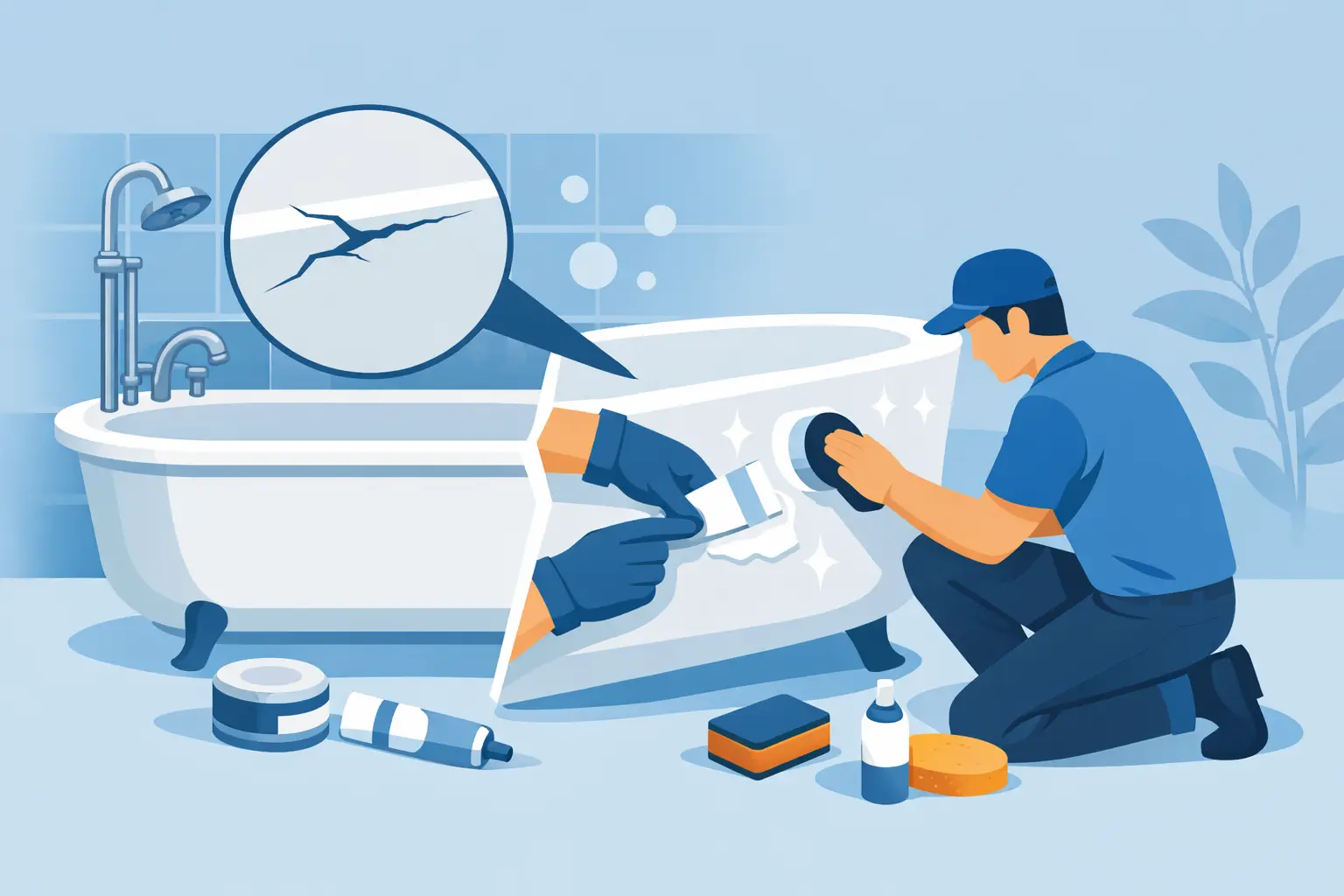
A small crack in a bathtub has a way of turning into a bigger problem fast. What starts as a hairline mark can turn into a leak, a soft spot under your feet, or a repair that keeps failing because the real issue was never fixed. If you’re wondering how to repair tub cracks, the first step is figuring out what kind of crack you have and whether the tub itself is still sound.
Some cracks are cosmetic. Some mean the tub is flexing too much. And some are a sign that patching the surface alone will only buy you a little time. That distinction matters, because the right repair can save your tub. The wrong one usually wastes time and money.
How to repair tub cracks starts with the cause
Not every tub crack happens for the same reason. Acrylic and fiberglass tubs are the usual trouble spots because they can flex over time. If the tub was not supported well underneath, the bottom can move when someone stands in it. That movement stresses the surface until it cracks.
You also see cracks from impact. Drop a heavy shampoo bottle, a tool, or a shower rod in the wrong place, and the finish can chip or fracture. Older tubs may crack after years of wear, poor cleaning habits, or past repairs that were done with the wrong materials.
This is why a crack repair is not just about filling a line. You have to know whether you’re fixing a surface blemish or dealing with a structural problem under it.
What kind of tub do you have?
Before you reach for a repair kit, know what you’re working with. Fiberglass and acrylic tubs can often be repaired, but the process is different from fixing a porcelain or cast iron surface.
A fiberglass or acrylic crack usually has some give around it. You may notice the floor of the tub feels a little soft or bouncy. Porcelain over steel or cast iron is more likely to chip than crack through the body of the tub. If you have a walk-in tub or a specialty unit, repairs can get more technical because seams, doors, and molded sections matter.
If you’re not sure, look at the feel and sound of the tub. Acrylic and fiberglass tend to sound hollow and feel warmer to the touch. Cast iron feels solid and heavy. That helps you choose the right repair path.
When a DIY tub crack repair can work
A do-it-yourself repair can make sense if the crack is small, the tub feels solid, and there is no sign of leaking below. Hairline cracks or minor surface damage in fiberglass or acrylic are the best candidates.
The goal is simple. Clean the area, stabilize the damage, fill it with the right repair compound, sand it smooth, and refinish the repaired spot so it blends in. Done well, this can improve the look and stop the crack from spreading for a while.
But there is a trade-off. Most store-bought kits are made for spot repair, not long-term structural correction. If the tub keeps flexing, the crack often comes back. That is why many homeowners end up calling for a professional repair after trying a patch first.
Basic steps for a small crack repair
Start by cleaning the area thoroughly. Any soap residue, body oils, or cleaner buildup will weaken the bond. Let the surface dry fully.
Next, lightly sand around the crack and follow the kit instructions for opening or prepping the damaged area. Many repair products need a little texture to grip properly. After that, apply the filler or epoxy made for your tub material. Let it cure completely. Rushing this step is one of the most common reasons a repair fails.
Once cured, sand it smooth and apply the finish coat if your kit includes one. Color match can be hit or miss, so be realistic. A DIY patch may stop the damage, but it often remains visible.
Signs the crack is more than cosmetic
If the crack is on the tub floor, especially where people stand, be careful. That area takes the most stress. A crack there often points to movement underneath.
Watch for a few warning signs. The tub bottom feels soft. The crack keeps returning. You see staining around the damage. Water shows up on the ceiling below or around the outside of the tub. Any of those signs mean the problem is likely deeper than the finish.
At that point, surface filler alone is not much of a fix. The tub may need reinforcement, professional repair, or in some cases replacement if the unit is too far gone.
How pros repair tub cracks differently
Professional repair is usually more than a cosmetic patch. A proper repair addresses the damaged surface and the reason it cracked. On fiberglass and acrylic tubs, that can mean reinforcing the area, rebuilding the damaged section, and refinishing the surface so the repair looks like it belongs there.
That matters for durability. A crack that forms because of flexing will often reopen unless the weak area is stabilized. Pros also have better materials, stronger bonding systems, and color-matching methods that look cleaner than a basic repair kit.
For many homeowners, this is the sweet spot. You avoid the cost and mess of tearing out the tub, but you get a repair that is built to last longer and look better.
Repair or replace? It depends on the damage
This is the question most people really want answered. Can the tub be saved, or are you throwing money at a bad fixture?
If the crack is small and isolated, repair is usually the better value. If the tub has multiple cracks, major flexing, water damage around the base, or previous failed repairs, replacement may be worth a closer look. The same goes for tubs with hidden moisture damage behind walls or under the floor.
Still, replacement is not cheap. Once demolition starts, the bill can climb fast. You are not just paying for a new tub. You may be paying for plumbing changes, tile work, wall repair, disposal, and downtime in your bathroom.
That is why many Florida homeowners look at professional repair and refinishing first. If the tub structure is still serviceable, repairing and restoring it often makes more sense than ripping everything out.
Why tub refinishing often follows crack repair
A crack repair fixes the damaged area. Refinishing restores the full surface.
That combination matters when the tub is worn, stained, mismatched, or showing age beyond the crack itself. After the damaged section is repaired, the whole tub can be resurfaced to create a uniform finish and a cleaner final look. Instead of one patched area standing out, the tub looks refreshed from edge to edge.
This is also the better route when appearance matters as much as function. If you’re getting the bathroom ready to enjoy, rent, or sell, a repaired and refinished tub gives you a more complete result.
The value of a professional finish
A patched crack that does not match the rest of the tub can still make the bathroom look worn out. A professional refinish changes that. It gives the surface a like-new appearance and helps extend the life of the tub without full replacement.
For homeowners trying to improve a bathroom on a sensible budget, that is usually the strongest play. Better look. Less disruption. Lower cost than remodeling.
Common mistakes that lead to failed repairs
The biggest mistake is fixing the crack without fixing the movement. If the tub flexes, the crack will likely come back.
The next issue is poor prep. Repair products do not bond well to dirty, damp, or glossy surfaces. Using the wrong filler is another common problem. Not every epoxy works on every tub material, and general-purpose products often fail in wet, high-use areas.
Then there is timing. Homeowners often use the tub too soon. Even if the repair looks dry, full cure can take longer than expected. If the area gets wet or stressed before it is ready, the patch can weaken right away.
How to keep a repaired tub in good shape
Once the crack is repaired, treat the tub like a surface you want to keep, not test. Avoid harsh abrasive cleaners. Do not use suction-cup mats unless the surface is approved for them. Try not to drop heavy items on the tub floor.
If the tub had flexing issues, ask whether support was added or whether the weak spot is likely to remain a concern. That answer affects how much life you can expect from the repair.
And if the tub is older and the finish is worn, consider whether refinishing now will protect the investment you just made in the repair. Often, doing both at the same time gives a better long-term result.
When it makes sense to call a specialist
If the crack is growing, leaking, on the bottom of the tub, or part of a larger surface problem, it is time to bring in a pro. The same goes if you want the repair to look right, not just hold for a few months.
A specialist can tell you quickly whether the tub is a good candidate for repair, refinishing, or replacement. That kind of honest assessment matters. A cheap patch is not a bargain if it fails and leaves you paying twice.
At The Tub Guy, that is the kind of decision homeowners call about every day – whether the tub can be repaired properly and whether refinishing will give them the best value.
If your tub has cracked, do not wait for water damage to make the decision for you. The sooner you deal with it, the better your options usually are.