
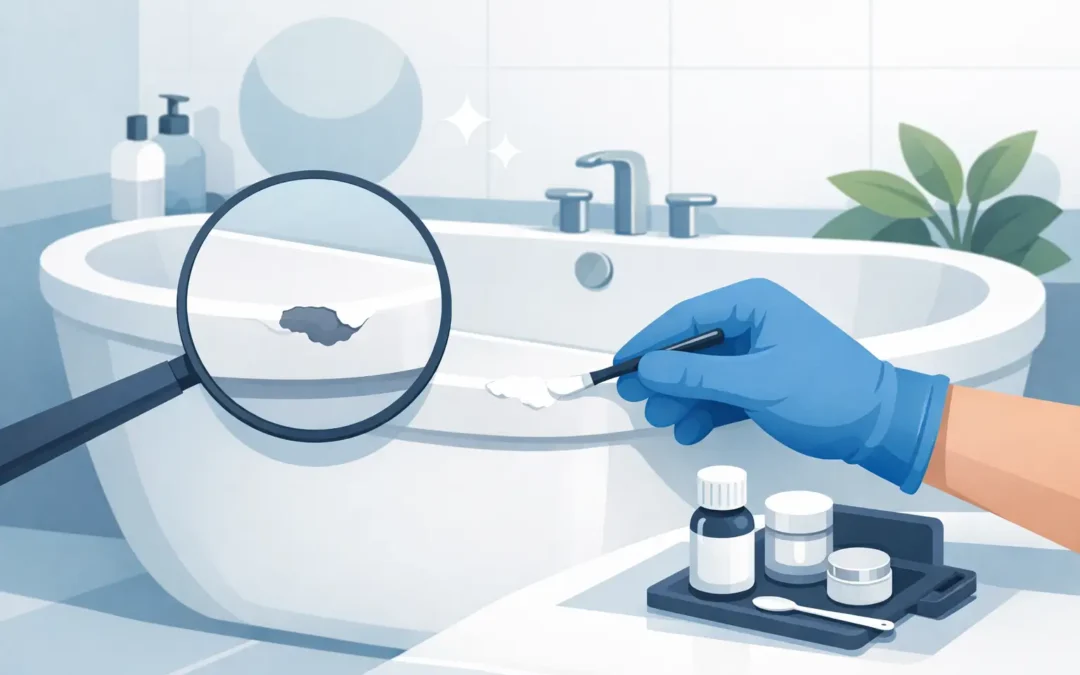
A chipped tub usually starts small. Then it catches dirt, snags a washcloth, and keeps drawing your eye every time you walk into the bathroom. If you are searching for chip repair bathtub enamel, you are probably trying to answer one practical question fast – can this be fixed, or is it time to replace the tub?
Most chips can be repaired. The bigger question is how well they can be repaired, how long the fix will hold, and whether a spot repair is enough or the whole surface needs attention. That depends on the chip, the age of the finish, and what shape the rest of the tub is in.
What chip repair bathtub enamel really means
When homeowners say bathtub enamel, they usually mean the hard finished surface on the tub. On an older cast iron or steel tub, that may be true porcelain enamel. On a refinished tub, it is a professionally applied coating system. Either way, when that surface chips, the damage is more than cosmetic.
A chip opens the door for moisture, staining, and rust on metal tubs. On fiberglass or acrylic, it can leave rough edges and make the damage spread. A small defect can turn into a bigger repair if it sits too long.
That is why timing matters. A fresh chip is almost always easier to deal with than one that has been collecting water and cleaner residue for months.
Why tubs chip in the first place
Some chips happen in one second. A dropped shower head, a razor, a bottle of cleaner, or a metal tool can do it. Other chips show up because the surface is already worn thin.
If your tub has been scrubbed for years with abrasive powders or stiff brushes, the finish gets weaker. If it was refinished before and the coating is failing, chips may show up along with peeling or dull spots. In older Florida homes, age alone is often part of the problem. The tub may still be solid, but the finish has taken a beating.
That is where homeowners can get tripped up. A single impact chip on an otherwise healthy tub is one thing. A chip on a tub with widespread wear is another.
When a chip repair makes sense
A local repair is often the right call when the damage is small and isolated. If the rest of the tub still looks good, a properly done repair can restore the appearance and protect the surface from getting worse.
This works best when the chip is limited to one area, there is no major rust spread, and the surrounding finish is still bonded well. In that case, the repair is targeted. The damaged section is cleaned, prepped, filled if needed, sanded smooth, color matched, and coated.
A good repair should not leave a crater, a sharp edge, or an obvious rough patch. The goal is simple – stop the damage, improve the look, and blend it as well as the tub allows.
When chip repair bathtub enamel is not enough
Sometimes the chip is only the symptom. The real issue is a tub that is worn out on the surface.
If you see multiple chips, rust spots, peeling, heavy discoloration, or a finish that has gone dull and chalky, a spot fix may stand out more than it helps. You can repair one defect, but the rest of the tub still looks tired. In that situation, full refinishing is often the better value.
This is especially true when the tub is structurally sound but ugly. Replacement means demolition, plumbing risk, tile disruption, and a much bigger bill. Refinishing keeps the existing tub in place and gives you a fresh, uniform surface without tearing up the bathroom.
The problem with store-bought repair kits
Homeowners try DIY kits all the time. That makes sense. The package is cheap, the chip looks small, and the job sounds easy.
The problem is not effort. It is finish quality.
Most off-the-shelf kits struggle with color match, smoothness, and long-term adhesion. White is not just white. There are warm whites, cool whites, older off-whites, and aged finishes that have changed over time. A repair that looks close in the package can dry too bright, too gray, or too yellow.
Texture is another issue. If the patch sits high, dips low, or cures with a rough feel, you will see it every day. And if the surface prep is not right, the repair can fail early.
For a tiny chip in a low-visibility area, a kit may be acceptable. For a chip in the main floor of the tub or on a visible wall, the results are often disappointing.
What professional repair does differently
Professional chip repair is less about the filler itself and more about the prep, bonding, and finish work. That is where the result is won or lost.
First, the damaged area has to be fully cleaned and stabilized. Any loose material has to go. If there is rust, it needs to be addressed before it gets sealed in. Then the chip is built back to level, sanded smooth, and blended into the surrounding surface.
After that comes color and topcoat work. This is where experience matters. A repair should not just cover the damaged spot. It should look natural next to the existing tub finish.
On some tubs, the chip can be repaired on its own and look good. On others, the best professional answer is to repair the chip first and then refinish the full tub for a clean, even appearance.
Cast iron, steel, fiberglass, and acrylic are different
Not every tub takes damage the same way, and not every repair should be handled the same way.
Cast iron and steel tubs can rust when the enamel is chipped through to bare metal. That makes fast action more important. If rust is left alone, the damage can spread beneath the surrounding finish.
Fiberglass and acrylic tubs do not rust, but they can crack, flex, or show spidering around an impact point. What looks like a simple chip may actually involve a deeper surface failure. Those repairs often need more build-up and more careful blending.
That is one reason one-size-fits-all advice does not help much. The right repair depends on what the tub is made of and what happened to it.
How long a bathtub enamel chip repair lasts
This depends on the size of the damage, the condition of the surrounding finish, and how the tub is used after the repair. There is no honest way around that.
A well-done repair on a stable surface can last for years. But if the tub already has failing coating around the chip, the repair is only as strong as the area around it. If the surface keeps peeling, the chip repair will not fix the bigger problem.
Maintenance matters too. Harsh cleaners, bath mats with suction cups, and abrasive scrubbing can shorten the life of both repairs and refinished surfaces. Gentle cleaning goes a long way.
Signs you should stop patching and refinish the tub
If you are seeing one chip after another, patching becomes a temporary habit instead of a real solution. The same goes for tubs with stains that never come clean, rough worn areas, or finish loss around the drain and bottom.
At that point, the smarter move is often to repair any damaged areas and refinish the tub so the whole surface matches. You get a better appearance, a smoother feel, and a result that looks intentional instead of patched together.
For many homeowners, that is the tipping point. They do not need a full bathroom remodel. They just want the tub to look clean, solid, and worth keeping.
What to expect before scheduling repair
Take a close look at the chip and the rest of the tub. Ask yourself a few plain questions. Is the damage isolated? Is there rust? Is the surrounding finish solid? Does the tub still look good overall, or is the chip just the most obvious problem?
Photos help, but an in-person evaluation is often the fastest way to get a real answer. A good refinishing specialist should tell you plainly whether a spot repair makes sense or whether full refinishing will give you a better result for the money.
That matters because the cheapest fix is not always the least expensive in the long run. If a patch buys you a few months and then you still need refinishing, you paid twice.
Homeowners call The Tub Guy for exactly this kind of problem because they want a straight answer, solid workmanship, and a result that holds up.
A chipped tub does not always mean replacement, and it does not always mean a simple patch either. The right fix is the one that matches the condition of the whole surface, not just the spot that got your attention first. If you deal with it early, you usually have more options and a better-looking outcome.