
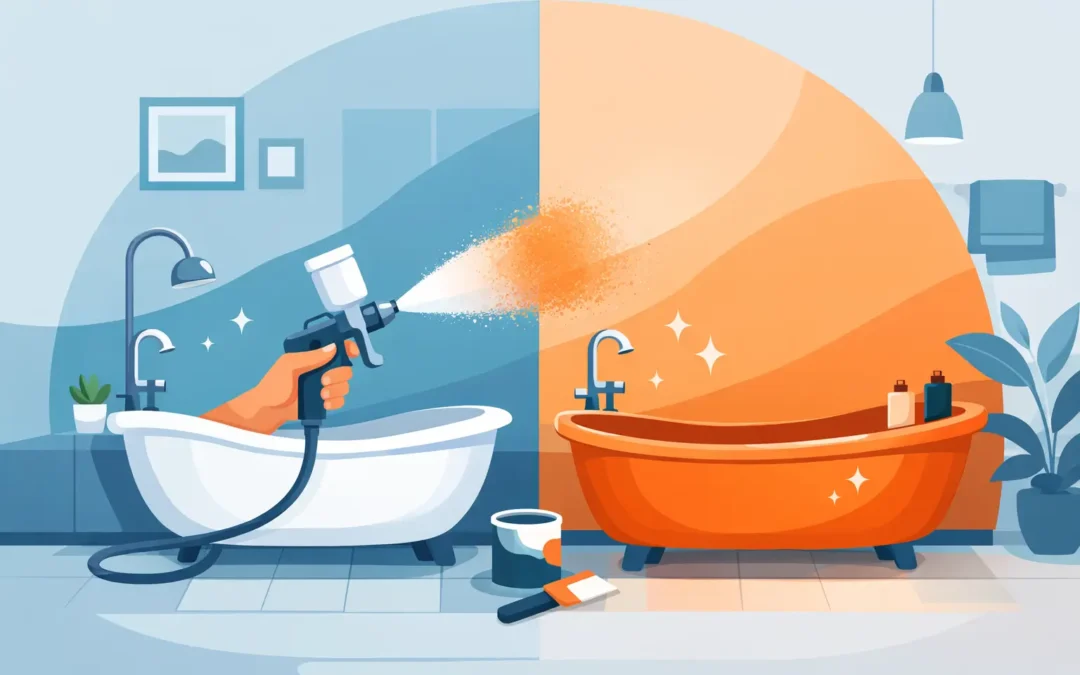
That old pink, almond, or stained white tub can make the whole bathroom feel dated. If you’re asking, can you change bathtub color, the short answer is yes. In most cases, you can change the color of a bathtub without tearing it out, replacing tile, or turning your bathroom into a construction zone.
For a lot of homeowners, that answer comes as a relief. Tub replacement is expensive. It also comes with demolition, plumbing issues, possible damage to surrounding tile, and days or weeks of disruption. A professional color change through refinishing is often the faster and more affordable way to get a cleaner, updated look.
Can you change bathtub color without replacing it?
Yes, if the tub is structurally sound. That is the key. If your bathtub is ugly, worn, stained, chipped, or just stuck in another decade, refinishing can change the surface color and restore the finish at the same time.
This is not the same as dropping in a liner or doing a full remodel. Refinishing keeps the existing tub in place. The old surface is cleaned, prepped, repaired if needed, and coated with a new finish in the color you choose. When done right, the tub looks refreshed and feels smooth again.
That said, not every tub is a good candidate. If the tub has major structural damage, severe movement, or widespread failure from past bad coatings, the answer may shift from refinishing to replacement. A good contractor should tell you that up front.
How bathtub color change actually works
Most homeowners picture paint. That is usually where confusion starts. A bathtub color change is not a standard paint job from the hardware store.
Professional bathtub refinishing uses specialized bonding agents, repair materials, and topcoats made for high-moisture, high-use surfaces. The process matters just as much as the product. If the surface is not cleaned and prepared the right way, the new finish will not hold up.
A typical job starts with deep cleaning to remove soap scum, body oils, and residue. Chips or small damage spots are repaired. The surface is then etched or otherwise prepared so the new coating can bond properly. After that, the new finish is applied in the selected color.
Done properly, the result is a real transformation. The tub does not just look different from across the room. It looks cleaner, newer, and more in line with the rest of the bathroom.
What bathtub colors can you change to?
White is still the most common choice, and for good reason. It brightens the room, looks clean, and works with almost any tile, vanity, or flooring. If your tub is pink, blue, beige, or badly yellowed, switching to white can make the whole bathroom feel newer without changing anything else.
But white is not the only option. Depending on the refinishing system, other colors may be available. Neutral shades are usually the safest bet because they age better and appeal to more people if you ever sell the home.
This is where practical judgment matters. If you want a bold custom shade, ask first. Some color changes are easier and more common than others. Most homeowners are happiest when they choose a clean, classic color that fits the rest of the bathroom.
Why homeowners choose refinishing over replacement
For most people, this comes down to cost, time, and hassle.
Replacing a bathtub sounds simple until the work starts. The old tub has to come out. That can affect the wall surround, tile, plumbing connections, flooring, and trim. Even a basic replacement can snowball into a much bigger project.
Refinishing avoids most of that. The tub stays where it is. There is no demolition. The visual change is dramatic, but the process is much more controlled. That is a big deal if you have one main bathroom or just do not want your home torn apart.
Cost is another major reason. In many cases, refinishing costs a fraction of replacement. You get a cleaner, updated bathtub without paying for removal, disposal, plumbing changes, new materials, and repair work around the tub.
For busy homeowners, that trade-off makes sense. If the tub is still solid, refinishing gives you the look of an update without the full remodel price tag.
Is changing bathtub color durable?
It can be, but durability depends on the quality of the work. That is the honest answer.
A professional refinishing job should not be treated like a quick cosmetic patch. When the tub is properly prepped and coated with quality materials, the finish can last for years with normal care. When it is rushed, done with the wrong products, or handled by someone without experience, problems show up fast. Peeling, bubbling, and early wear usually point back to poor prep or poor application.
This is why the company doing the work matters. You want someone who specializes in surface restoration, not someone treating bathtub refinishing as a side service. Warranty coverage matters too. A strong warranty tells you the contractor expects the finish to hold up and is willing to stand behind it.
DIY kits vs professional bathtub color change
DIY kits are easy to find. They are also one of the main reasons homeowners get frustrated with bathtub refinishing.
On paper, the kit looks cheaper. In real life, the finish often goes on uneven, cures poorly, or fails early. Bathrooms are tough environments. Constant moisture, cleaners, temperature changes, and daily use put a lot of stress on the coating.
A bathtub is not a wall. It is not even a cabinet. It needs the right prep, the right ventilation, the right coating system, and a steady hand during application. If any part of that goes wrong, the tub usually looks worse, not better.
Professional refinishing costs more than a kit, but it also gives you a much better chance at a smooth finish, a true color change, and results that last. For a fixture you use every day, that is usually the smarter move.
When a tub should not be refinished
Some tubs are too far gone. If there are major cracks, soft spots, instability, or long-term water damage around the structure, changing the color will not fix the real problem.
The same goes for tubs with multiple layers of failing DIY coatings. In some cases, old material can be stripped and the tub can still be saved. In others, the surface condition makes good results less likely. This is where an honest inspection matters.
A dependable refinisher will not promise miracles on a bad candidate. They should explain what is possible, what is not, and whether the tub is worth restoring.
What to expect after the color change
Once the tub is refinished, the biggest adjustment is care. A newly refinished tub needs proper curing time and proper cleaning after that. Harsh abrasives, suction-cup bath mats, and rough treatment can shorten the life of the finish.
The good news is maintenance is simple. Gentle cleaning and basic care usually go a long way. If your contractor gives you care instructions, follow them. That is part of protecting the finish and getting the longest life from the job.
If you are in Florida and dealing with an outdated tub that drags down the whole bathroom, this is where working with a specialist helps. A company like The Tub Guy can tell you quickly whether your tub is a good fit for a color change and what kind of result you can expect.
So, can you change bathtub color and is it worth it?
Yes, you can change bathtub color, and for many homeowners, it is absolutely worth it. If the tub is solid but looks old, stained, or out of place, refinishing can give you a cleaner and more current bathroom without the cost and mess of replacement.
The key is knowing what you are trying to fix. If the problem is appearance, refinishing is often the right answer. If the problem is structural, replacement may be the better call. A good pro will tell you which one you are dealing with.
If your bathtub still works fine but you are tired of looking at it, you may not need a full remodel. Sometimes the smartest upgrade is the one that changes the room fast, saves money, and gets the job done right.