
That chip in your bathroom tile gets your attention fast. It catches dirt, stands out every time the light hits it, and makes the whole room look more worn than it really is. If you’re asking, can chipped bathroom tile be repaired, the short answer is yes. But the right fix depends on how bad the damage is, where the tile sits, and whether the problem is cosmetic or structural.
A lot of homeowners assume a chip means full replacement. Not always. In many cases, a chipped tile can be repaired well enough that it blends in and holds up. In other cases, spot repair is only a temporary patch, and refinishing or replacement is the smarter move.
Can chipped bathroom tile be repaired without replacing it?
Yes, many chipped bathroom tiles can be repaired without tearing them out. Small chips on wall tile, shower surrounds, and other stable surfaces are often good candidates for repair. The goal is simple – fill the damaged area, smooth it out, and match the color and sheen as closely as possible.
That said, not every chip is the same. A tiny edge chip is one thing. A deep gouge in a floor tile, or damage tied to movement behind the tile, is another. If the tile is loose, cracked through, or taking on water, a cosmetic repair will not solve the real issue.
The key is knowing what kind of damage you have before you spend money on the wrong fix.
When a tile chip is usually repairable
Most repairable chips fall into the cosmetic category. The tile is still firmly attached. The surrounding grout is intact. There is no soft wall, no shifting underfoot, and no spreading crack running across the surface.
A repair usually makes sense when the chip is small and localized, especially if it is on glazed ceramic or porcelain tile. Chips on wall tile tend to be easier than chips on floor tile because they take less impact. Shower wall chips can also be repaired if the surface around them is sound and the damage has not allowed water behind the tile.
Older bathrooms are a mixed bag. Sometimes the tile itself is still solid, but the finish is worn and the color looks dated. In that case, fixing one chip may improve the damage, but it will not improve the overall look. That is where refinishing the tile surface can make more sense than chasing individual defects.
When repair is not enough
There are times when a chipped tile is telling you something bigger is going on. If the tile sounds hollow, feels loose, or shifts when pressed, the bond may be failing. If a floor tile chipped because the subfloor moves, patching the chip will not last. The same goes for repeated cracking around the same area.
Water damage is another red flag. In showers and tub surrounds, a chip near failed grout or caulk can allow moisture into places it should not go. If the wall behind the tile is soft, stained, or swollen, surface repair is not the first step. The moisture issue has to be addressed first.
And then there is appearance. Some chips are technically repairable, but the finish match will still bother you. If the tile has heavy wear, fading, mineral staining, or a dated color from top to bottom, one repaired spot can still leave the bathroom looking tired.
How chipped tile repair usually works
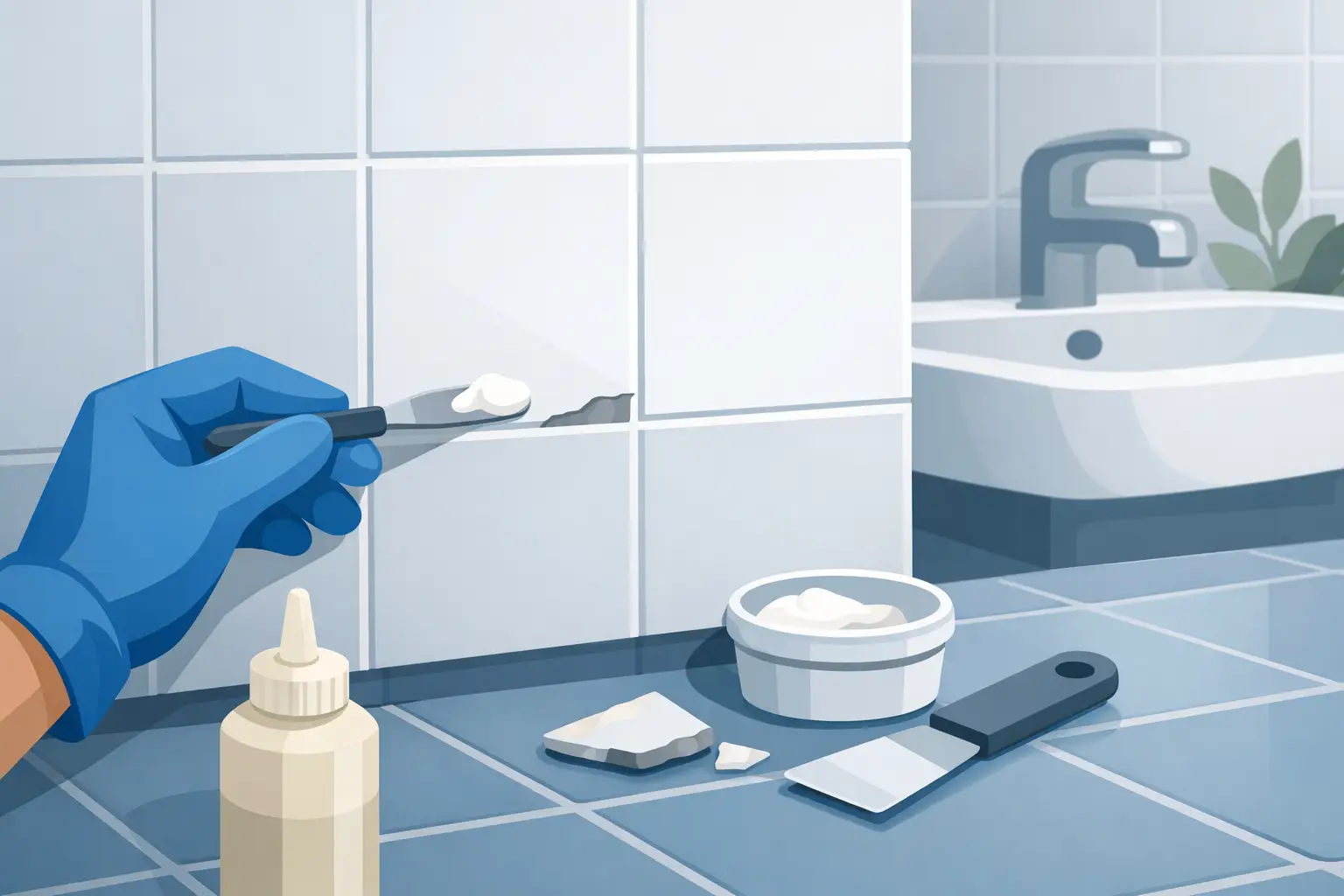
A proper repair starts with cleaning the damaged area. Any soap film, loose material, or residue has to go. After that, the chipped section is filled with a repair compound made for hard bathroom surfaces. Once cured, it gets shaped and sanded so it sits flush with the tile face.
The hardest part is the finish. A repair that is smooth but the wrong color will still stand out. That is why color matching matters so much. On white tile, this can be straightforward. On almond, gray, beige, or older tile colors, it gets trickier. Gloss level matters too. Even a close color match can look off if the repaired spot is shinier or duller than the surrounding tile.
For one or two minor chips, a spot repair may be enough. For multiple chips, worn surfaces, or mismatched tile, a broader tile refinishing approach often gives a cleaner final result.
DIY repair versus professional repair
You can find DIY tile chip repair kits at most home improvement stores. Some work fine for very small damage in low-visibility spots. If the chip is tiny and you understand it may not look perfect, a DIY fix can be a reasonable short-term option.
But bathroom tile is unforgiving. Repairs are usually done at eye level. Light reflects off glossy surfaces. Water exposure tests the bond. A repair that looks okay on day one can yellow, shrink, or fail if the prep or product is wrong.
Professional repair tends to make more sense when the chip is in a visible spot, when matching the existing finish matters, or when there are several damaged areas. It also makes sense when the tile is part of a larger resurfacing project. A trained refinishing technician can repair the damage and improve the overall look at the same time.
Can chipped bathroom tile be repaired if the finish looks old too?
Yes, but this is where homeowners often choose the wrong target. They focus on the chip because it is the obvious defect. The bigger issue may be that the whole tile surround looks dated, dull, or stained.
If that sounds familiar, spot repair alone may leave you disappointed. The chip may be gone, but the bathroom still looks old. In that case, refinishing can be the better value. Instead of removing tile, a professional can repair minor damage and then apply a new finish over the existing surface. That changes the appearance of the tile, helps create a more uniform look, and avoids the mess of demolition.
This approach is especially appealing when the tile color is outdated but the tile itself is still solid. It is also useful when you want the bathroom to look cleaner and newer without paying for full replacement.
What affects how long a repair lasts
Durability depends on three things – the condition of the tile, the quality of the prep, and the amount of wear the area gets.
A small chip on a stable shower wall will generally have a better chance of lasting than a chip on a bathroom floor near the doorway. Impact, foot traffic, cleaning products, and moisture all matter. So does the original cause of the damage. If something heavy was dropped once, that is one scenario. If the tile chipped because the surface is moving, that is a different problem.
Maintenance matters too. Harsh scrubbers and abrasive cleaners can wear down repaired and refinished surfaces faster. Gentle cleaning and proper care go a long way.
Repair, refinish, or replace?
This is usually the real decision.
Repair is best for isolated chips on otherwise sound tile. It is the smallest fix and often the most affordable.
Refinishing is best when the tile is still solid but looks worn, dated, stained, or uneven. It handles minor cosmetic damage while improving the full surface. For many homeowners, this hits the sweet spot between cost and appearance.
Replacement is best when the tile is loose, cracked through, leaking, or backed by damaged walls or subfloor. It is also the right call when the layout or substrate problems cannot be solved from the surface.
A lot of bathrooms in Florida fall into the middle category. The tile is ugly, chipped in a few places, maybe a little tired, but not beyond saving. That is where a practical resurfacing plan can save time, mess, and money.
What to do next if you have chipped tile
Start with a close look. Check whether the tile is firm. Look at the grout and caulk around it. Think about whether the issue is one chip or a bathroom that looks worn all over.
If the damage is small and the tile is solid, repair may be all you need. If the surface is dated or there are multiple problem areas, ask about refinishing instead of assuming replacement is your only option. Companies like The Tub Guy handle this type of bathroom surface restoration every day, and that matters when you want the fix to look right and last.
A chipped tile does not always mean a full remodel is waiting around the corner. Sometimes the smartest move is the one that restores what you already have and gets your bathroom looking right again without tearing it apart.