
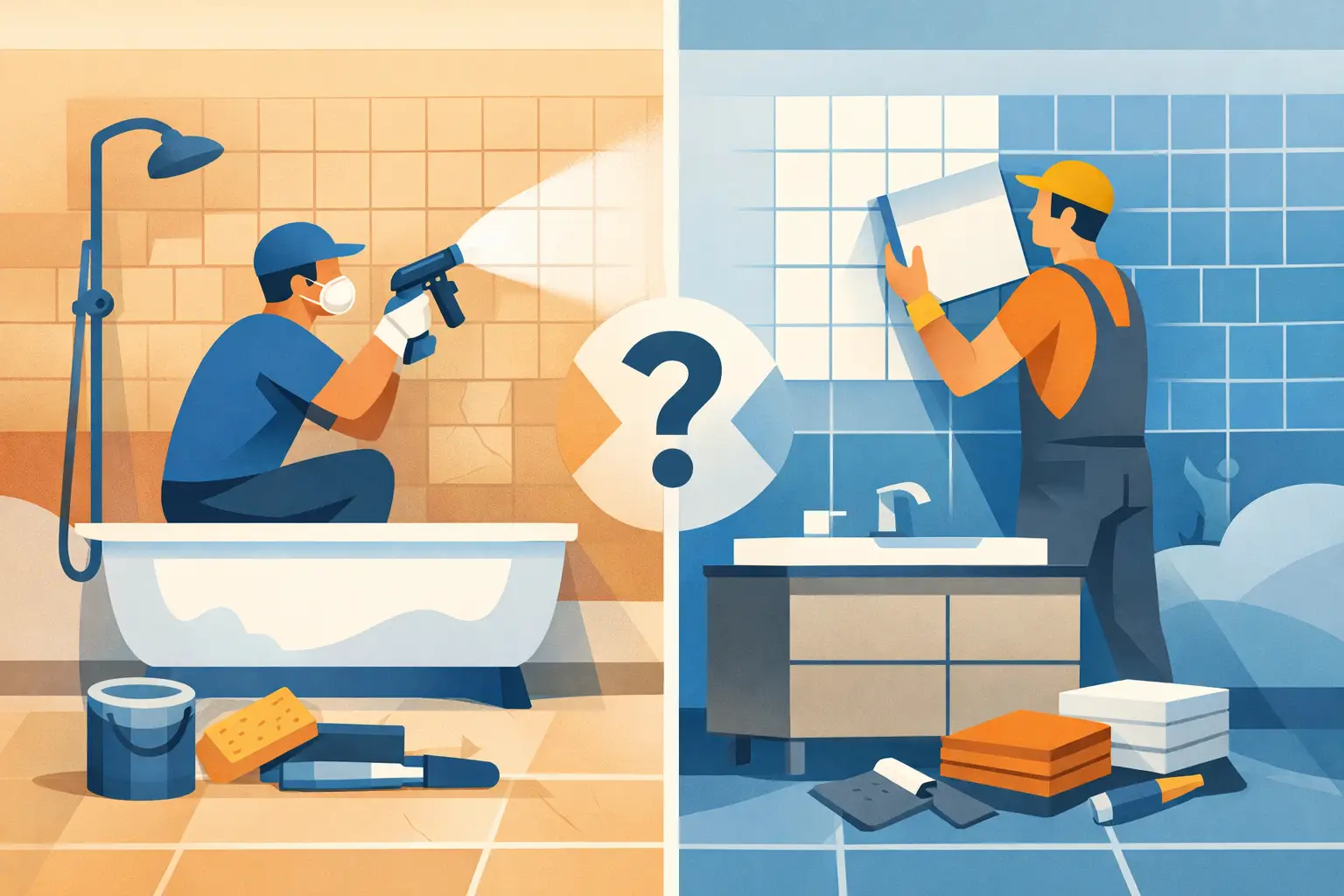
That old bathroom tile can make the whole room feel worn out. If you’re weighing reglazing vs replacing tile, the real question is simple: do you need a full tear-out, or do you just need the surface brought back to life? For many homeowners, the right answer comes down to cost, condition, timeline, and how much disruption you can tolerate.
Tile replacement sounds like the permanent fix. Sometimes it is. But it also means demolition, dust, haul-away, plumbing risk, and a much bigger bill. Reglazing is different. It keeps the existing tile in place, repairs surface flaws, and applies a new finish that gives the room a clean, updated look without ripping the bathroom apart.
Reglazing vs replacing tile: the basic difference
Reglazing is a surface restoration process. The existing tile stays where it is. The surface gets cleaned, prepped, repaired, and coated with a new finish. This can cover stains, dullness, outdated color, and many signs of wear.
Replacing tile means removing the old tile and installing new material from scratch. That includes demolition, disposal, prep work, setting new tile, grouting, and often dealing with whatever damage is hiding behind the wall or under the floor.
One option restores what you already have. The other starts over. That is why the price, timeline, and mess are so different.
When reglazing makes the most sense
Reglazing is often the smart move when the tile is ugly but still structurally sound. If the tile is firmly attached, the layout still works, and the main problems are cosmetic, refinishing can give you a dramatic improvement without the cost of replacement.
This is common in older Florida bathrooms. Pink, blue, beige, or badly dated wall tile may still be solid after decades. It just looks tired. If the surface has staining, minor chips, worn glaze, or grout lines that make the whole room feel dirty even after cleaning, reglazing can be a practical fix.
It also makes sense when you want speed. A lot of homeowners do not want their bathroom torn up for days or weeks. They want it to look better fast and move on. Reglazing fits that goal.
Cost matters too. Full tile replacement can climb quickly once labor and hidden repairs enter the picture. Reglazing is usually a fraction of that price. For homeowners who want a better-looking bathroom without a full remodel budget, that matters.
When replacing tile is the better call
There are times when refinishing is not enough. If tile is loose, badly cracked through the body, or failing because of water damage behind the surface, replacement is usually the better option.
The same goes for major layout issues. If you hate the size, shape, or pattern of the tile itself, glazing will not change that. It changes the finish and color, not the structure. If you want larger-format tile, a new shower design, or a completely different look that depends on changing the actual material, replacement is the way to go.
You may also need replacement if moisture has gotten behind the walls and caused substrate damage. In that case, a pretty new finish on top will not solve the underlying problem. The damaged areas need to be opened up and repaired correctly.
Cost: where most homeowners make the decision
For many people, the biggest factor in reglazing vs replacing tile is money. That makes sense. Bathroom projects can get expensive fast.
Replacing tile is not just about the tile you see. You are paying for demo, disposal, prep, material, labor, grout, caulk, and often touch-up work around the areas that were disturbed. If plumbing fixtures need to come off and go back on, the cost can rise again. If hidden damage shows up, that is another jump in the budget.
Reglazing avoids most of that. There is no tear-out. No dumpster. No replacing a wall because demolition exposed a problem. You are restoring the surface you already have. That is why it is often the better value when the tile is still in good shape underneath the wear.
If your goal is to improve the look of the bathroom and stretch your dollars, reglazing usually delivers more visual change per dollar spent.
Time and disruption matter more than people expect
A bathroom project affects your whole routine. That is why the timeline deserves just as much attention as the price.
Tile replacement is labor-heavy. Even a smaller bathroom can mean days of disruption, and sometimes longer if materials are delayed or repairs are needed. There will be noise. There will be dust. There may be sections of the bathroom you cannot use while work is underway.
Reglazing is faster and far less invasive. That matters for busy households, rental properties, and anyone who does not want their home turned into a jobsite. If you need a cleaner process with less mess and downtime, refinishing has a clear edge.
Appearance: can reglazing really look good?
This is one of the biggest questions homeowners ask, and it is fair. If the finish looks cheap, the savings do not matter.
Done right, reglazing can look sharp, clean, and bright. It can dramatically improve outdated tile and make the whole bathroom feel newer. Color changes are also a big advantage. If your tile is stuck in another decade, reglazing can update the room without replacing the walls.
The key phrase is done right. Surface prep matters. Repair work matters. Product quality matters. So does the skill of the technician. A rushed or sloppy job will not hold up or look right. Professional workmanship is what separates a finish that looks refreshed from one that looks painted over.
Durability and maintenance
Replacement has one obvious advantage. New tile is new tile. If installed correctly, it can last for many years.
But that does not mean reglazing is a short-term patch when done by a qualified refinishing company. A professionally restored tile surface can hold up well with proper care. The biggest factors are prep quality, coating quality, and whether the homeowner follows basic maintenance instructions.
Harsh cleaners can damage refinished surfaces. Abrasive tools can too. That is not unusual. Plenty of bathroom finishes need the right care to stay looking good. The difference is that a refinished surface needs a little more respect than brand-new tile.
This is where warranty matters. A company that stands behind the work tells you a lot about how seriously they take prep, materials, and follow-through. That peace of mind counts.
What Florida homeowners should think about
Bathrooms in Florida deal with heat, humidity, and frequent use. That makes proper surface prep and correct application especially important. If moisture issues already exist behind the tile, they need to be addressed honestly. No coating should be sold as a fix for hidden water damage.
At the same time, many Florida homes have older bathrooms with solid original tile that is simply worn, stained, or dated. That is where reglazing often shines. You can update the look, improve cleanliness, and avoid a major renovation bill.
For homeowners in Pinellas County and Saint Petersburg, this can be a practical way to improve a bathroom before selling, refresh a rental, or finally deal with a room that has looked tired for years.
How to choose between reglazing and replacing tile
Start with the condition of the tile. If it is solid and the problem is mostly cosmetic, reglazing deserves a serious look. If there is movement, widespread cracking, water intrusion, or failing substrate, replacement is usually the safer move.
Next, think about your goal. If you want the bathroom to look cleaner, newer, and more current without a full remodel, reglazing is often the better fit. If you want to change the layout or install a completely different tile design, replacement makes more sense.
Then look at your budget and tolerance for disruption. Some homeowners are ready for a full renovation. Others want a strong visual upgrade without the cost, mess, and downtime. There is no one-size-fits-all answer.
A good contractor should be honest about that. If your tile should be replaced, they should say so. If the surface is a good candidate for restoration, they should explain what results to expect and how to care for it after the work is done.
The better question is not which option is best
The better question is which option is right for the tile you have right now. Reglazing vs replacing tile is not about picking the more expensive choice or the faster one. It is about matching the solution to the problem. If your tile is still solid, refinishing can save you a lot of money and hassle while giving the bathroom a fresh, clean look. If the tile is failing underneath, replacement is money better spent.
A bathroom does not always need demolition to feel new again. Sometimes it just needs skilled restoration and a company willing to stand behind the work, like The Tub Guy.