
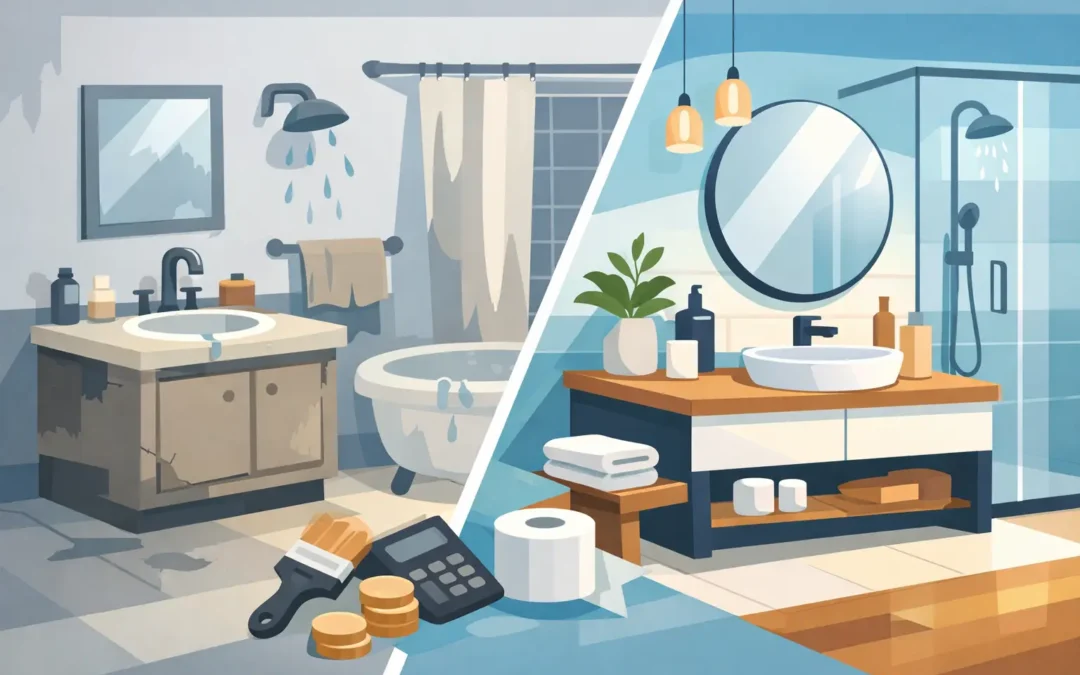
If you’re asking how much to refresh a bathroom, you’re probably not looking for a full gut job. You want it cleaner, newer, and easier to live with – without tearing out tile, replacing the tub, or spending the kind of money that makes the whole project stall out. That is exactly where a bathroom refresh makes sense.
A refresh is not the same as a remodel. You’re improving what you already have. That can mean refinishing a worn tub, reglazing tile, updating a vanity, changing fixtures, repainting, and fixing the small things that make the room feel dated. The cost can vary a lot, but most homeowners spend far less on a refresh than they would on full replacement.
How much to refresh a bathroom depends on the scope
For a basic cosmetic refresh, many homeowners land somewhere between $1,500 and $5,000. If you are doing more updates, using higher-end materials, or hiring out every part of the job, the number can move into the $6,000 to $10,000 range. A full remodel often goes well beyond that.
The biggest factor is simple. Are you keeping the existing layout and fixtures, or are you replacing them?
If the tub is structurally sound but stained, chipped, or an outdated color, refinishing it costs a fraction of replacement. The same goes for tile, sinks, countertops, and even cabinets in some bathrooms. Once demolition starts, labor, disposal, plumbing changes, and repair work add up fast.
That is why two bathrooms that look similar on paper can have very different price tags. One homeowner refreshes surfaces and paints the walls. Another pulls the tub, replaces tile, moves plumbing, and now the project has become a renovation.
Typical bathroom refresh cost by project level
A light refresh usually runs about $1,500 to $3,000. This often includes paint, new hardware, updated light fixtures, a mirror swap, and a deep clean or minor repair work. It helps the room look sharper, but it will not solve worn-out tub or tile surfaces.
A mid-range refresh often falls between $3,000 and $6,000. This is where many homeowners get the best value. You might refinish the tub, reglaze wall tile, replace faucets, install a new vanity top, update the toilet, and repaint. The room looks dramatically better, but you avoid the mess and cost of full demolition.
A more complete refresh can land between $6,000 and $10,000 or more. That might include a new vanity, flooring, upgraded lighting, glass doors, surface refinishing, and several plumbing fixture replacements. It still may not be a full remodel, but it is more involved.
The smart move is to decide what really bothers you. If the bathroom works fine and the problem is mostly appearance, a refresh usually gets you where you want to go without overspending.
Where the money goes
Labor is a big piece of the cost. Bathrooms pack a lot into a small space, and every trade charges for skill and time. Plumbing fixture changes, electrical updates, prep work, surface repair, painting, and finish installation all add to the total.
Materials matter too, but not always in the way people think. A new faucet or mirror may not break the budget. Replacing a tub, hauling it out, repairing surrounding areas, and installing a new one is where costs jump. The same thing happens with tile. Keeping solid tile and refinishing it can save a lot compared to tearing it out and starting over.
There is also the hidden cost of disruption. A bathroom replacement project can drag on. A professional refinishing job is much faster. For busy homeowners, that time savings matters.
Refinishing vs replacement
This is where a lot of bathroom budgets are won or lost.
Replacing a tub can cost several thousand dollars once you count removal, disposal, plumbing adjustments, wall repair, and the new tub itself. Refinishing that same tub is usually a much smaller investment if the structure is still good.
The same logic applies to tile walls, shower pans, sinks, and countertops. If the surfaces are ugly but not failing, refinishing can give you a clean, updated look without ripping everything out.
That does not mean refinishing is right for every job. If a tub is badly cracked through, leaking, or improperly installed, replacement may be the better call. If tile is loose or there is moisture damage behind the walls, covering the surface will not fix the real problem. A good contractor should tell you that.
But if your bathroom is just worn, stained, chipped, or stuck in another decade, refinishing is often the practical answer.
How much to refresh a bathroom with refinishing
If your goal is better appearance without major construction, refinishing can lower the overall cost in a big way.
A tub refinish is commonly one of the most cost-effective upgrades in the room. Refinishing wall tile or a shower can also save serious money compared to replacement. Add in a fresh coat of paint, updated hardware, and better lighting, and the bathroom can look dramatically different for far less than a remodel.
For many Florida homeowners, this is the sweet spot. The room gets a visible upgrade. The job moves fast. You avoid weeks of dust, debris, and scheduling headaches.
That is why companies like The Tub Guy focus on restoration work. When the structure is sound, resurfacing gives homeowners a practical way to get results without paying replacement prices.
What can raise the price fast
Some cost increases are obvious. Others sneak up on you.
Custom materials, layout changes, plumbing relocation, and tile replacement can push a refresh into remodel territory fast. Water damage is another budget changer. Once walls or subfloors are opened up, repair work can spread.
Older homes can bring extra surprises too. Outdated plumbing, damaged drywall, uneven floors, and poor past workmanship all take time to correct. If you are in an older Florida home, it is wise to leave room in the budget for something unexpected.
Even smaller choices can stack up. A new vanity, premium fixtures, upgraded lighting, new mirror, and fresh flooring may each feel manageable alone. Put them together, and the number climbs quickly.
That is why it helps to separate must-haves from nice-to-haves before the work begins.
Best ways to keep costs under control
The easiest way to control cost is to keep the layout the same. Moving plumbing almost always raises the price.
The second big saver is to refinish instead of replace when the existing surfaces are still solid. Tubs, tile, sinks, showers, and countertops can often be restored for much less than replacement.
It also helps to focus on the changes with the biggest visual impact. In many bathrooms, that means the tub or shower area, old tile, paint, lighting, and hardware. Those updates can make the whole room feel newer without rebuilding it.
Good planning matters. If you hire one company for refinishing and another for paint or fixture work, make sure the schedule is coordinated. Delays cost money. So does rework.
And get clear about warranty coverage. A low price is not much of a bargain if the finish fails and nobody stands behind it.
Is a bathroom refresh worth it?
If your bathroom is functional but ugly, worn, or dated, yes – usually it is. A refresh costs less than a remodel, causes less disruption, and can still make the space feel clean and current.
It is especially worth it when the core pieces are still in decent shape. A solid cast iron tub, stable tile, and working plumbing do not need to be ripped out just because the finish looks bad.
This kind of project also makes sense if you want to improve the home before selling, fix up a rental, or finally deal with a bathroom you have been putting off for years. You get visible results where they count.
The main thing is to match the solution to the problem. If you need structural repair, a simple cosmetic refresh will not do enough. If the room just looks tired, full replacement is often more than you need.
The real answer on bathroom refresh cost
So, how much to refresh a bathroom? For most homeowners, the realistic answer is somewhere between a few thousand dollars for a straightforward cosmetic update and several thousand more for a larger refresh with fixture changes and finish upgrades. The price depends on whether you restore what you have or start replacing everything in sight.
If the bathroom is worn but still solid, refinishing can shift the math in your favor. You spend less, finish faster, and still get a bathroom that looks dramatically better. That is usually the smartest place to start – with what needs to change most, not with the most expensive possible plan.
A good bathroom does not always need to be rebuilt. Sometimes it just needs the right hands on the right surfaces.