
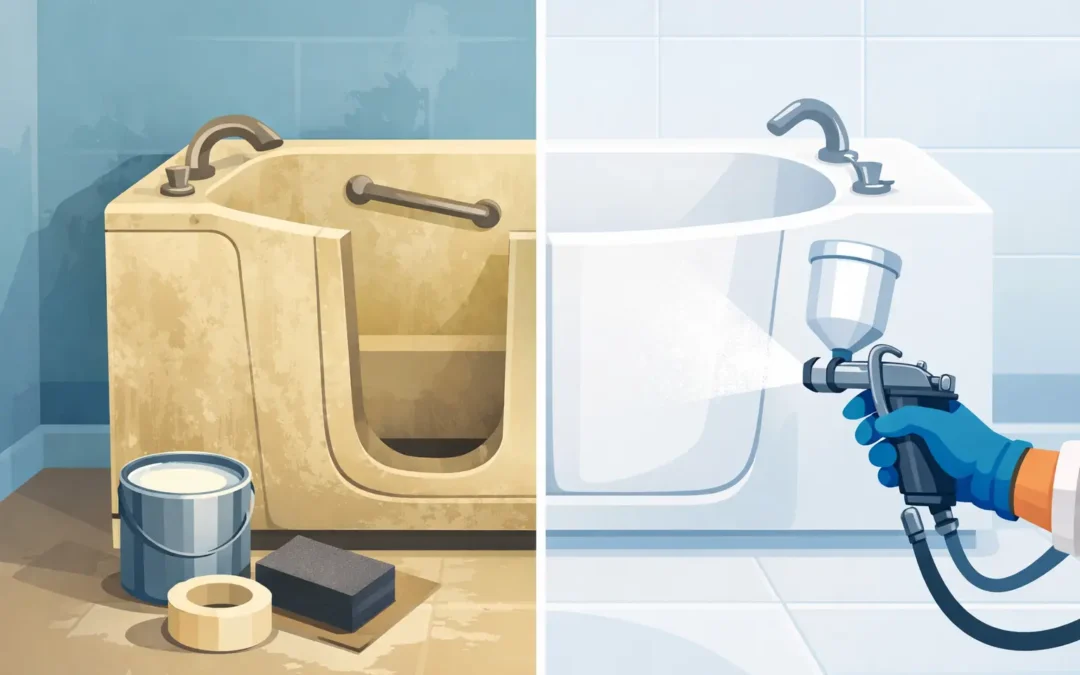
A worn walk-in tub stands out for all the wrong reasons. Stains around the floor, chips on the rim, dull color, and a rough finish can make the whole bathroom feel older than it is. Walk in tub refinishing gives homeowners a way to fix that without tearing out a tub that still works.
For many Florida homeowners, that matters. Replacing a walk-in tub is not a small job. These tubs are large, heavy, and built around access and safety features that take real work to remove and reinstall. If the tub is structurally sound, refinishing is often the smarter move.
What walk in tub refinishing actually does
Walk in tub refinishing restores the visible surface of the tub. The goal is simple. Repair the damage, smooth the finish, and apply a new coating that makes the tub look clean, bright, and refreshed again.
This is not a paint-it-and-hope-for-the-best job. Done right, the process includes deep cleaning, surface prep, repairs to chips or worn spots, bonding agents, and a professional topcoat made for bathroom use. The end result should look like a real improvement, not a cover-up.
That matters even more with a walk-in tub because these units have more detail than a standard tub. There is usually a door, threshold, seat, textured floor, jets in some models, and tighter edges where wear tends to show first. A refinisher has to work around all of that and still leave a smooth, even finish.
Why homeowners choose walk in tub refinishing
The biggest reason is cost. In most cases, refinishing costs far less than full replacement. Once you start pricing out demolition, disposal, plumbing changes, installation, surrounding wall repair, and possible floor work, replacement adds up fast.
The second reason is less disruption. A replacement can drag a bathroom out of service and turn into a bigger remodel than expected. Refinishing is much more contained. You keep the tub you already have. The room stays intact. The mess stays limited.
There is also the appearance factor. Many walk-in tubs are installed for safety and comfort, but after years of use they can start to look dated. If the color is off, the gloss is gone, or the surface is stained, the tub can make the whole bathroom feel tired. Refinishing gives it a cleaner, newer look without rebuilding the space.
When refinishing makes sense
Refinishing is a strong option when the tub has cosmetic problems but is still in solid working shape. That includes surface stains, minor chips, dullness, discoloration, worn finish, and light scratches. If the tub still functions the way it should, the problem may be more about looks than structure.
It also makes sense when you want a color update. Many older tubs have a dated tone that clashes with newer flooring, paint, or fixtures. Refinishing can help bring the tub in line with the rest of the bathroom without replacing a specialized fixture.
Another good fit is when you are trying to improve the bathroom before selling, renting, or aging in place. A clean-looking walk-in tub can help the room feel cared for. That matters whether you are planning to stay or planning to put the home on the market.
When it may not be the right fix
Refinishing is not a cure-all. If the walk-in tub has major structural damage, active leaks, failing seals around the door, serious plumbing issues, or mechanical problems with jets and controls, the first question is not the finish. The first question is whether the tub itself is sound.
This is where honest evaluation matters. Some tubs are worth refinishing. Some are too far gone. If there is rust-through, soft spots, major cracks, or ongoing water intrusion, replacement or repair work may come first.
It also depends on who did the last coating. If a tub has been coated poorly before and that finish is peeling badly, the prep work becomes more demanding. It can still be fixable, but the condition of the surface affects the process, the labor, and the result.
The walk in tub refinishing process
Homeowners usually want to know one thing first. How long is my bathroom going to be tied up?
In many cases, the actual refinishing work can be done in a day, though cure time matters. The surface needs time to set before normal use. A professional should give you clear instructions on when the tub can be used again and how to care for it.
Surface prep comes first
Prep is where the job is won or lost. The tub is cleaned to remove soap residue, body oils, hard water buildup, and old contaminants. Any chips, cracks, or rough areas are repaired. The surface is then etched or sanded as needed so the new coating can bond properly.
With walk-in tubs, detail work is a bigger part of the job. The door area, seat, floor, and hardware edges all need careful attention. If prep gets rushed in those spots, the finish will not hold up the way it should.
Coating and finish
After prep, the refinisher applies bonding materials and a topcoat designed for tub surfaces. The goal is even coverage, clean lines, and a smooth finish with consistent color and gloss.
A good refinished tub should not look blotchy or heavy. It should look clean and uniform. That sounds basic, but it takes skill. Walk-in tubs have more corners and contours than standard tubs, which leaves more room for poor workmanship to show.
How long does a refinished walk-in tub last?
That depends on two things: the condition of the tub before the job and the quality of the refinishing work. Maintenance matters too.
A professionally refinished tub can last for years when it is prepped correctly and cared for properly. A rushed or low-cost job may fail much sooner. That is why warranty coverage matters. If a company stands behind its work, that tells you something about the materials, process, and confidence behind the service.
Homeowners should ask direct questions. How is the surface prepared? What kind of coating is used? What problems are covered? What happens if there is an issue after the job is done? Straight answers matter more than flashy promises.
Caring for a refinished walk-in tub
Once the tub is refinished, maintenance is simple but important. Use non-abrasive cleaners. Avoid harsh scrub pads. Do not treat the surface like unfinished porcelain or fiberglass. A refinished topcoat needs the right cleaning habits if you want it to stay looking good.
That does not mean the tub becomes fragile. It means normal care matters. If you use the wrong cleaners week after week, even a well-done finish can wear faster than it should.
For households using a walk-in tub every day, clear care instructions are a must. That is especially true in homes with caregivers, multiple users, or rental turnover where cleaning products may change from one person to the next.
Cost vs. replacement
For most homeowners, this is the real decision point. Is refinishing worth the money, or are you just delaying a replacement?
If the tub is in good working order, refinishing is usually the better value. You get a major visual improvement without demolition, plumbing reset, tile repair, and installation costs. You also avoid the hassle that comes with pulling out a large accessible tub and fitting a new one back into the same bathroom.
If the tub has major functional issues, the math changes. Spending money on a new finish does not make sense if the door leaks or the unit has larger mechanical problems. That is why a proper assessment matters before any work starts.
In a lot of cases, homeowners are surprised by how much life is left in the tub they already have. The surface looks bad, so they assume the whole fixture is done. Often, it is not.
Choosing the right refinishing company
Not every company handles walk-in tubs well. These tubs are more specialized, and they need more than a basic spray-over approach.
Look for a company that has real experience with bathroom surface restoration, not just general handyman work. Ask about repairs, coating systems, drying time, and warranty coverage. Ask if they have handled walk-in tubs specifically. You want someone who understands the shape, the door area, and the wear patterns that come with regular use.
A dependable contractor should also set realistic expectations. No hard sell. No vague answers. Just clear information about what can be improved, what cannot, and how the finish should be maintained.
The Tub Guy works with homeowners who want that kind of straight answer. If your walk-in tub is worn, stained, chipped, or outdated but still structurally sound, refinishing can be a practical way to get the bathroom looking right again without taking on a full remodel.
A walk-in tub was installed for comfort, safety, and ease of use. If the surface is the only thing letting it down, you may not need a replacement. You may just need the right hands on the job.