
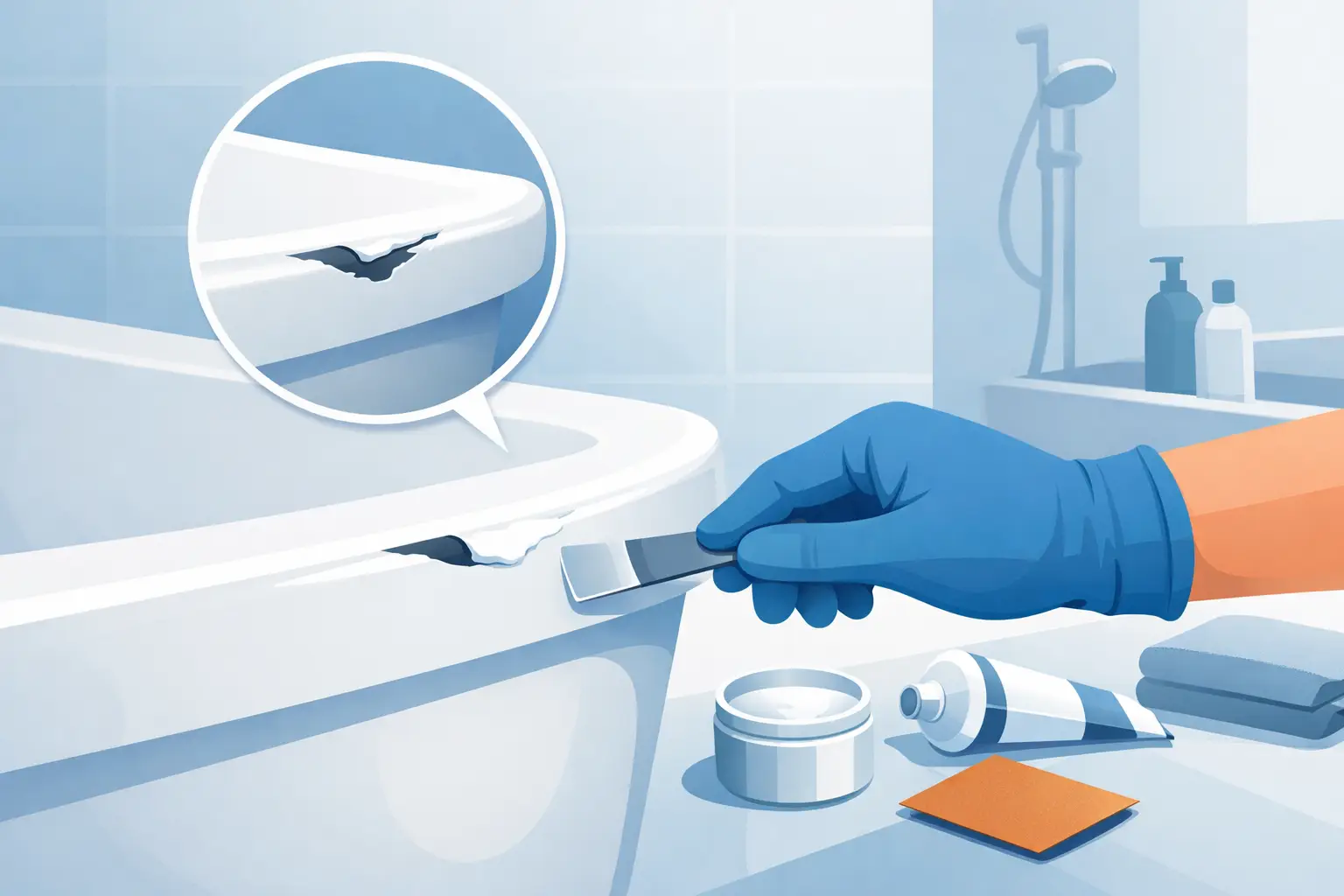
That chip in your tub never stays “just a chip” for long. Water gets in. Soap scum builds around the edge. Rust can start if metal is exposed. If you need to repair chipped porcelain bathtub damage, the right fix depends on the size of the chip, the age of the tub, and how good you want the final result to look.
For some homeowners, a small touch-up kit is enough to get by. For others, that patch ends up standing out worse than the original damage. A chipped tub can often be repaired, but not every repair gives the same finish, durability, or value.
When a chipped porcelain tub can be repaired
Most chips can be repaired if the damage is limited to a small area and the tub is still structurally sound. A surface chip, a small impact mark, or a nick near the rim is usually fixable. The key is whether the damage is cosmetic or whether it points to a bigger coating failure.
If the porcelain is chipped but the rest of the tub is solid, repair makes sense. If the tub has multiple chips, widespread wear, heavy staining, or peeling from an old refinish job, a spot repair alone may not give you a clean final look. That is when refinishing the full tub becomes the better investment.
Older cast iron and steel tubs are often worth saving. They are heavy, durable, and expensive to replace. In many Florida homes, the smarter move is repair or refinishing instead of tearing out the tub, wall tile, plumbing trim, and anything else tied to the replacement.
What causes porcelain tub chips
Most chips happen from impact. A dropped shower head, a metal tool, a shampoo bottle with a hard edge, or even a tile installation mistake can take a bite out of the surface. Sometimes the chip starts small and grows because moisture gets under the surrounding finish.
Age also matters. Over time, porcelain surfaces can become more vulnerable around worn areas. If the tub has already been reglazed once and that coating is failing, what looks like a porcelain chip may actually be a chip in the refinished topcoat. That changes the repair method.
The location matters too. A chip on the inside floor of the tub gets more foot traffic and standing water than one on the outer apron. A repair in a high-use area needs to be done right or it will show wear faster.
DIY repair chipped porcelain bathtub options
If the chip is very small, a DIY repair kit may be enough as a short-term fix. These kits usually include filler, a color-matched touch-up material, sandpaper, and instructions. The basic idea is simple. Clean the chip, remove loose material, fill the damaged area, smooth it out, and apply a finish coat.
That sounds easy. The hard part is making it blend.
Porcelain has a hard, baked-on surface with a specific sheen. Most DIY kits cannot perfectly match that texture or gloss. You may seal the chip, which is good, but you may still be left with a patch you can see every time you walk into the bathroom.
That does not mean DIY never works. For a tiny chip in a less visible spot, it can be a practical option. If your goal is to stop rust and get a decent cosmetic improvement, a kit may do the job. If your goal is a like-new finish, expectations need to be realistic.
Where DIY repairs usually go wrong
The biggest problem is prep. If the chip is not fully cleaned and dried, the filler may not bond well. If there is rust under the chip and it is not treated first, the damage can come back through the repair. If the patch sits too high or too low, it catches the light and becomes obvious.
Color match is another issue. White tubs are not all the same white. Some are bright white. Some are almond. Some have yellowed with age. A repair that is technically solid can still look bad if the color is off by even a little.
Then there is gloss. A bathtub surface reflects light across a wide area. One dull patch or one overly shiny spot stands out fast. That is why homeowners often start with a chip repair and then call for professional refinishing later.
When professional repair is the better move
If the chip is larger than a dime, down to metal, surrounded by cracks, or located in a very visible area, professional repair is usually worth it. The same goes for tubs with multiple problem spots or previous refinishing work.
A pro can assess whether you need a localized repair, a full reglaze, or both. That matters because patching one spot on a worn tub may solve the damage but not the overall appearance. If the rest of the surface is dull, stained, or rough, the repaired spot can look newer than the tub around it.
Professional repair is also the better choice if you want durability. A proper repair process includes surface prep, bonding materials made for wet environments, and topcoats designed to hold up under daily use. Done right, the repaired area should not just hide the damage. It should protect the tub from getting worse.
Repair versus refinishing the whole tub
This is where homeowners often save real money. Replacing a porcelain tub sounds simple until the work starts. Demo, haul-away, plumbing adjustments, wall repair, tile repair, flooring impact, and new fixture costs can push the price up fast.
Repair is the cheapest option when the damage is isolated. Refinishing costs more than a spot repair, but far less than replacement in most cases. It also gives you a uniform finish across the whole tub.
If your tub has one small chip and otherwise looks good, repair may be enough. If your tub has chips plus stains, worn areas, old color, or surface damage in several spots, refinishing usually gives the better result. You get the cosmetic reset and the repair at the same time.
That is often the sweet spot for homeowners who want the bathroom to look clean and updated without getting pulled into a full remodel.
What to expect from a professional chipped tub repair
A good repair starts with evaluating the damage. The chipped area is cleaned, loose material is removed, and any rust or contamination is addressed. The area is then filled and shaped so it sits level with the surrounding surface.
After that, the repair is sanded smooth and blended. If the tub is being refinished, the full surface is prepped and coated so the finished appearance is even from end to end. That is usually the best way to avoid a visible patch.
Timing depends on the condition of the tub and the scope of the work, but this is still much faster and less disruptive than replacement. No demolition. No hauling a heavy tub through the house. No surprise tile damage.
For busy homeowners, that matters.
How long a repair will last
It depends on the method and the condition of the tub. A DIY spot fix may hold for a while, especially in a low-stress area, but it is usually not the longest-lasting solution. Professional repairs tend to last longer because the materials and prep are better.
The bigger factor is maintenance after the repair. Harsh cleaners can shorten the life of the finish. So can bath mats with suction cups, abrasive pads, and leaving bottles sitting on the tub edge where they can trap moisture or cause new chips.
A repaired or refinished tub should be cleaned with non-abrasive products and treated with basic care. That is not complicated, but it does matter if you want the surface to stay smooth and bright.
Repair chipped porcelain bathtub damage before it spreads
A small chip is easier to deal with than a rusting, flaking area that keeps growing. If you catch it early, you usually have more options and lower cost. Wait too long, and what could have been a straightforward repair may turn into a bigger refinishing job.
That is especially true in bathrooms that get heavy daily use. Kids, guests, tenants, and regular cleaning all put stress on the tub surface. Once water starts getting under damaged areas, the problem rarely improves on its own.
If you are not sure whether your tub needs a simple repair or full refinishing, get it looked at before trying to patch over a bigger issue. A quick evaluation can save you from wasting time on a fix that does not hold.
For homeowners who want a tub to look right, last, and avoid the cost of replacement, the best repair is the one that solves the damage and improves the whole bathroom at the same time. That is the standard The Tub Guy builds to, and it is usually what saves the most money in the long run.
A chipped porcelain tub is not the end of the road for that bathroom. Fix it early, choose the right level of repair, and you can keep the tub you have without living with damage every day.