
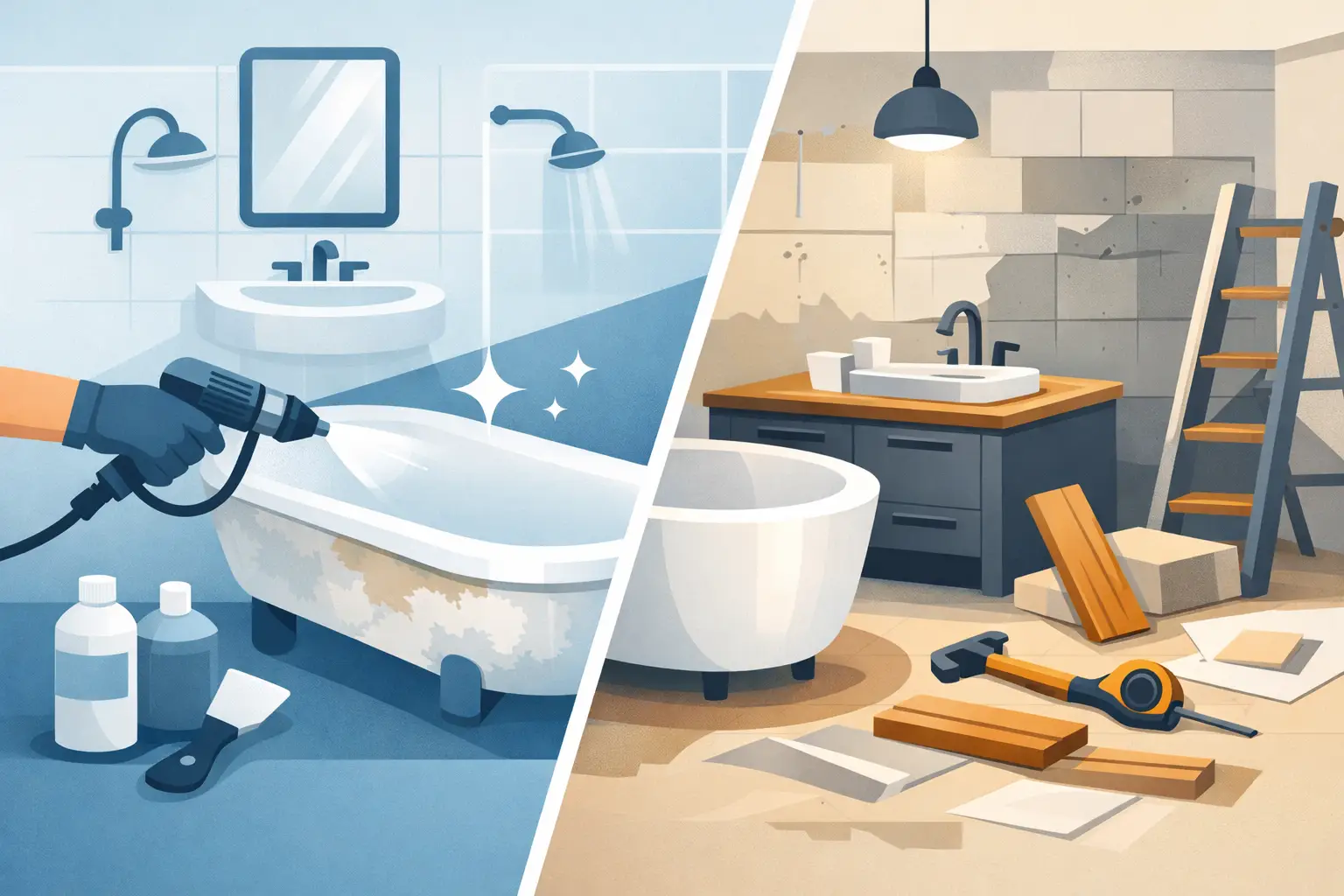
A bathroom can make your whole house feel tired. You walk in, see a stained tub, worn tile, or a color that should have stayed in 1987, and suddenly the space feels worse than it really is. That is why homeowners often end up weighing reglazing vs remodeling bathroom options when they want a change without wasting money.
The truth is, these are not interchangeable solutions. One is a surface restoration job. The other is a full construction project. If you choose the wrong one, you can spend far more than needed or expect results that the process was never built to deliver.
Reglazing vs remodeling bathroom: what is the real difference?
Reglazing is about restoring what you already have. If your bathtub, shower, tile, sink, or countertop is structurally sound but looks worn, chipped, stained, or outdated, refinishing can make it look clean and updated again. The fixture stays in place. There is no tear-out. No hauling debris through the house. No shopping for replacement pieces that may or may not fit your space.
Remodeling is a bigger move. It usually means demolition, replacement, layout changes, plumbing work, new materials, and multiple trades. If your bathroom has hidden water damage, serious leaks, mold issues, or a layout that does not work for your family, remodeling may be the right call.
This is where many homeowners get stuck. They think a tired-looking bathroom automatically needs a full remodel. Often it does not. A lot of bathrooms look rough on the surface but are still solid underneath.
When reglazing makes more sense
If the main problem is appearance, reglazing is usually the smarter option. A tub with scratches, chips, rust stains, or a dull finish can often be restored. Tile that looks dated can be refinished in a new color. A sink or shower pan that has years of wear can be brought back without replacement.
This matters if you want results fast. A full remodel can stretch into weeks. Sometimes longer if materials are delayed or hidden problems show up once the walls are opened. Refinishing is far less disruptive. For busy homeowners, that alone can be the deciding factor.
Cost is another big factor. Replacing a tub is rarely just the price of a tub. You may have demolition, plumbing adjustments, wall repair, tile repair, disposal, flooring work, and labor stacked on top. Reglazing avoids most of that. You keep the fixture and improve the finish.
There is also a practical middle ground here. If your bathroom layout works, your fixtures are the right size, and the surfaces are still solid, replacing everything can be overkill. Refinishing gives you a visual upgrade without paying for a construction project you do not actually need.
When remodeling is the better investment
Refinishing is not magic. It will not fix structural damage. It will not correct a bad layout. And it will not solve plumbing issues hidden behind walls.
If your tub is badly cracked through the body, your subfloor is soft, the shower leaks into another room, or the tile substrate is failing, remodeling is usually the better investment. The same goes for bathrooms with severe mold problems, outdated plumbing that needs replacement, or accessibility needs that require major changes.
Some homeowners also want a complete redesign. Maybe they want to remove a tub and build a walk-in shower. Maybe the vanity is too small, the storage is poor, or the room needs a better layout. Those are remodeling goals, not reglazing goals.
The key is being honest about the condition of the bathroom. Cosmetic problems point one way. Structural and layout problems point the other.
Cost: the part most homeowners care about first
Let’s be direct. Budget drives this decision for most people.
Reglazing is almost always the lower-cost option because you are not paying for demolition and replacement. That keeps labor down and avoids the chain reaction that often comes with remodeling. Once you start tearing things out, one repair leads to another.
A remodel can make sense if the bathroom is beyond surface repair or if you plan to stay in the home long term and want a full redesign. But if your goal is to make the bathroom look clean, fresh, and updated at a fraction of replacement cost, refinishing is hard to beat.
That is especially true in Florida homes where many bathrooms still have solid older tubs, tile, and shower surrounds that are ugly but usable. Replacing them can cost far more than restoring them.
Time and disruption matter more than people expect
Most homeowners think about money first. Then the project starts, and they realize time and disruption matter just as much.
A remodel can turn one bathroom into a job site. Dust, noise, workers coming and going, material delays, and rooms being out of service all add stress. If it is your only bathroom, the inconvenience gets real fast.
Reglazing is simpler. Because the existing surface stays in place, the process is faster and cleaner than replacement. That makes it a strong choice for homeowners who want visible improvement without weeks of construction.
If you are getting a house ready to sell, fixing up a rental, or updating a bathroom before guests arrive, speed matters. In those cases, refinishing often fits the timeline much better.
Appearance: can reglazing really look that good?
This is a fair question. Some homeowners hear “refinishing” and picture a cheap paint job. Professional reglazing is not that.
Done right, the finish looks smooth, glossy, and refreshed. It covers stains, dullness, minor surface damage, and outdated colors. It can make an old tub or tile surround look dramatically better without ripping it out.
That said, expectations should be realistic. Reglazing restores and updates existing surfaces. It does not change the footprint of the room or turn a basic bathroom into a custom designer space. If your goal is a clean, sharp, like-new appearance, it is a strong solution. If your goal is a full transformation of layout, materials, and features, that is remodel territory.
Durability depends on workmanship and care
One reason some people hesitate on refinishing is durability. That concern usually comes from seeing bad work.
A professional reglazing job should not be treated like a temporary fix. Surface prep matters. Repair work matters. Product quality matters. Application matters. When those steps are rushed, the finish will show it.
When the work is done properly and the surface is cared for the right way, refinishing can hold up well. That is why warranty matters. A company willing to stand behind the work is telling you something important about how they do the job.
For homeowners, this is simple. Do not just compare price. Compare process, experience, and whether the company will come back if something is not right. That peace of mind has real value.
How to decide between reglazing and remodeling bathroom plans
Start with the condition of the bathroom, not your frustration level. A bathroom can look awful and still be a good candidate for refinishing.
Ask yourself a few direct questions. Are the tub, tile, sink, or shower still solid? Is the main issue stains, chips, wear, or outdated color? Does the current layout still work? Do you want a fast upgrade without tearing the room apart? If the answer is yes, reglazing is probably worth a serious look.
Now ask the other side. Is there water damage, soft flooring, leaks behind walls, serious mold, or failing materials? Do you want to move plumbing, expand the shower, or fully redesign the room? If yes, remodeling is probably the right path.
For many homeowners, the best answer is not all or nothing. You may remodel part of the bathroom later but refinish the tub or tile now to improve the space and control costs. That kind of staged approach can make a lot of sense.
The smart choice is the one that fits the bathroom
There is no trophy for spending more than necessary. If your bathroom needs structural work or a full redesign, remodel it. But if the bones are good and the problem is mainly worn, dated surfaces, refinishing is often the practical answer.
That is why so many homeowners choose restoration first. It saves money, cuts downtime, and delivers a big visual change without demolition. For the right bathroom, it is not a compromise. It is the smarter move.
If you are staring at a tub, shower, or tile wall that looks shot but still feels solid, do not assume replacement is your only option. A good bathroom does not always start with a sledgehammer.