
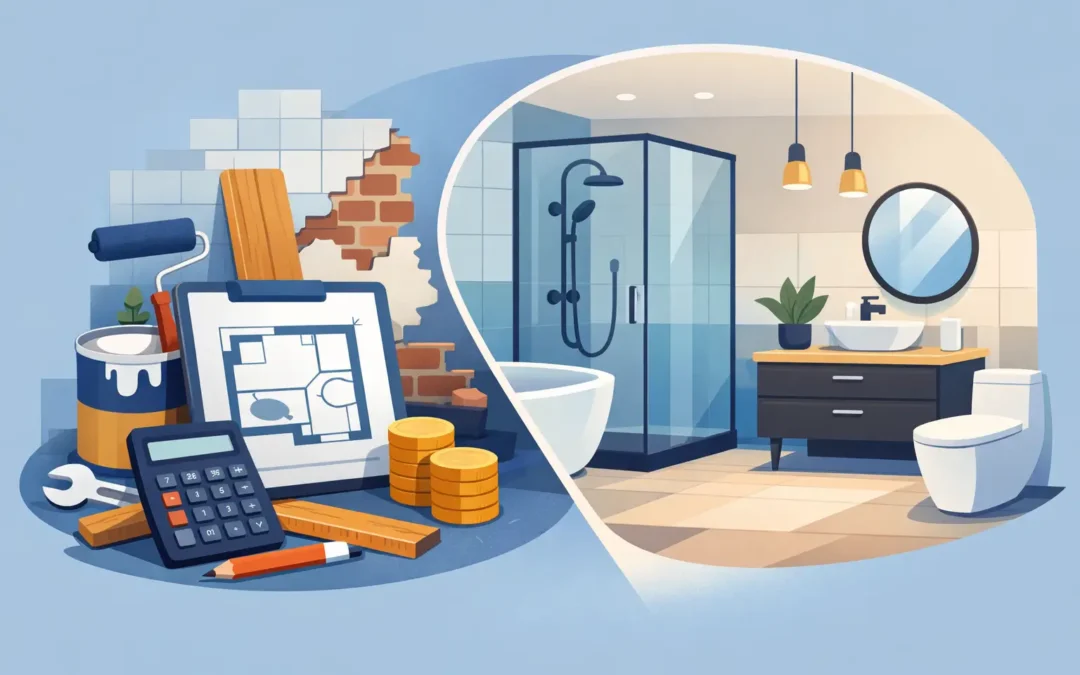
Sticker shock usually hits at the worst moment – right after you decide that ugly bathroom has to go. The truth is, full bathroom remodel cost can swing hard depending on size, materials, layout changes, and the condition hiding behind the walls. If you are planning a bathroom update in Florida, the smartest first step is knowing what actually drives the price.
What is a full bathroom remodel cost range?
A full bathroom remodel cost for a standard bathroom often falls somewhere between $12,000 and $35,000. On the higher end, it can push well beyond that if you are moving plumbing, installing premium tile, upgrading to custom glass, or replacing everything down to the studs.
That is a wide range for a reason. One homeowner may be keeping the same layout and choosing practical finishes. Another may be replacing the tub with a walk-in shower, redoing the flooring, moving the vanity, and correcting water damage at the same time. Those are not the same projects, and they should not have the same price tag.
In many Florida homes, labor, material availability, and moisture-related repairs also affect the final number. Bathrooms take a beating. Once demolition starts, hidden issues often show up.
Why full bathroom remodel cost varies so much
The biggest factor is scope. A true full remodel usually means demolition, disposal, plumbing work, electrical updates, wall repair, waterproofing, flooring, fixtures, paint, and finish installation. If even one of those categories gets more complex, the total climbs fast.
Layout changes are where budgets can really jump. Keeping the toilet, tub, and vanity in the same general location helps control labor. Moving plumbing lines or drains adds time, permits, and cost.
Material choices matter too. A basic vanity and builder-grade surround cost far less than custom cabinetry, natural stone, and frameless glass. The gap between a practical bathroom and a high-end one can be tens of thousands of dollars.
Then there is the condition of the room. Old subfloor damage, mold, cracked tile beds, bad drywall, or outdated wiring are not glamorous upgrades, but they still have to be fixed.
The main pieces of the budget
Demolition and haul-away
Tearing out the old bathroom sounds simple, but it takes labor, dust control, and disposal. If the bathroom has heavy tile, cast iron fixtures, or stubborn old materials, that part costs more than people expect.
Plumbing and electrical
If fixtures stay in place, plumbing work is more manageable. Once you start relocating a shower valve, moving a drain, or upgrading an old electrical setup, costs rise quickly. This is also where permit requirements can come into play.
Wet area work
Showers and tub surrounds are labor-heavy. Waterproofing matters. Cheap shortcuts in this area can lead to leaks and repairs later. A good-looking bathroom is not enough if the water control behind it fails.
Flooring, vanity, and fixtures
Floor tile, vanities, mirrors, lighting, faucets, and toilets can add up fast. Homeowners often underestimate how much these finish items cost when combined.
Paint, trim, and final details
The last 10 percent of the project tends to feel small, but it still affects the budget. Trim, hardware, caulk lines, touch-up work, and cleanup all matter if you want the room to feel finished.
A realistic way to think about bathroom pricing
For a modest hall bath, a full remodel may land in the low-to-mid teens if you keep the layout and choose sensible finishes. For a primary bathroom with more square footage, double vanities, tile work, and upgraded materials, the number can climb into the $20,000 to $40,000 range without much trouble.
Once homeowners start talking about custom tile showers, specialty glass, luxury fixtures, and structural changes, the ceiling goes much higher. That may be worth it for some homes. But not every bathroom needs a full gut job.
That is the part many people miss. There is a difference between a bathroom that is worn out and a bathroom that is simply ugly, stained, chipped, dated, or hard to clean. Those issues do not always require full replacement.
When a full remodel makes sense
Sometimes a full remodel is the right call. If the layout does not work, the shower leaks, the floor is failing, or the room has major damage behind the walls, patching the surface will not solve the real problem.
A full remodel also makes sense when you are changing how the bathroom functions. Maybe you need better accessibility. Maybe you want to convert a tub into a walk-in shower. Maybe storage is terrible and the vanity setup no longer fits your needs.
If the structure and systems need work, do the work. No coating or cosmetic update should be used to cover a serious issue.
When refinishing can cut the cost dramatically
This is where homeowners can save real money. If your tub, tile, shower, sink, or countertop is structurally sound but looks rough, refinishing can make a major visual difference without demolition.
That matters because demolition is expensive. Replacement is expensive. Haul-away, plumbing disconnects, new materials, and installation all stack up. Refinishing skips much of that.
Instead of tearing out a tub because it is stained, dull, or outdated in color, refinishing restores the surface. The same goes for worn tile, old wall surrounds, chipped sinks, and other bathroom surfaces that still have life left in them.
For many homeowners, this is the better answer. You get a cleaner, brighter, updated bathroom without turning the house upside down for weeks.
Full bathroom remodel cost vs. bathroom refinishing
A full remodel changes the whole room. Refinishing changes the look of key surfaces at a fraction of the price. That is not hype. It is just the math.
If your bathroom has a solid layout and the fixtures are still functional, refinishing may save thousands. It also shortens downtime. That matters if this is your main bathroom or if you simply do not want contractors in and out of your home for an extended project.
There are trade-offs. Refinishing will not move walls, fix a bad floor plan, or replace damaged plumbing behind the wall. It is not a fit for every situation. But when the problem is cosmetic wear, it is often the practical solution.
That is why companies like The Tub Guy focus on restoration work that gives homeowners a visible upgrade without the full replacement bill. In the right bathroom, that approach makes a lot of sense.
How to tell which path fits your bathroom
Start with the condition, not the frustration. Ask a few direct questions. Is the bathroom failing, or does it just look tired? Are there leaks, soft spots, and major damage? Or are you mostly dealing with stains, chips, outdated colors, and worn finishes?
If the bones are good, a full remodel may be overkill. If the room has deeper issues, surface work alone will not be enough.
It also helps to think about your timeline and your budget honestly. A lot of homeowners begin with remodel dreams and end up looking for smarter ways to improve what they already have. That is not settling. That is making a decision based on value.
A few Florida-specific cost realities
In Florida, moisture is always part of the conversation. Bathrooms need proper prep, proper sealing, and materials that hold up in humid conditions. Skipping those details can cost more later.
Labor pricing also varies by market, and busy contractors can stay booked out. If you are comparing quotes, make sure you are comparing the same scope of work. One price may include waterproofing, finish trim, and disposal. Another may not.
That is how budgets get blown. Not always from luxury choices, but from assumptions.
Before you spend big, price the problem correctly
A worn bathtub does not always mean you need a new bathtub. Old tile does not always mean full demolition. And a dated bathroom does not automatically justify a complete remodel.
The best move is to price the actual problem. If you need a full rebuild, do it right. If you need a surface transformation, do not pay for tear-out you do not need.
A bathroom should look clean, work well, and hold up. Getting there does not always require the biggest project on the table. Sometimes the smartest money is spent on restoring what already works.