
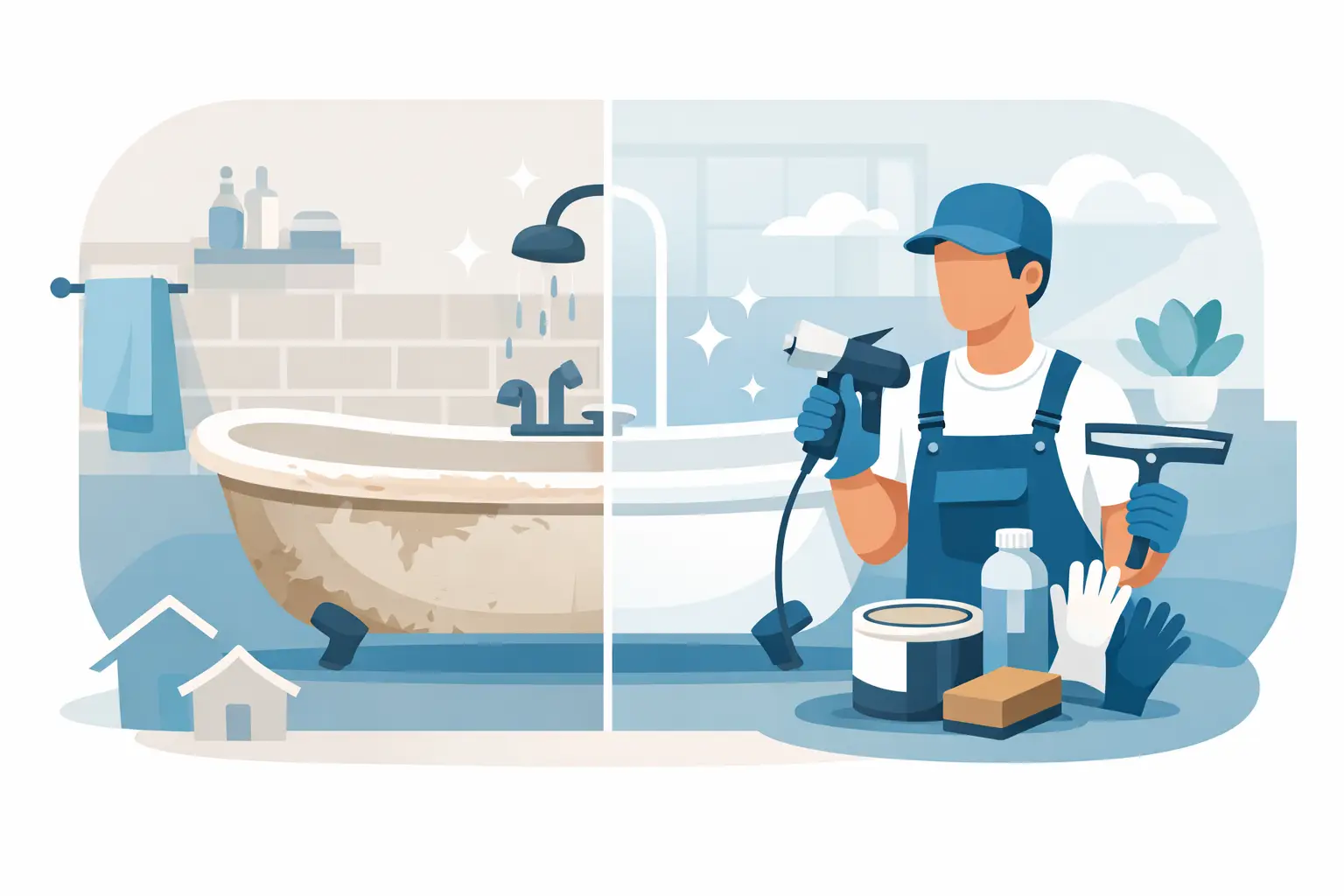
A stained, chipped, worn-out tub can make the whole bathroom feel older than it is. That is why a solid bathtub reglazing homeowner guide matters. If you want a cleaner look without tearing out tile, paying for plumbing work, and living through a remodel, reglazing is often the smarter move.
For many Florida homeowners, the real question is not whether the tub looks bad. It is whether refinishing will hold up, how much disruption to expect, and whether it is worth the money. Those are the right questions. Reglazing can save you a lot compared to replacement, but only when the tub is a good candidate and the work is done right.
What bathtub reglazing actually does
Bathtub reglazing, also called refinishing, restores the surface of an existing tub. The old tub stays in place. A trained refinisher deep cleans it, removes buildup, repairs chips or small damage, etches or sands the surface, applies bonding products, and then sprays on a new coating.
The goal is simple. You keep the tub you have, but the finish looks fresh again. In many cases, the color can also be changed. That means you are not stuck with an outdated shade if the rest of the bathroom has already been updated.
This is not the same thing as a cheap paint job from a hardware store kit. Professional reglazing uses stronger materials, better prep, and spray equipment designed to produce a smoother, more durable finish. That prep work is what separates a finish that lasts from one that peels early.
When reglazing makes sense and when it does not
A good bathtub reglazing homeowner guide should be honest about the trade-offs. Reglazing is a strong option for tubs that are structurally sound but look rough. Stains, dull surfaces, minor chips, light rust spots, and outdated color are all common reasons to refinish.
It also makes sense when the cost of replacement starts snowballing. Removing a tub can turn into tile repair, plumbing adjustments, wall patching, flooring issues, and time without a usable bathroom. Reglazing avoids most of that.
But it is not the answer for every tub. If the tub is flexing, badly rusted through, leaking, or has major structural damage, replacement may be the better long-term call. The same goes for tubs with serious water damage around the surrounding walls or subfloor. A new finish will not solve bigger construction problems.
That is why a real inspection matters. A dependable refinisher should tell you if your tub is not worth coating.
The biggest reason homeowners choose refinishing
It usually comes down to value. Replacement is expensive, messy, and slow. Reglazing is faster and far less disruptive.
For a homeowner trying to improve a bathroom without committing to a full renovation, that matters. You get a visible upgrade without demolition. The bathroom looks cleaner, newer, and better cared for. That can improve daily use, and it can also help if you are getting the home ready to sell or rent.
There is another practical benefit. Older tubs are often heavier and better built than newer low-cost replacements. If the tub itself is still solid, restoring the finish can make more sense than swapping it out for a lower-grade unit.
What to expect from the reglazing process
The process is usually quicker than homeowners expect, but it is still skilled surface work. First comes cleaning. Soap scum, body oils, hard water residue, and old caulk all have to be removed. If not, the new coating will not bond the way it should.
Next comes surface prep and repairs. Small chips, pitted areas, and minor imperfections are filled and smoothed. Then bonding agents and primer are applied based on the tub material and coating system being used. After that, the new finish is sprayed on evenly.
Dry time matters. The tub may look done the same day, but that does not mean it is ready for use immediately. Cure times vary based on product, humidity, and temperature. In Florida, that matters even more. A professional should give you clear instructions on when the tub can be used safely.
Ventilation also matters. Proper masking and ventilation protect the rest of the bathroom and help the finish cure correctly. If a contractor rushes setup, that is a red flag.
How long does bathtub reglazing last?
This is one of the first questions homeowners ask, and they should. A professionally reglazed tub can last for years with proper care. The exact lifespan depends on the condition of the original tub, the quality of prep, the coating system used, and how the tub is maintained afterward.
This is where workmanship matters most. Good materials on bad prep still lead to bad results. A finish is only as good as the surface under it.
Homeowners should also pay attention to warranty terms. A warranty says a lot about how much confidence a company has in its own work. If a refinisher stands behind the job and is willing to come back and fix issues, that lowers your risk. That kind of accountability matters more than a low price.
Cost savings are real, but cheap work can cost more later
Reglazing is known for saving money, and that is true. Compared with replacement, it is usually the more affordable option by a wide margin. But there is a difference between fair pricing and bargain-basement work.
If a company skips repairs, uses weak coatings, or rushes prep, the finish may fail early. Then you are paying again to strip it, redo it, or replace the tub after all. That is why the lowest bid is not always the best deal.
Look for clear answers about prep, repair work, dry time, warranty coverage, and expected longevity. If the estimate is vague, the job may be too.
Choosing the right contractor for bathtub reglazing
A bathtub reglazing homeowner guide should spend more time here than on color trends. The contractor matters more than anything else.
Start with experience. Surface refinishing is specialized work. It is not general handyman work, and it is not the same as painting. Ask how often they reglaze tubs, what surfaces they handle, and how they deal with chips, rust, or previous failed coatings.
Ask about warranty coverage in plain terms. What is covered? For how long? What happens if there is a problem? A company that stands behind its work should answer that without hesitation.
Ask about prep and ventilation. Ask how long before the tub can be used. Ask what cleaning products to avoid afterward. Real pros have straightforward answers because they do this every day.
If you are in the Florida market, local experience helps. Heat and humidity affect drying and curing, so it is worth hiring a company that understands local conditions and schedules jobs accordingly. That is one reason homeowners call specialists like The Tub Guy instead of gambling on a general contractor.
How to care for a newly reglazed tub
Once the tub is refinished, maintenance is simple, but it matters. Use non-abrasive cleaners. Avoid scouring pads, harsh powders, bleach-heavy products, and suction-cup bath mats unless your refinisher says they are safe. Those can damage the new surface.
Do not leave soap, shampoo bottles, or metal cans sitting on the tub edge or floor for long periods. Trapped moisture can stain or weaken the finish over time. A quick rinse and wipe-down now and then goes a long way.
If the caulk around the tub needs attention later, handle it carefully. Poor recaulking can damage the edge of the finish. If you are unsure, ask the refinisher what products and methods are safe.
Common homeowner concerns
The first concern is usually smell. There can be odor during the process, which is why ventilation is part of professional setup. It should be managed, not ignored.
The second concern is whether the finish will look fake. When the job is done well, the tub should look smooth, glossy, and clean – not brushed on or patchy. Poor application is what creates that painted-over look homeowners worry about.
The third concern is whether refinishing is just a short-term patch. Sometimes it is not the right fit, especially for badly damaged tubs. But on the right tub, done by the right company, it is a practical upgrade that buys you years of service and a much better-looking bathroom.
If your tub is ugly but still solid, do not assume replacement is your only option. Get a real assessment, ask hard questions, and choose a refinisher who backs up the work. A good tub does not always need to be torn out. Sometimes it just needs the surface restored the right way.